
By: Stephen N. Sonpon
In an effort to strengthening transparency and accountable local governance, NAYMOTE Partners for Democratic Development is empowering communities across Liberia to take ownership of their development through a citizen-led oversight mechanism that is reshaping how government projects are tracked and monitored at the grassroots level.
The initiative, which is being implemented under the County Accountability and Advocacy Teams (CAATs), is supported by the United Nations Peacebuilding Fund through the United Nations Development Programme (UNDP) Liberia.
CAATs are now operational in all 15 counties and are tasked with monitoring public service delivery and tracking the implementation of government-funded development projects.
Over the past two months, CAAT members visited and monitored 240 development projects across Liberia’s counties.
Of that number, 75 percent were found to be ongoing, while the remaining projects have either stalled due to limited funding or are undergoing transition to new phases.
The findings, according to NAYMOTE, are being documented and shared with county authorities along with practical recommendations.
In Gbarma Town, Gbarpolu County, CAAT’s consistent monitoring and community engagement helped reactivate construction works at the Gbarma Health Center, which had been abandoned since 2017.
The renewed effort followed direct engagements with the County Administration and stakeholders during a public budget hearing held in Bopolu City on July 30, 2025.
During the session, Gbarpolu County Finance Officer, Howard P. Bunday, presented a draft budget of US$706,666 to the County Council for review and deliberation.
CAAT members were present and participated actively in the process, marking a milestone in citizen participation in local governance.
In Lofa County, the CAAT team visited the Presidential Palace construction site in Foya District on July 30, 2025, to gather information on the progress and cost of the project.
The site engineer informed the team that the project is valued at US$10 million.
However, CAAT was unable to access the Bill of Quantities and other relevant documentation during the visit, even as construction was observed to be ongoing.
Lofa County has witnessed notable progress in public access to information since the intervention of CAAT.
For the first time, residents are accessing copies of the 2024 County Resolutions, Social Development Fund reports, and other key financial documents, thanks to persistent advocacy and demand for transparency by the team.
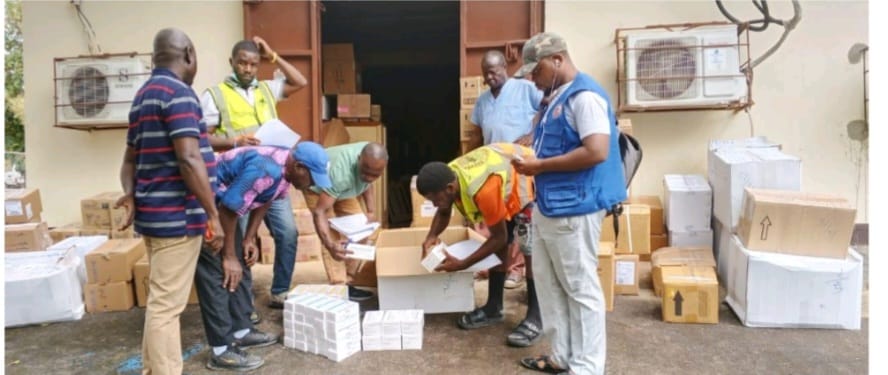
Also in Lofa, on July 28, CAAT monitored the delivery of a large consignment of essential drugs to the Tellewoyan Memorial Hospital in Voinjama.
The hospital’s leadership welcomed the monitoring team and pledged to uphold transparency and accountability in the handling and distribution of the supplies.
In Maryland County, CAAT’s work has significantly improved coordination between the County Administration and the public.
The team is working with local authorities to establish communication channels aimed at informing citizens about ongoing projects, timelines, and budget allocations.
Peter P. Toe, Jr., a member of CAAT-Maryland, disclosed that Maryland District #2 Representative, Anthony Williams, commended the initiative and described it as an accountability tool that strengthens the performance of elected officials and reinforces trust between leaders and the communities they serve.
The presence of CAAT in various counties is fostering increased citizen participation and awareness.
Through radio talk shows, town hall meetings, and direct engagement with stakeholders, citizens are now questioning delays in project implementation and demanding transparency in the management of development funds.
With support from NAYMOTE, CAAT teams are using ComCare — a digital tool that enables real-time data collection on public spending and service delivery.
The tool supports gender-responsive tracking and helps ensure that resources are being used equitably and efficiently.
Data collected is compiled and submitted to county authorities and councils along with action points and recommendations.
In many counties, the information provided by CAAT has influenced project prioritization and led to corrective measures where lapses were identified.
NAYMOTE’s Executive Director, Eddie D. Jarwolo, said the initiative is shifting the governance landscape across Liberia.
“The CAAT initiative is changing the narrative. Citizens are no longer silent spectators. They are now actively involved in holding the government accountable,” Jarwolo asserted.
While commending the progress made so far, Mr. Jarwolo also raised concerns over the limited funding allocated for development in the national budget.
He emphasized that the current allotment of US$186,666 per county is insufficient to meet local development.
