





By: Julius Konton
The Kingdom of Morocco and the Republic of Zambia on Thursday reaffirmed their determination to strengthen bilateral cooperation across several strategic sectors, signaling a renewed commitment to deepening economic, diplomatic, and development ties between the two African nations.
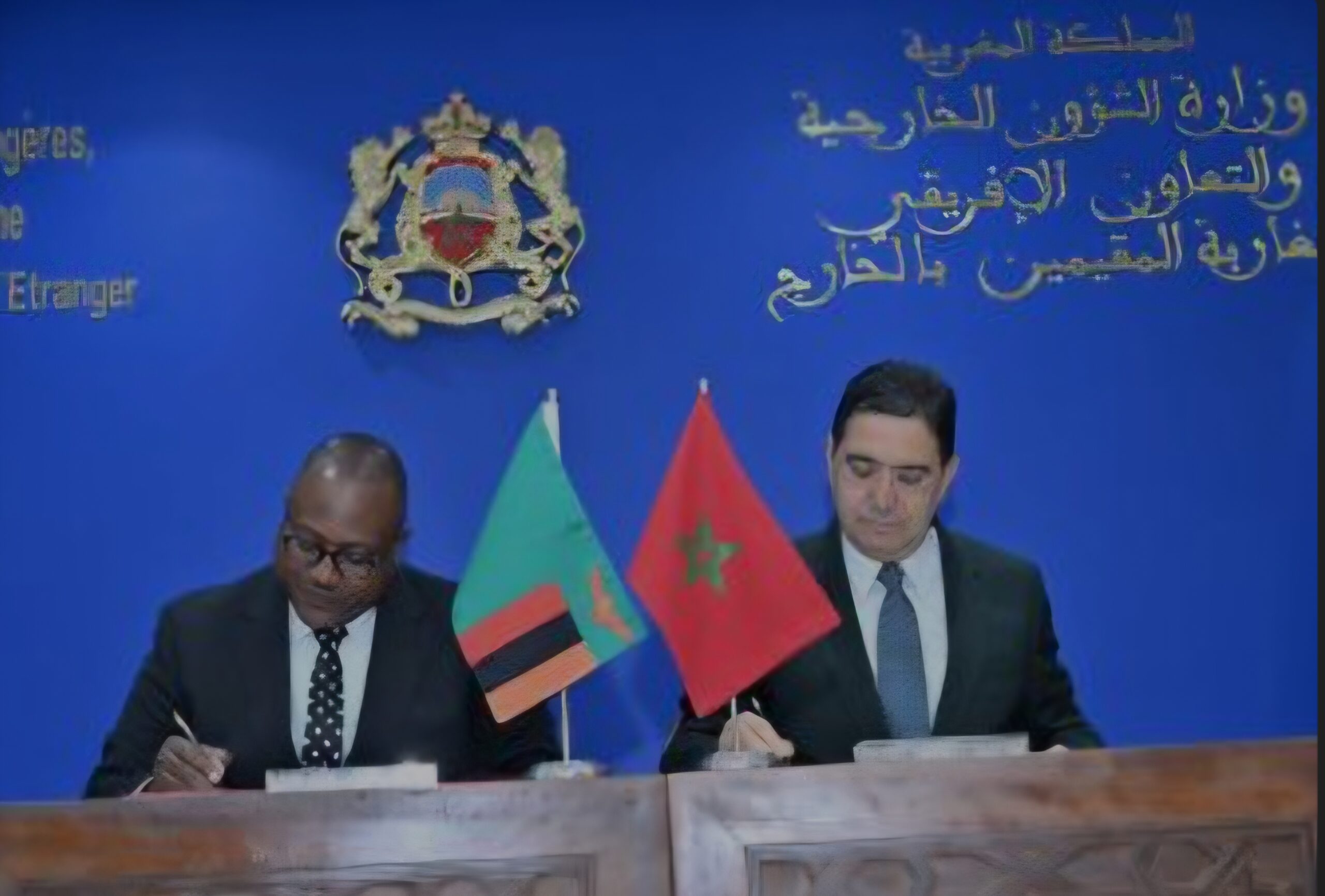
The renewed commitment was highlighted during high-level talks in Rabat between Morocco’s Minister of Foreign Affairs, African Cooperation and Moroccan Expatriates, Nasser Bourita, and Zambia’s Minister of Foreign Affairs and International Cooperation, Mulambo Haimbe, who is currently undertaking a working visit to Morocco.
According to diplomatic sources, the discussions reflected the shared vision of Mohammed VI and Hakainde Hichilema to elevate relations between Rabat and Lusaka into a stronger and more ambitious strategic partnership centered on economic transformation, regional integration, and South-South cooperation.
The two ministers welcomed the growing momentum in bilateral relations and identified several priority sectors for future cooperation projects ahead of the next Morocco-Zambia Joint Commission meeting.
Focus on Energy, Mining and Sustainable Development
Among the major sectors highlighted were energy and mining two critical industries for both economies.
Zambia remains one of Africa’s largest copper producers, contributing nearly 70 percent of the country’s export earnings, while Morocco possesses one of the continent’s most diversified industrial and renewable energy sectors.
Analysts say the partnership could create new opportunities for investment, technology transfer, and joint ventures in mineral processing, renewable energy, and infrastructure development.
Morocco has emerged as a continental leader in renewable energy, with ambitious plans to generate more than 52 percent of its electricity from renewable sources by 2030.
The North African kingdom is internationally recognized for large-scale projects such as the Noor Ouarzazate Solar Complex, one of the world’s largest concentrated solar power plants.
Zambia, meanwhile, continues to expand its mining and energy sectors as part of efforts to revive economic growth and attract foreign direct investment.
The country produced over 820,000 metric tons of copper in 2025 and is targeting production of 3 million metric tons annually over the next decade.
The ministers also discussed cooperation in sustainable development, environmental resilience, and climate adaptation, areas increasingly critical as African countries confront the economic impacts of climate change.
Expanding Education, Research and Health Cooperation
Beyond economic sectors, both nations pledged to deepen collaboration in education, scientific research, innovation, and scholarship opportunities.
Morocco has in recent years increased scholarship programs for African students as part of its broader diplomatic engagement across the continent.
Thousands of African students are currently enrolled in Moroccan universities and technical institutions, particularly in medicine, engineering, agriculture, and technology.
Officials say enhanced academic cooperation between Morocco and Zambia could help strengthen human capital development and innovation-driven growth.
Health and social protection also featured prominently during the talks, with both countries exploring ways to improve healthcare systems, medical training, and access to social welfare programs.
Morocco Strengthens African Diplomacy
The meeting comes amid Morocco’s
intensified diplomatic and economic outreach across Africa under the leadership of King Mohammed VI.
Since rejoining the African Union in 2017, Morocco has expanded bilateral partnerships with several African countries through trade, banking, agriculture, telecommunications, and infrastructure investments.
Trade between Morocco and African countries has significantly increased over the past decade, with Moroccan companies investing billions of dollars across the continent in sectors ranging from fertilizers and finance to renewable energy and housing.
Political observers note that Zambia’s growing engagement with Morocco reflects a broader continental push toward intra-African cooperation under the framework of the African Continental Free Trade Area (AfCFTA), which seeks to create a single African market of over 1.4 billion people with a combined GDP exceeding US$3 trillion.
Toward a Stronger Africa-Africa Partnership
Diplomatic experts believe the strengthening of Morocco-Zambia relations represents a broader shift toward stronger Africa-Africa partnerships aimed at reducing dependence on external actors while promoting regional industrialization and economic resilience.
As Rabat and Lusaka move toward the next Joint Commission meeting, expectations remain high that both countries will translate diplomatic commitments into concrete development projects capable of delivering mutual economic benefits and advancing continental integration.
The renewed partnership between Morocco and Zambia is also expected to reinforce political dialogue and cooperation within regional and international organizations, as both nations seek to play more influential roles in shaping Africa’s economic and diplomatic future.


