




By: Julius Konton
Morocco has renewed its call for a comprehensive, Africa-led approach to combating terrorism and insecurity, warning that the continent faces an increasingly complex web of threats ranging from violent extremism and armed conflicts to organized crime and emerging technological risks.
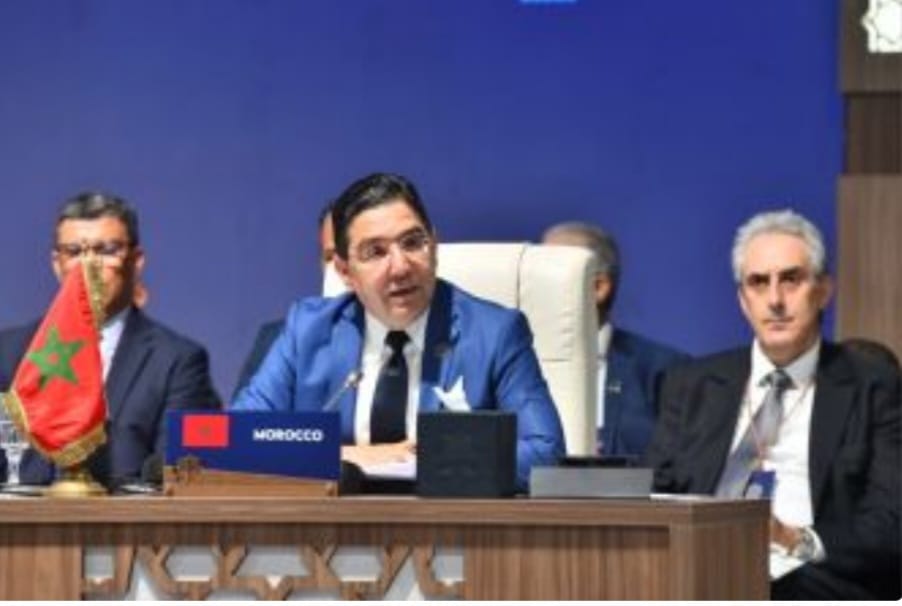
Speaking at the opening of the 5th High-Level Meeting of Heads of Counter-Terrorism and Security Agencies in Africa in El Jadida on Tuesday, Morocco’s Minister of Foreign Affairs, African Cooperation and Moroccan Expatriates, Nasser Bourita outlined the strategic vision of Mohammed VI for addressing Africa’s evolving security challenges while promoting sustainable development and prosperity.
The high-level gathering, organized jointly by the Kingdom of Morocco and the United Nations Office of Counter-Terrorism under the framework of the Marrakech Platform, brought together African security chiefs, policymakers, and international partners to discuss coordinated responses to terrorism and regional instability.
Africa Remains the Global Epicenter of Terrorism
Bourita warned that terrorism in Africa continues to evolve rapidly, becoming increasingly transnational and interconnected with organized criminal networks.
According to recent global security assessments, Africa accounted for a significant share of terrorism-related deaths worldwide in recent years, with regions such as the Sahel emerging as some of the most dangerous hotspots for extremist violence.
Armed groups linked to Al-Qaeda and the Islamic State have expanded operations across several countries, exploiting weak governance, poverty, political instability, and porous borders.
The minister identified several troubling trends shaping the continent’s security environment:
The expansion and regionalization of terrorist networks;
The proliferation of armed conflicts and political instability;
Growing links between terrorist organizations, separatist movements, and transnational criminal enterprises;
The misuse of emerging technologies and artificial intelligence by extremist actors;
Increased cyber threats and digital radicalization.
“These developments require innovative and coordinated responses that go beyond traditional security measures,” Bourita emphasized.
King Mohammed VI’s Vision: Security and Development Are Interconnected
Central to Bourita’s address was the strategic vision championed by King Mohammed VI, which views security, development, and regional cooperation as inseparable pillars of Africa’s future.
The minister stressed that Morocco’s African policy is rooted in a profound sense of belonging to the continent.
“Africa is not simply a neighboring continent for Morocco, nor merely one diplomatic option among many,” Bourita stated. “It is a continent to which Morocco belongs geographically, historically, politically, institutionally, and culturally.”
He explained that Morocco’s engagement in Africa is driven by the conviction that the Kingdom’s security and prosperity are directly linked to those of the continent as a whole.
According to Bourita, Morocco’s counterterrorism commitment is therefore not merely a policy choice but a responsibility arising from its shared destiny with Africa.
Beyond Military Solutions
The Moroccan foreign minister reiterated King Mohammed VI’s longstanding position that defeating terrorism requires more than military operations and intelligence sharing.
He argued that lasting security can only be achieved through a holistic approach that addresses the root causes of extremism, including economic deprivation, unemployment, social exclusion, weak governance, and ideological radicalization.
Morocco has often highlighted its own model of countering extremism through religious education reforms, economic development initiatives, and regional cooperation programs aimed at strengthening resilience against radicalization.
Security experts increasingly support such multidimensional strategies, noting that regions suffering from high unemployment, weak institutions, and limited educational opportunities often become fertile ground for extremist recruitment.
Marrakech Platform Marks Five Years of Regional Cooperation
Bourita also celebrated the fifth anniversary of the Marrakech Platform, describing it as one of Africa’s most important mechanisms for dialogue and cooperation on counterterrorism issues.
Established in 2022, the platform was created to strengthen intelligence sharing, operational coordination, capacity building, and strategic cooperation among African security institutions and international partners.
Over the past five years, it has evolved into a significant forum for addressing cross-border security threats and fostering collaboration among governments, regional organizations, and global partners.
The minister praised the continued involvement of UNOCT, describing Morocco’s partnership with the UN counterterrorism office as “strong, structured, sustainable, and forward-looking.”
Africa Demands Greater Influence in Global Security Decisions
In one of the strongest messages of his speech, Bourita called for greater African representation in shaping international counterterrorism policies.
He argued that because Africa now bears a disproportionate share of the global terrorism burden, the continent must have a stronger voice in revising and implementing the United Nations Global Counter-Terrorism Strategy.
“If Africa is today the epicenter of global terrorism, it must also be at the center of the global response,” he said.
The statement reflects growing calls from African leaders for international institutions to grant the continent greater influence over decisions that directly affect its security, development, and geopolitical future.
Balancing Security and Development
Analysts note that Bourita’s remarks underscore an increasingly accepted principle in international security policy: that stability serves as the foundation for democratic governance, economic growth, and sustainable development.
With Africa’s population projected to surpass 2.5 billion by 2050 and youth expected to account for a substantial share of global workforce growth, experts argue that addressing insecurity will be critical to unlocking the continent’s economic potential.
As terrorist groups continue adapting their tactics and leveraging new technologies, the discussions in El Jadida highlight the urgency of strengthening continental cooperation and ensuring that Africa plays a leading role in designing the solutions to its own security challenges.


