




By: Julius Konton
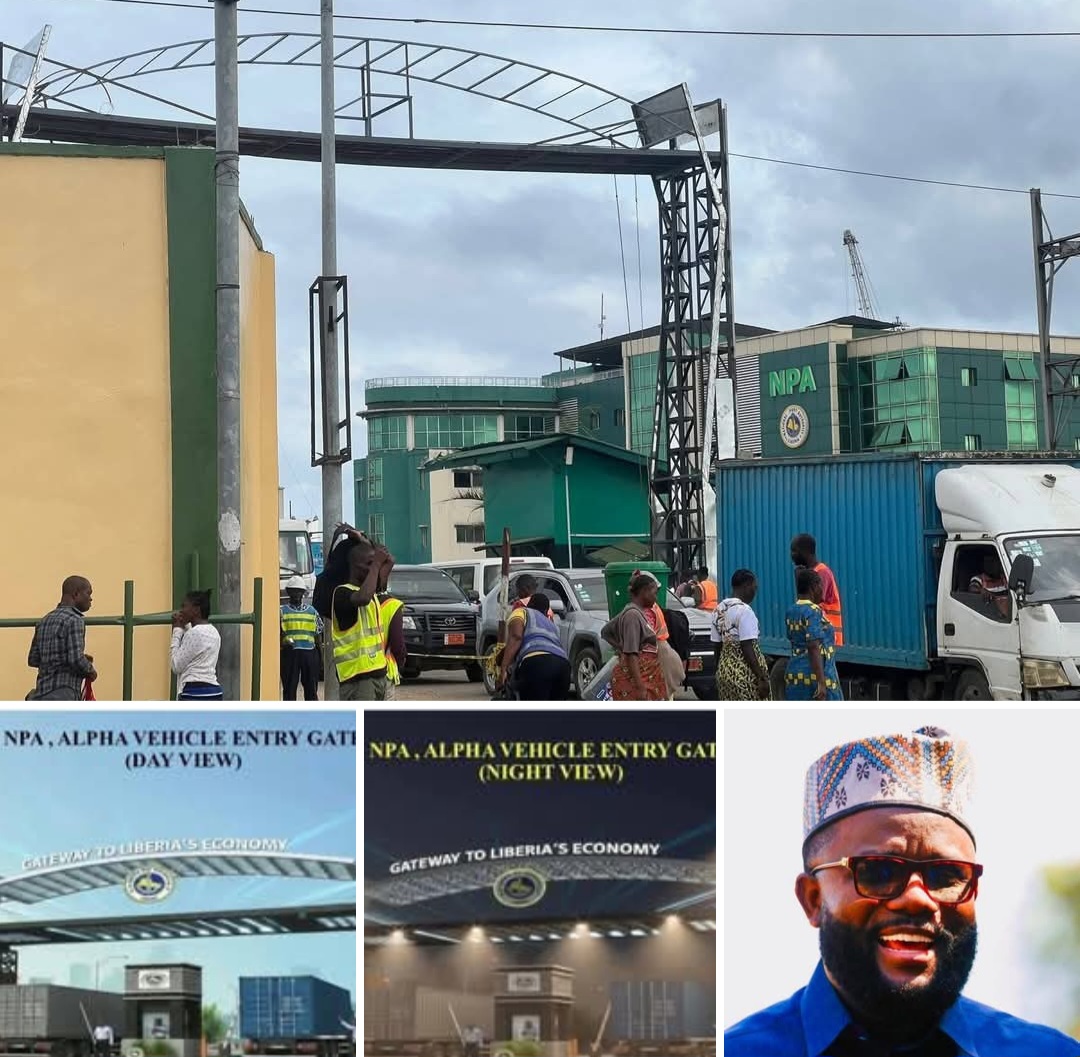
The National Port Authority (NPA) has announced that a major security and infrastructure modernization project at the Freeport of Monrovia is now nearing completion, signaling a significant step in Liberia’s drive to improve port security, operational efficiency, and international trade compliance.
The ambitious project, launched under the leadership of NPA Managing Director Sekou Hussein Dukuly, includes the construction of a reinforced perimeter fence and the installation of Liberia’s first Automatic Digital Gate Access System, a technology-driven security solution designed to transform access control at the country’s principal maritime gateway.
According to the NPA, more than 80 percent of the project has been completed, with final works now underway.
Once operational, the digital system will utilize facial recognition technology for pedestrian access and Automatic License Plate Recognition (ALPR) for vehicles, allowing authorities to monitor, verify, and record all entries and exits in real time.
The Freeport of Monrovia handles an estimated 85 to 90 percent of Liberia’s international trade volume, making it the country’s most critical commercial hub.
With Liberia importing over US$1.5 billion worth of goods annually, according to trade estimates, experts say stronger security at the port is crucial for national revenue collection, customs enforcement, and anti-smuggling operations.
Port authorities disclosed that all employees of the National Port Authority and Freeport operations have already undergone biometric registration, including the capturing of facial profiles and issuance of electronic identification cards as part of the transition.
“This project represents a major leap toward international port security standards,” an NPA boss, Mr. Dukuly said. “It is not only about controlling access, but about creating a secure, traceable, and accountable port environment.”
Historically, the Freeport of Monrovia established in 1948 and expanded significantly after Liberia’s civil war has remained the backbone of the country’s maritime economy.
However, security vulnerabilities, unauthorized access, and aging infrastructure have long been cited as major operational challenges.
The latest modernization effort aligns with global port management trends, where digital surveillance and biometric verification have become standard across major seaports to combat theft, human trafficking, contraband movement, and revenue leakages.
Liberia’s maritime sector contributes significantly to the national economy, with the port sector generating millions in annual government revenue through customs duties, cargo handling fees, and vessel services.
In the 2026 national budget, port and customs-related revenues remain one of the largest non-tax income streams for government operations.
Analysts believe the completion of the project could enhance Liberia’s attractiveness to international shipping companies by improving turnaround times, reducing unauthorized movement, and strengthening cargo integrity.
The project also forms part of broader reforms under President ’s infrastructure and governance agenda aimed at modernizing state-owned enterprises and improving public sector efficiency.
As Liberia positions itself to strengthen regional trade competitiveness under the African Continental Free Trade Area (AfCFTA), the modernization of the Freeport of Monrovia could prove pivotal in boosting investor confidence and supporting economic growth.
With final testing and activation expected soon, the NPA says the upgraded entrance gate system will usher in what officials describe as “a new era of secure and smart port management” in Liberia.


