


By: Julius Konton
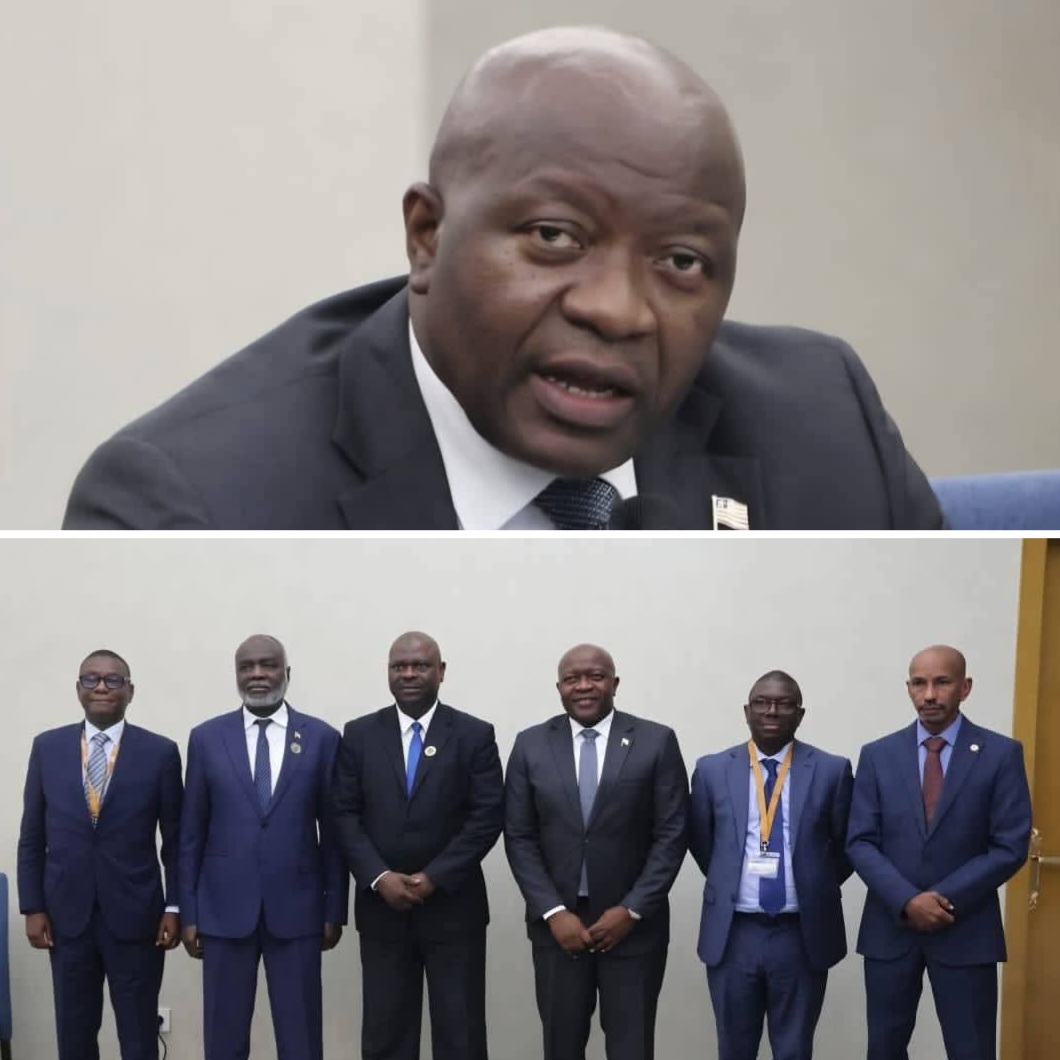
Against a backdrop of geopolitical instability, tightening global financial conditions and mounting pressure on developing economies, Liberia’s Finance and Development Planning Minister, Augustine Kpehe Ngafuan, has assumed the chairmanship of the African Development Bank (AfDB) Constituency 15, urging member states to deepen fiscal resilience, strengthen domestic resource mobilization and reposition Africa for a more uncertain economic future.
Speaking during the Annual Meeting of Constituency 15, held on the sidelines of the 2026 Annual Meetings of the African Development Bank Group in Brazzaville, Ngafuan described the gathering as taking place at a pivotal moment for Africa, when international geopolitical shocks, financial tightening and volatile commodity markets are increasingly reshaping the continent’s development trajectory.
The 2026 AfDB meetings, hosted in the Republic of Congo from May 25–29, are convening under the theme “Mobilising Africa’s Development Financing at Scale in a Fragmented World.” More than 3,000 delegates are attending the forum, including ministers, governors, investors, development agencies and private-sector leaders.
Constituency 15 of the AfDB comprises five member states, The Gambia, Ghana, Liberia, Sierra Leone and Sudan which collectively advocate within the bank’s governance system for development financing priorities affecting some of Africa’s most economically vulnerable yet reform-oriented economies.
Ngafuan, a veteran Liberian technocrat and former foreign minister now serving again as Finance Minister under President Joseph Nyuma Boakai, formally assumed leadership of the constituency while praising outgoing chair, Sierra Leone’s Finance Minister Sekou Ahmed Bangura, for strengthening institutional cohesion and representation within the Bank’s governance architecture.
Ngafuan previously served as Liberia’s finance minister between 2008 and 2012 and returned to the post in 2024 amid renewed reform efforts in Monrovia.
“We gather at a moment of renewed strategic and institutional transformation within the African Development Bank Group,” Ngafuan declared, emphasizing the urgency for African countries to recalibrate development strategies in response to global disruptions.
A Changing Global Order and Africa’s
Development Financing Challenge
Ngafuan warned delegates that geopolitical tensions particularly disruptions linked to instability in the Middle East have intensified volatility in global energy markets, shipping routes and commodity prices, disproportionately affecting import-dependent African economies.
For countries in Constituency 15, many of which rely heavily on imported fuel, food and industrial goods, the consequences are immediate: rising inflation, larger import bills, shrinking fiscal space and heightened competition for concessional development financing.
“The global financial landscape is tightening,” Ngafuan cautioned. “Africa must rely more on resilience, reform and domestic resource mobilization.”
His remarks echoed growing concerns among African policymakers that traditional donor financing and concessional lending are becoming increasingly constrained amid fiscal pressures in advanced economies.
Analysts estimate Africa faces an annual development financing gap exceeding US$400 billion, intensifying pressure on institutions such as the AfDB to innovate and mobilize private capital at scale.
The warning comes as international development financing experiences growing stress. In recent months, multilateral institutions have confronted shrinking donor commitments and rising global debt burdens, prompting stronger calls for African-led financing solutions and sovereign resource mobilization.
Backing a New AfDB Leadership Agenda
Ngafuan used the occasion to align Constituency 15 behind the reform agenda of newly elected AfDB President Sidi Ould Tah, who assumed office following a historic leadership transition in 2025 after securing more than 76 percent of shareholder votes, the strongest first-term electoral mandate in the institution’s history.
The AfDB president has championed an ambitious agenda centered on mobilizing Africa’s capital, rebuilding economic sovereignty, leveraging demographic growth and expanding resilient infrastructure and competitive value chains.
According to Ngafuan, Constituency 15 strongly supports this renewed strategic direction.
He also pledged Liberia’s active participation in strengthening governance standards within the Bank through his leadership role on the Standing Committee of the Board of Governors overseeing conditions of service for elected officers, a body tasked with reinforcing institutional accountability, integrity and effective leadership management.
Ngafuan commended Gambian Finance Minister Seedy Keita for his role in safeguarding transparency and institutional credibility during the presidential election process that elevated Tah to office, while welcoming the return of Dr. Cassell R. Fasoh to the constituency’s leadership framework, citing the importance of institutional memory and continuity.
Economic Bright Spots Across Constituency 15
Despite external shocks, Ngafuan argued that the five-country constituency continues to display notable resilience.
He highlighted signs of economic recovery and sectoral transformation across member states:
In The Gambia, tourism is rebounding strongly, while rural electrification is expanding through solar mini-grid installations.
In Ghana, macroeconomic stabilization measures are reportedly improving fiscal confidence through inflation management, digital tax systems and growth in creative and technology industries.
In Liberia, governance reforms including digitization of public payments and procurement systems are being paired with infrastructure investments targeting roads and electricity to stimulate productivity and private investment.
In Sierra Leone, education reforms continue receiving international recognition while renewed investor interest in mining and critical minerals is strengthening growth expectations.
In Sudan, Ngafuan noted signs of economic stabilization despite ongoing humanitarian and political pressures, pointing to modest recovery indicators beginning in 2025.
“These developments remind us that even in a turbulent global environment, African countries continue to move forward with determination, reform and resilience,” he told delegates.
Constituency Performance: US$223 Million in Approvals
The chairperson cited encouraging institutional performance, noting that AfDB approvals for Constituency 15 rose to US$223 million in 2025, representing a reported 238 percent increase over 2024, with major operations concentrated in Ghana and Sudan while Liberia and The Gambia benefited from interventions in agriculture, crisis response and social development.
He also described the constituency’s collective US$16 million contribution to the African Development Fund’s 17th replenishment (ADF-17) as a historic demonstration of ownership and credibility within the Bank.
The AfDB’s concessional financing arm, the African Development Fund, recently secured a record US$11 billion replenishment, its largest in history, to support low-income African countries between 2026 and 2028, reflecting a 23 percent increase over the previous cycle despite global fiscal tightening.
The Fund, established in 1972, supports infrastructure, governance reforms, climate adaptation and social development in vulnerable African economies.
Persistent Challenges: Delays, Arrears and Weak Private-Sector Financing
Yet Ngafuan acknowledged serious institutional weaknesses.
According to the constituency annual report, approximately 24 percent of operations remain flagged, largely because of procurement delays, implementation bottlenecks, limited Project Implementation Unit (PIU) capacity and fragility-related disruptions.
He warned that shareholder erosion, arrears and delayed subscriptions continue to diminish the constituency’s influence inside the Bank.
More concerning, he said, was the absence of non-sovereign operations in 2025 private-sector lending critical to entrepreneurship, industrialization and job creation.
“Our constituency recorded no non-sovereign approvals in 2025, and this must change,” Ngafuan stressed.
He called for stronger collaboration with the Bank to identify bankable projects, support small and medium-sized enterprises and de-risk investments in agriculture, energy and digital infrastructure.
Three Priorities for 2026
Setting out a forward-looking agenda, Ngafuan proposed three strategic priorities for Constituency 15 in 2026:
First, strengthening fiscal resilience through domestic revenue mobilization, expenditure efficiency and sustainable debt management.
Second, expanding private-sector operations through stronger pipelines of investment-ready projects capable of attracting concessional and blended finance.
Third, restoring influence within the Bank by reversing shareholder erosion, clearing arrears and meeting subscription commitments that determine voting power and policy leverage.
“Our voting power, credibility and ability to shape policy depend on them,” he reminded fellow governors.
Solidarity With Sudan
Ngafuan also made a strong appeal for solidarity with Sudan, acknowledging the severe humanitarian and economic pressures confronting the country while commending Khartoum for maintaining engagement with the AfDB and honoring its ADF-17 commitments despite extraordinary circumstances.
He urged member states to ensure Sudan remains eligible for transitional support resources, emergency financing and flexible implementation arrangements.
A Test of African Unity
Closing his remarks, Ngafuan emphasized that Constituency 15 has historically been defined by unity, shared purpose and collective determination.
“The global environment may be uncertain,” he said, “but our resolve must remain steady.”
He pledged to work alongside fellow governors and the constituency’s executive director to consolidate gains, accelerate reforms and elevate the bloc’s influence within the AfDB at a time when Africa faces mounting economic uncertainty but also unprecedented opportunity.


