
By: Julius Konton
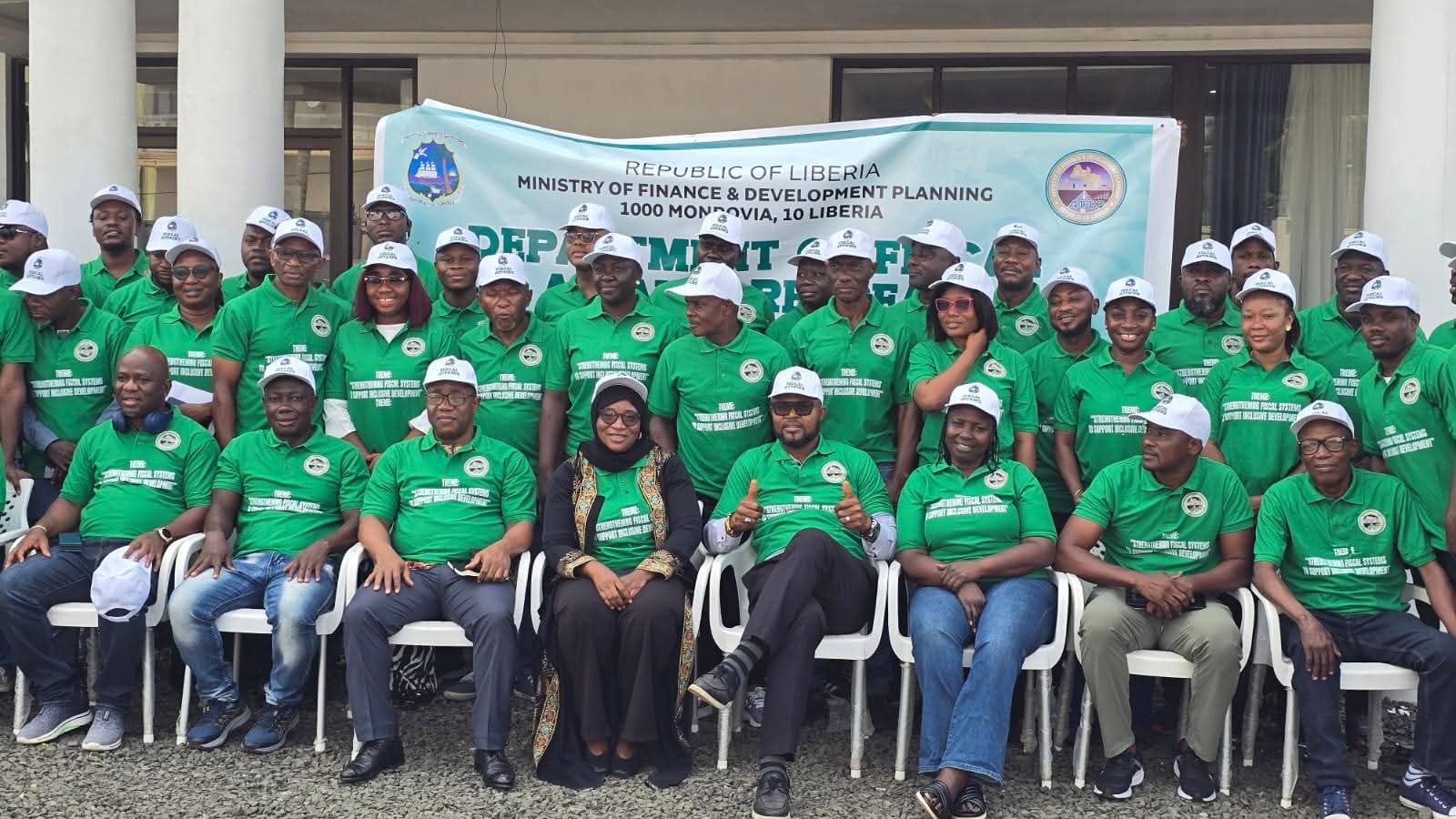
The Ministry of Finance and Development Planning (MFDP) has launched a high-level departmental retreat in Marshall, Margibi County, bringing together senior managers and technical experts of its Department of Fiscal Affairs in a renewed drive to strengthen Liberia’s fiscal systems and advance inclusive national development.
The two-day retreat, which opened Friday, is being held under the theme “Strengthening Fiscal Systems to Support Inclusive Development.”
It focuses on evaluating internal operational frameworks, addressing persistent institutional gaps, and aligning fiscal strategies with the Government of Liberia’s decentralization agenda and long-term development priorities.
Liberia’s public finance system has undergone significant reforms since the end of the civil conflict in 2003, including the introduction of modern budget processes, enhanced revenue administration, and improved expenditure controls. However, fiscal pressures remain acute.
Public revenue, which averaged below 15 percent of GDP for much of the past decade, continues to lag behind regional benchmarks, limiting the government’s capacity to finance infrastructure, health, education, and social protection programs.
Delivering the keynote address, Deputy Minister for Fiscal Affairs, Anthony G. Myers, emphasized that effective fiscal management is a collective responsibility that extends beyond senior leadership.
“Management is not the exclusive responsibility of ministers and directors,” Myers said.
“Whether you are a desk officer or a senior official, you are part of the system. Management affects you, and you affect management.”
He outlined what he described as five core pillars of functional management, beginning with strategic planning.
According to the Deputy Minister, planning provides long-term direction and ensures that policies, decisions, and daily operations remain aligned with national development goals.
“Strategy is about long-term direction,” he noted. “If we say we are strengthening the fiscal system, then every action we take must move us toward that objective.”
Closing Revenue Gaps and Strengthening Accountability
Addressing long-standing discrepancies between reported revenues and consolidated fiscal accounts, Myers called for closer collaboration between fiscal authorities and revenue generating institutions.
Such inconsistencies, he noted, undermine transparency, weaken public trust, and complicate macroeconomic planning.
“The time has come to abandon the idea that certain problems belong to one institution alone,” he said.
“As fiscal authorities responsible for revenue and expenditure policy, we must work collectively to close the perennial gaps in our system.”
According to MFDP data, gaps between projected and actual revenue collections have averaged several percentage points annually, often forcing expenditure adjustments mid-budget cycle.
Strengthening reporting accuracy and inter-agency coordination is therefore viewed as critical to fiscal stability.
Decentralization and County-Level Capacity
The Deputy Minister also underscored the importance of organizational structures and adequate resourcing to support fiscal decentralization.
He disclosed that the government is advancing plans for the construction and rehabilitation of county treasury facilities, aimed at enhancing local public financial management and service delivery.
Liberia’s decentralization policy, which seeks to transfer greater fiscal and administrative authority to counties, is expected to improve efficiency and responsiveness.
However, experts note that success depends heavily on building local capacity, strengthening controls, and ensuring citizen participation.
“Inclusive development means involving citizens from planning through implementation,” Myers said. “Nothing for us without us.”
Institutional Knowledge and Leadership
Providing an overview of the retreat, Romeo D. N. Gbartea, Director of the Financial Decentralization Unit, emphasized the role of experience, discipline, and institutional memory in strengthening public financial management.
Dr. Gbartea highlighted humility as a key driver of productivity and effective teamwork, noting that leadership by example remains essential in public service.
He referenced the leadership philosophy of Finance and Development Planning Minister Augustine Kpehe Ngafuan, citing his hands-on engagement with staff as a reflection of a results-oriented management culture.
He also commended Deputy Minister Myers for providing steady leadership within the Department of Fiscal Affairs.
Toward a Resilient Fiscal System
Throughout the retreat, participants are assessing departmental structures, staffing composition, and operational processes.
Discussions are centered on identifying systemic weaknesses, recommending reforms, and proposing practical measures to strengthen fiscal oversight, coordination, and accountability at both national and county levels.
The retreat forms part of MFDP’s broader reform agenda aimed at building a resilient, transparent, and responsive fiscal system capable of supporting Liberia’s economic recovery, decentralization policy, and long-term development objectives.
As Liberia continues to navigate fiscal constraints amid growing development needs, officials say strengthening internal systems and institutional capacity remains central to ensuring sustainable growth and improved public service delivery.
