




By: Julius Konton
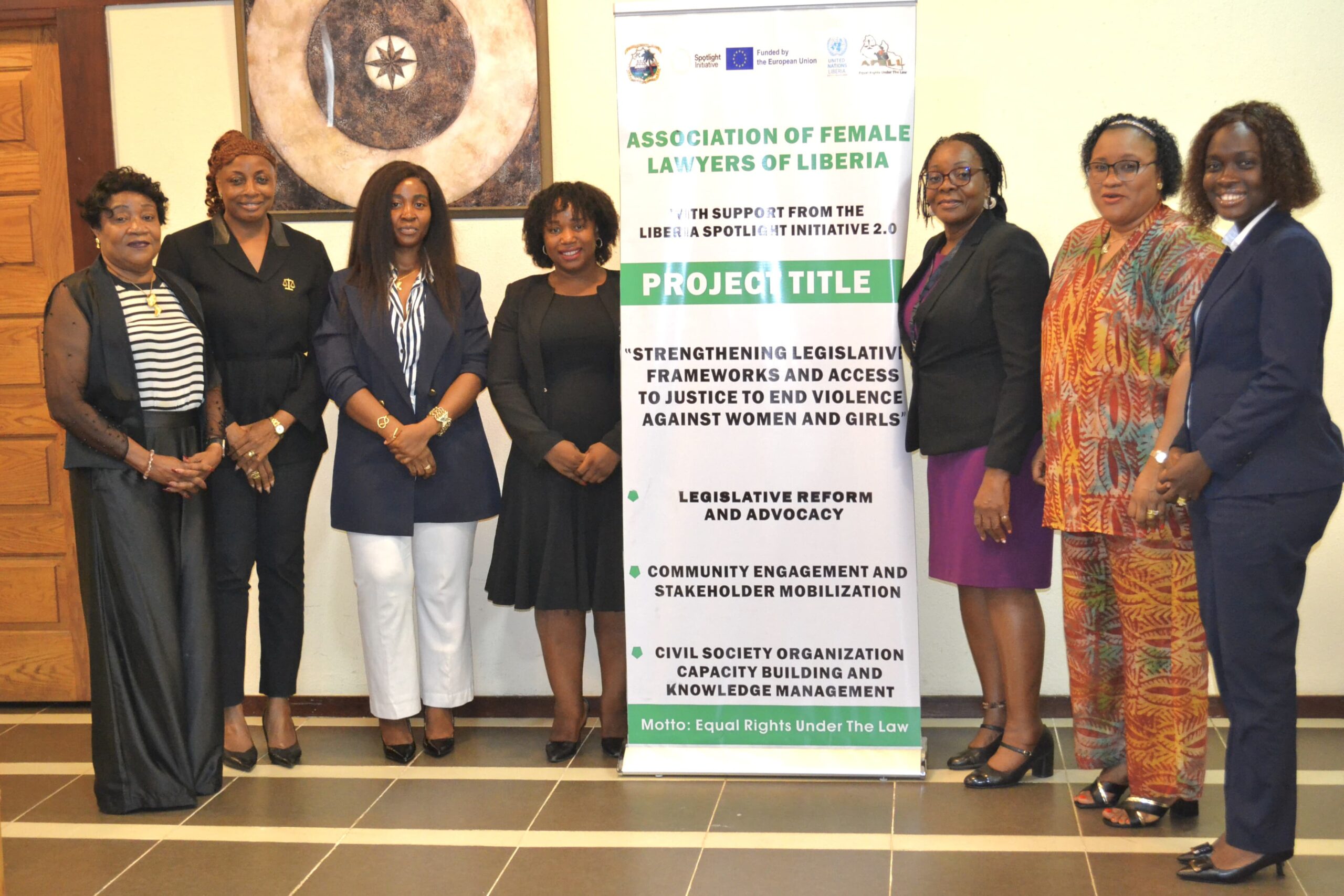
In a significant step toward advancing gender justice and strengthening legal protections, the Association of Female Lawyers of Liberia (AFELL), in partnership with key national institutions and with technical support from UN Women Liberia, successfully concluded a two-day high-level legal review session aimed at enhancing the rights and protections of women and girls across Liberia.
The event, held in the capital city of Monrovia, convened a broad coalition of legal professionals, policymakers, civil society leaders, and women’s rights advocates to assess Liberia’s current legal framework and recommend reforms responsive to modern challenges facing women and girls.
Participants included representatives from the Liberian National Bar Association, the Ministry of Gender, Children and Social Protection, women human rights defenders, and legal scholars committed to promoting equality and justice.
Reviewing Laws to Meet Modern Realities
During the intensive two-day engagement, stakeholders examined existing legislation related to gender equality, domestic violence, sexual offenses, inheritance rights, child protection, and access to justice.
Discussions centered on the urgent need to modernize legal instruments to:
Address emerging forms of gender-based violence (GBV), including cyber harassment and online exploitation
Strengthen enforcement mechanisms for existing laws
Improve access to justice for survivors
Align Liberia’s statutes with international and regional human rights standards
Close loopholes that enable discrimination and impunity
Participants emphasized that while Liberia has made measurable progress over the years, many women and girls still face structural barriers, violence, and unequal treatment under social and legal systems.
A Persistent Global and National Challenge
According to UN Women, nearly 1 in 3 women worldwide experience physical or sexual violence in their lifetime. In sub-Saharan Africa, weak legal enforcement and social stigma continue to hinder justice for survivors.
In Liberia, post-war recovery efforts have included major reforms such as the 2006 Rape Law, the Domestic Violence Act of 2019, and the establishment of specialized gender-based violence courts. However, rights groups say implementation gaps, underreporting, and limited legal aid continue to affect outcomes.
Liberia also made history in 2005 when it elected Ellen Johnson Sirleaf, Africa’s first elected female president, signaling progress in women’s political leadership. Yet activists note that legal empowerment at the grassroots level remains an unfinished agenda.
Shared Commitment to Justice and Equality
The review session concluded with renewed commitments from all participating institutions to pursue practical reforms and collaborative action that will create a safer and more equitable Liberia.
Organizers noted that the recommendations developed during the meeting will shape future advocacy campaigns, legal reform proposals, capacity-building initiatives, and survivor-centered interventions under Spotlight Initiative 2.0.
The Spotlight Initiative, a global partnership between the United Nations and the European Union, is designed to eliminate violence against women and girls.
Its second phase seeks to deepen impact through stronger institutions, prevention strategies, and accountability systems.
Voices from the Forum
Stakeholders at the meeting stressed that legal reform is not only about changing statutes, but about transforming lives.
“Strong laws are essential, but they must also be implemented effectively and reach every woman and girl, including those in rural communities,” one participant noted.
As Liberia continues its democratic and social development journey, experts say ensuring equal protection under the law for women and girls will remain central to sustainable peace, economic growth, and national progress.
The Monrovia review session marks another important milestone in Liberia’s broader struggle to build a justice system that reflects dignity, equality, and opportunity for all citizens.


