


By: Julius Konton
Liberia’s opposition political landscape is set for another major consultation on Sunday, September 27, as leaders of several opposition parties prepare to convene in Monrovia for a second roundtable aimed at strengthening political dialogue, coordination and cooperation.
The meeting, scheduled for 3:00 p.m. at Sinkor Palace in Sinkor, Monrovia, will be hosted by Simeon C. M. Freeman, Political Leader of the Movement for Progressive Change (MPC).
The gathering follows two earlier consultations held in September.
The first, on September 5, brought together key individual stakeholders within Liberia’s opposition community, while a second meeting on September 6 focused specifically on political leaders of opposition parties.
According to the Opposition Political Parties Joint Technical Committee (OPPJTC), the consultations have provided a platform for political leaders to exchange views on Liberia’s national situation, identify areas of common interest and consider practical mechanisms for sustained cooperation.
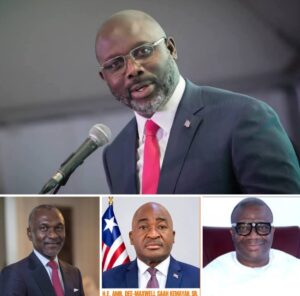
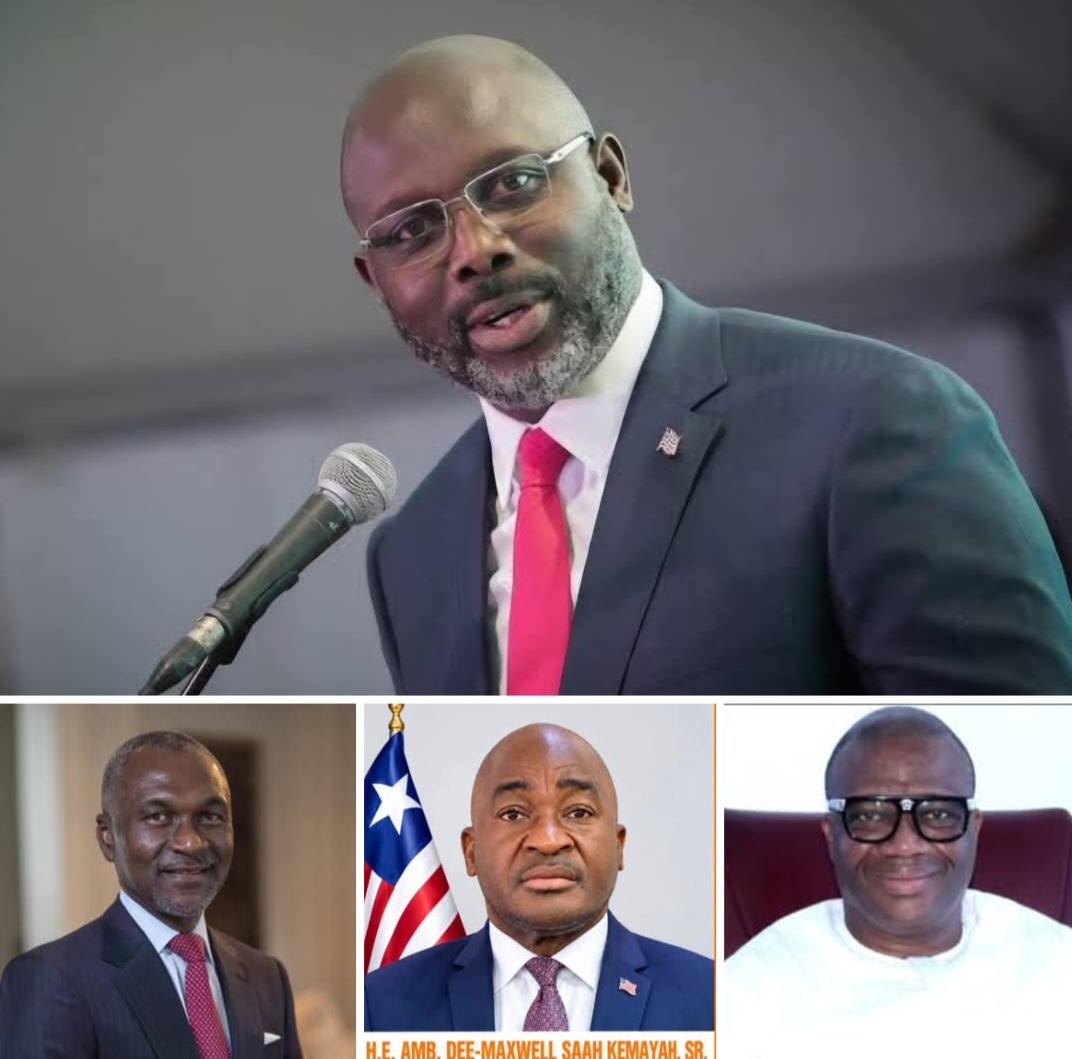
The September 27 roundtable is expected to bring together several prominent opposition figures, including former President George Manneh Weah, Political Leader of the Coalition for Democratic Change (CDC); Alexander Benedict Cummings, Political Leader of the Alternative National Congress (ANC); former Foreign Minister Ambassador Dee-Maxwell Saah Kemayah, Political Leader and Standard Bearer of the Movement for Economic Empowerment (MOVEE); host Simeon C. M. Freeman of the MPC; and Jonathan A. Mason, Political Leader of the Union of Liberian Democrats Party (ULDP).
The planned discussions are expected to move beyond general political consultations toward the development of practical structures capable of sustaining cooperation among participating parties.
The organizers say the objective is not limited to the formation of an electoral alliance.
Rather, the emerging process is being framed as an effort to create a broader platform through which opposition parties can collectively examine Liberia’s national challenges and develop ideas and practical approaches to addressing them.
The September 27 meeting is expected to focus particularly on the technical foundation of the cooperation, including organizational arrangements, decision-making structures, consultation mechanisms and other practical issues required to sustain collaboration among the participating parties.
The development comes against the backdrop of Liberia’s highly competitive multiparty political environment, where opposition parties have historically faced the challenge of translating individual political support bases into sustained institutional cooperation.
Liberia’s 2023 presidential election illustrated the narrow margins that can characterize national political contests.
In the first round, then-President George Weah of the CDC received 804,087 votes, or 43.83%, while Unity Party candidate Joseph Boakai received 796,961 votes, or 43.44%.
Alexander Cummings received 29,613 votes, or 1.61%, while Simeon Freeman received 13,205 votes, or 0.72%, according to the African Union’s election-observation report.
The National Elections Commission had 2,471,617 registered voters for the 2023 elections, with women accounting for 50.06% and men 49.94%.
The electoral infrastructure included 2,080 voting precincts and 5,890 polling places nationwide.
The presidential race proceeded to a runoff, where Boakai ultimately defeated Weah by a narrow margin.
Final results reported by Reuters put Boakai at 50.64% and Weah at 49.36%, illustrating the significance of voter mobilization and political coalition-building in Liberia’s presidential contests.
The current opposition consultations also take place within Liberia’s broader history of political alliances and realignment.
Since the end of the country’s civil wars in 2003, political competition has increasingly centered on elections, party alliances and coalition-building.
The 2023 election again demonstrated the fragmented nature of the political field, with numerous presidential candidates competing in the first round before the contest narrowed to two candidates in the runoff.
The African Union recorded 20 presidential candidates in the first-round results.
The narrow 2023 runoff further underscored the potential importance of cooperation among political parties whose individual first-round support may be relatively modest but whose combined constituencies can become consequential in a competitive national election.
However, the organizers of the current dialogue are emphasizing that the initiative should not be viewed exclusively through an electoral lens.
A major outcome of Sunday’s meeting is expected to be the live signing of a Joint Communiqué by the participating political leaders.
The document is expected to capture the understandings reached during the consultations and establish a basis for continued dialogue and cooperation among the participating opposition parties.
The Joint Technical Committee says the communiqué will provide a framework for subsequent consultations and help define the practical direction of the cooperation.
The initiative therefore represents an effort to move from informal political conversations toward a more structured process involving political leaders, technical representatives and agreed mechanisms for continued engagement.
The opposition leaders say their objective is to build the foundation for cooperation around Liberia’s national interests rather than simply pursue an electoral arrangement.
According to the organizing committee, the process is intended to encourage the opposition to rethink how national problems are identified, debated and addressed through collective ideas, constructive political engagement and practical solutions.
That approach could place issues such as economic management, employment, infrastructure, governance, institutional development, social services and national reconciliation at the center of future political discussions.
For Liberia, where the 2023 presidential runoff was decided by a relatively narrow margin, the ability of political parties to coordinate, consolidate policy positions and maintain organizational structures could become an important feature of the country’s evolving political landscape.
The September 27 roundtable is therefore expected to serve as another step in determining whether the current consultations can develop into a durable mechanism for political cooperation.


