
By: Julius Konton
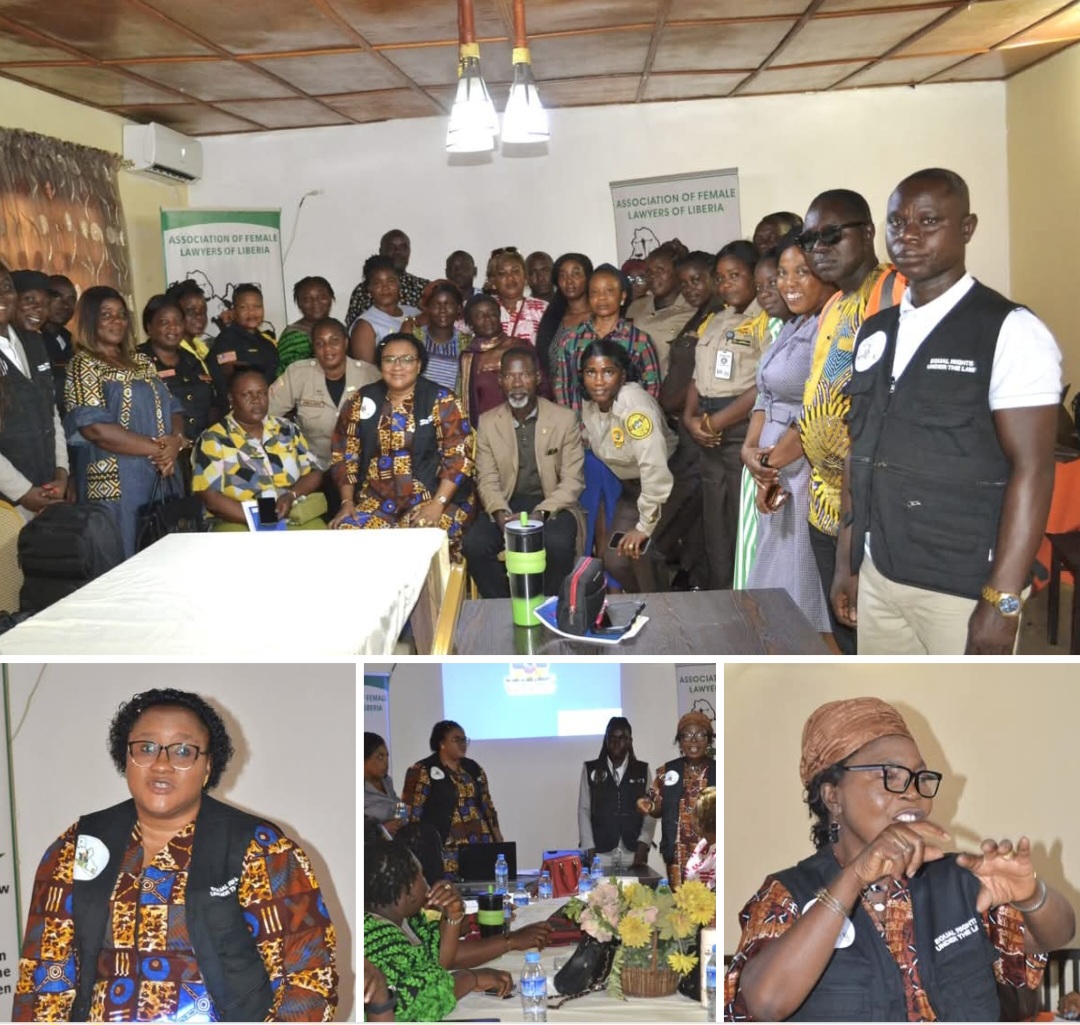
Liberia has taken another significant step in strengthening its response to sexual and gender-based violence (SGBV) with the launch of a high-level law enforcement training workshop organized by the Association of Female Lawyers of Liberia (AFELL) and its partners, amid growing national and international concern over rising abuse cases.
Speaking at the opening of the one-day workshop, AFELL Vice President Bowoulo Taylor Kelley, representing AFELL President Philomena Williams, described the training as a critical intervention aimed at equipping frontline security officers with the tools needed to respond effectively to domestic and gender-based violence.
“Your presence here reflects a commitment not only to law enforcement, but to justice, dignity, and the protection of vulnerable citizens,” Kelley told participants.
A Persistent National Crisis
Despite years of legislative reform and sustained advocacy, sexual and gender-based violence remains one of Liberia’s most pressing human rights challenges.
According to United Nations-backed assessments, approximately 60% of Liberian women aged 15–49 have experienced physical violence, while one in every ten women has survived sexual violence at some point in her life.
AFELL’s own case records further illustrate the scale of the problem.
The organization reports receiving more than 50 domestic violence cases weekly, ranging from sexual and physical abuse to economic deprivation and psychological coercion.
Experts note that many incidents remain unreported due to stigma, fear of retaliation, and limited trust in formal justice systems.
Gender-based violence, analysts warn, carries severe long-term consequences undermining public health, weakening economic productivity, perpetuating inequality, and destabilizing communities already recovering from years of conflict and economic fragility.
Training the First Responders
The workshop was organized under the Survivor-Centered Rehabilitation, Justice, and Prevention Project, implemented by AFELL in collaboration with the Community HealthCare Initiative (CHI) and the Liberia Association of Psychosocial Services (LAPS), with technical and financial support from the Danish Institute Against Torture (DIGNITY).
The program targets law enforcement officers who often serve as the first point of contact for survivors, emphasizing that domestic violence is rarely an isolated incident but rather a pattern of ongoing coercive control that requires specialized investigative and victim-sensitive responses.
Participants included officers from the Liberia National Police, the Liberia Immigration Service, and the Liberia Drug Enforcement Agency, reflecting a multi-agency approach to tackling the crisis.
From Law to Practice
Key sessions focused on translating Liberia’s legal frameworks particularly the Domestic Violence Act into effective action on the ground. Presentations addressed both technical and human-centered dimensions of law enforcement work:
Isaac George, who examined the application of the Domestic Violence Act in criminal investigation and litigation;
Sundaiway Amegashie, who led discussions on evidence gathering and preservation for successful prosecution;
Bendu Kpoto, who emphasized a human rights based approach in officer-survivor interactions.
Facilitators stressed that SGBV must be treated as a serious criminal offense, not a private or “women’s issue,” and urged officers to adopt proactive, multidisciplinary strategies that prioritize survivor safety, dignity, and long-term recovery.
A Call for Accountability and Prevention
As Liberia continues to strengthen its justice institutions, AFELL leaders underscored that the effectiveness of laws ultimately depends on those charged with enforcing them.
Decisions made by officers whether through action or inaction can profoundly shape the lives of survivors and the credibility of the justice system itself.
The workshop concluded with a renewed call for collaboration among law enforcement, legal professionals, health workers, and civil society, reinforcing a shared vision of a Liberia where justice prevails, perpetrators are held accountable, and survivors are protected and respected.
“Together,” organizers emphasized, “we can move from response to prevention and from silence to justice.”
