
By: Staff Writer
Liberia’s long-standing legal prohibitions on incest rarely debated in public and almost never tested at the highest levels of power have erupted into national and international focus following explosive allegations aired on the widely watched Spoon Talk show and amplified across social media platforms.
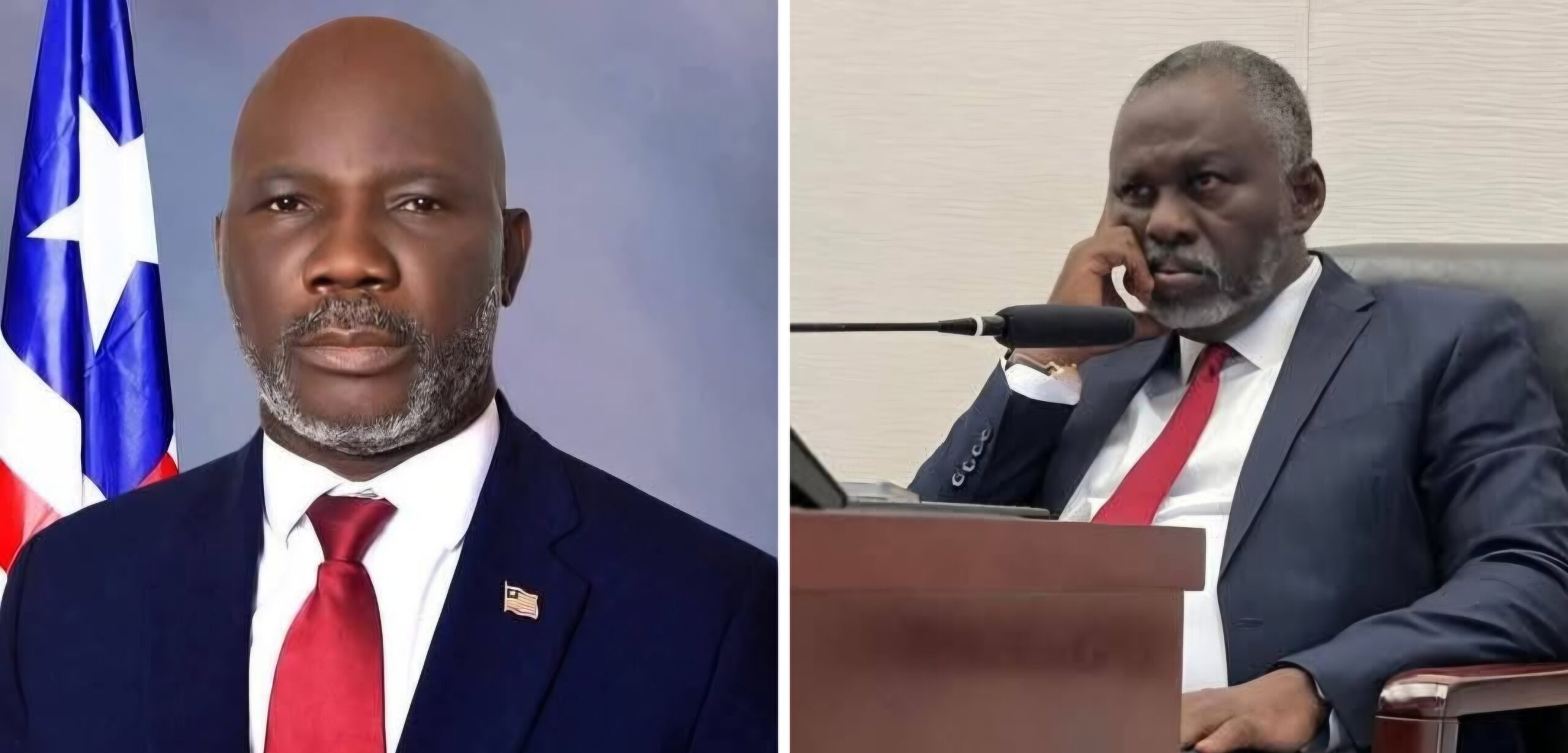
At the center of the storm is Speaker of the 55th National Legislature, Richard Nagbe Koon, who is facing allegations of a sexual or marital relationship with a woman he has reportedly acknowledged to be his biological sister.
While no court has established wrongdoing, the mere convergence of such claims with Liberia’s clear statutory prohibitions has triggered one of the most controversial governance debates in the country’s post-war history.
What might ordinarily be dismissed as scandal or private dispute has instead morphed into a searching national conversation about law enforcement, elite accountability, institutional integrity, and whether political power distorts justice in Liberia.
What the Law Says: Little Ambiguity, Serious Consequences
Liberia’s Domestic Relations Law of 1973 is unequivocal.
Any marriage between biological siblings whether of whole or half blood is declared void ab initio, meaning it is legally null from inception and incapable of producing any lawful rights or recognition.
More consequentially, Liberia’s Penal Law, Chapter 14, Section 14.70, classifies incest as a felony of the third degree, defining it as sexual relations between persons closely related by blood, including brothers and sisters.
Conviction may result in imprisonment, fines, or both, depending on aggravating factors and prosecutorial discretion.
Legal experts note that these provisions are not cultural anomalies.
Liberia’s incest laws draw heavily from Anglo-American legal traditions, reinforced by international human rights and child-protection frameworks that emphasize social harm, abuse prevention, and psychological welfare.
Comparable criminal prohibitions exist across West Africa, Europe, and North America, where incest remains among the most socially and legally condemned offenses.
When the Allegations Reach the Apex of Power
What has elevated this case from sensational controversy to constitutional significance is the office involved.
The Speaker of the House of Representatives is constitutionally third in the line of state authority, wielding immense influence over legislation, oversight, and national political direction.
The controversy intensified after Speaker Koon reportedly acknowledged the biological relationship with the accuser, an acknowledgment that, while not an admission of incest, has narrowed the legal questions and sharpened ethical scrutiny.
Margibi County Senator Nathaniel McGill, weighing in on the matter, underscored that under Liberian law, acknowledgment of biological kinship combined with allegations of a sexual or marital relationship automatically raises potential criminal implications under Section 14.70.
The issue, he argued, is no longer rumor but one demanding formal institutional attention.
Presumption of Innocence vs. the Burden of Public Office
Liberia’s Constitution guarantees presumption of innocence to all citizens, including its most powerful officials.
No allegation, however inflammatory, equates to guilt without due process.
Yet governance experts argue that public office carries obligations beyond the courtroom.
Transparency International’s governance studies across Africa consistently show that public trust in legislatures declines sharply when ethical allegations against leadership remain unresolved or are handled opaquely.
Liberia’s own history offers sobering lessons.
From wartime impunity to post-conflict corruption scandals, delayed investigations and elite silence have repeatedly undermined confidence in state institutions.
The result has often been public cynicism, weakened rule of law, and international reputational damage.
In this context, critics argue that silence or procedural delay risks transforming the presumption of innocence into a perception of elite immunity.
Calls for Institutional Action and Precedent
Pressure is mounting on the House of Representatives to respond institutionally rather than politically.
Senator McGill and other voices have called for the creation of a special investigative panel or the activation of a properly constituted Ethics and Compliance Committee to establish facts and recommend action.
Such steps would not be unprecedented.
In 2019, Liberia’s Legislature investigated bribery allegations involving lawmakers during a high-profile anti-corruption probe.
Across the continent, parliaments in Ghana, Kenya, and South Africa have initiated inquiries into senior officials not as declarations of guilt, but as safeguards for institutional credibility.
International best practice increasingly holds that investigation is not punishment; it is governance.
A Broader Test for Liberia’s Rule of Law
Beyond the personalities involved, this controversy has become a stress test for Liberia’s democracy.
The central question confronting the nation is stark:
Do Liberia’s laws apply equally to all citizens, or does political power create an informal shield against scrutiny?
For the Speaker himself, analysts suggest that proactive transparency may be the most effective path to preserving both personal reputation and legislative integrity.
Clear, verifiable disclosure within lawful investigative frameworks could help stem speculation and restore public confidence.
As Liberia continues its fragile post-conflict journey toward stronger institutions and international credibility, how this case is handled may well define a generation’s understanding of accountability, ethics, and the supremacy of the law.
Whether this moment becomes a footnote of scandal or a landmark affirmation of equal justice will depend not on rhetoric, but on action.
