




By: Julius Konton
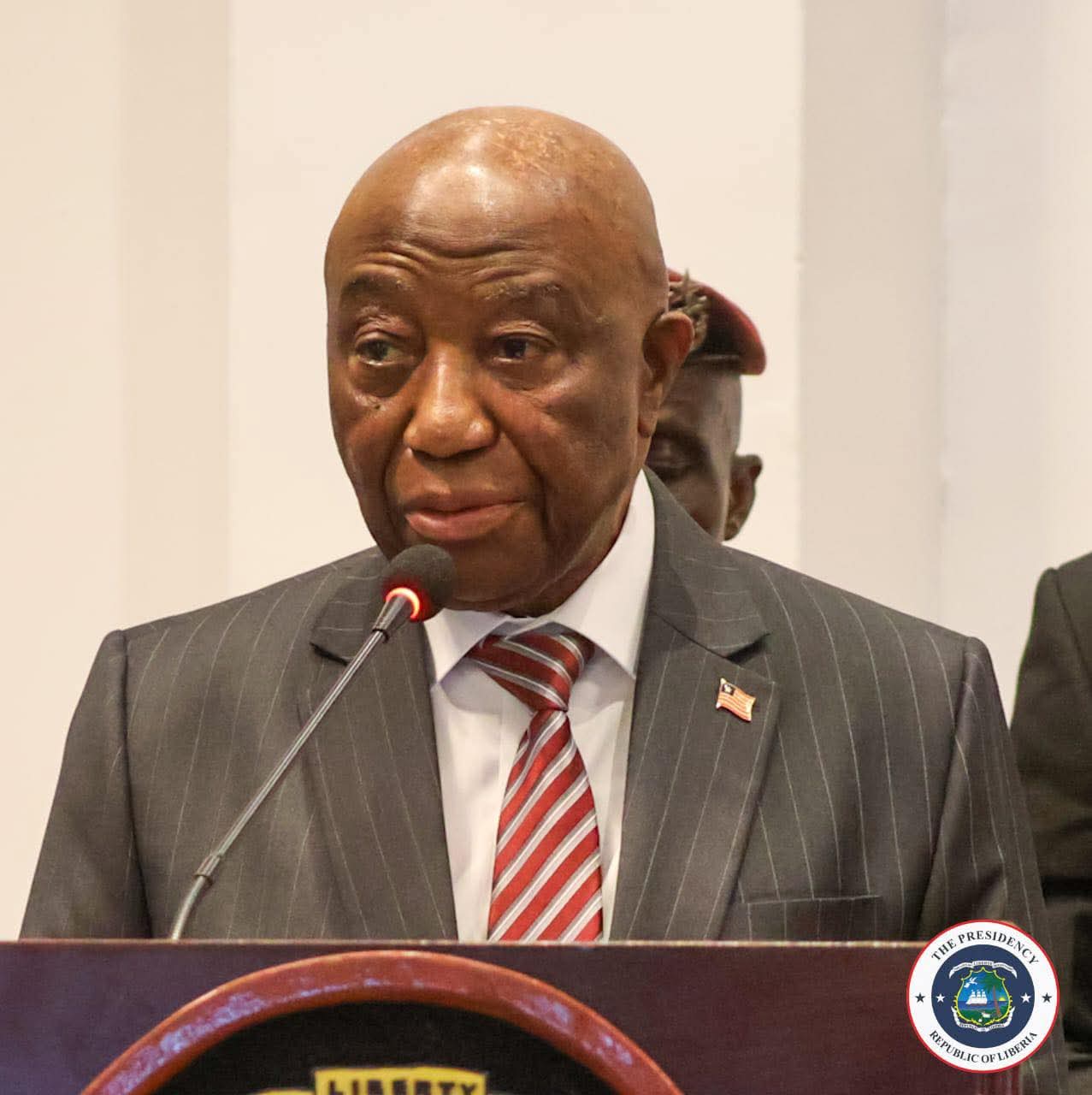
In an impassioned address to the Liberian people, President Joseph Nyuma Boakai offered both reassurance and clarity about the recent tensions along Liberia’s border with Guinea.
The situation, which centers around the Sorlumba area in Foyah District, Lofa County, has sparked significant concern among Liberians, especially those living in border communities.
The crisis has not only raised alarms among citizens but has also captured regional and international attention, particularly for its potential to escalate into broader conflict in a region already fraught with historical tensions.
“The peace and security of our nation remain my top priorities,” President Boakai affirmed, emphasizing Liberia’s commitment to managing the situation responsibly.
“Our pursuit of a peaceful resolution is not a sign of weakness, but rather a demonstration of strength,” he stated, addressing the widespread fears that have gripped both national and international audiences.
A History of Border Disputes: The Liberia-Guinea Struggle
To understand the current tensions, one must look at the complicated history of Liberia and Guinea.
These two countries share a long and often contested border, where issues of territorial claims, economic interests, and ethnic ties have fueled disputes for decades.
Despite efforts at cooperation, such as the creation of the Mano River Union (MRU) in the early 1970s, which includes Liberia, Guinea, and Sierra Leone, historical grievances have never fully been resolved.
In 2000, for example, a series of skirmishes broke out along the border, exacerbating regional instability.
The current flare-up near Sorlumba may appear as a continuation of this historical struggle, but it also reflects broader regional dynamics, including the complex relations between local ethnic groups and their cross-border affiliations.
The Geopolitical Implications: A Fragile Peace at Stake
Recent developments in the Sorlumba area have escalated diplomatic efforts, with Liberian authorities moving swiftly to prevent the situation from spiraling out of control.
The response from Guinea has been notably restrained, with the government instructing its forces to pull back to their previous positions along the border a gesture that marks a critical step in de-escalating tensions.
While Guinea’s military withdrawal is a positive sign, experts warn that the peace remains fragile.
Liberia’s government has been in close consultation with the Republic of Sierra Leone to coordinate efforts, and regional organizations like the Economic Community of West African States (ECOWAS) have shown support for Liberia’s peaceful approach.
The intervention of international actors has been critical, with organizations such as the African Union (AU) offering diplomatic backing and urging restraint on both sides.
However, despite these positive signs, the border remains a site of tension. In fact, the region has seen periodic confrontations over land use, movement restrictions, and alleged border violations.
This underscores the need for a comprehensive and long-term solution to prevent future flare-ups.
Diplomacy in Action: Liberia’s Regional Leadership and International Support
The international response to the crisis has been overwhelmingly supportive of Liberia’s diplomatic efforts.
Leaders from across Africa and beyond have rallied behind Liberia’s stance for peaceful resolution, reinforcing the country’s role as a pillar of peace in the region.
“We are encouraged by the international solidarity that has emerged,” President Boakai noted, emphasizing that Liberia’s position in the global community remains strong.
The government’s engagement with ECOWAS, the African Union, and other international actors demonstrates Liberia’s commitment to resolving disputes through dialogue rather than force.
Liberia has long been a champion of peace in West Africa.
From its pioneering role in establishing the ECOWAS Monitoring Group (ECOMOG) in the 1990s to its participation in ongoing peacekeeping missions, Liberia’s dedication to peace has shaped its international identity.
Yet, the current crisis on its borders tests the nation’s resolve to continue this legacy.
The Role of Local Communities: A Call for Unity and Calm
In his address, President Boakai also appealed directly to Liberian citizens, urging calm and unity, particularly in the border regions.
“I call upon all citizens, especially those residing in border communities, to remain calm and law-abiding,” the President stated, emphasizing the need for restraint and the importance of not spreading rumors that could inflame tensions further.
This message resonates strongly, as local communities along the Liberia–Guinea border often share familial, economic, and cultural ties that transcend national boundaries.
For many, the issue is personal, and maintaining peace is essential to their livelihoods.
The President’s call for solidarity among Liberians comes at a critical juncture when public sentiment could either foster reconciliation or escalate fears and divisions.
The Road Ahead: A Fragile Peace and Regional Cooperation
While the diplomatic steps taken so far have been encouraging, the future of peace along the Liberia–Guinea border remains uncertain.
The withdrawal of Guinean forces is a step in the right direction, but the long-term success of this de-escalation depends on continued dialogue, trust-building, and regional cooperation.
As the Mano River Union seeks to play a more active role, it must also address deeper issues related to border governance, resource sharing, and community engagement.
For now, Liberia holds firm to its commitment to peace—a message reinforced by President Boakai’s impassioned speech.
“We will continue to rely on diplomacy, dialogue, and the mechanisms of regional cooperation to ensure that this issue is addressed responsibly and without conflict,” the President concluded.
As Liberia navigates this delicate moment in its history, the world watches closely.
The outcome of this crisis will not only shape Liberia’s future but also influence the stability of the West African region as a whole.
Statistics and Data on Liberia-Guinea Relations
Historical Border Disputes:
The border between Liberia and Guinea spans over 500 kilometers, with several disputed regions, including areas in Lofa County and the Nimba Mountains.
Economic Impact: Cross-border trade accounts for nearly 8% of Liberia’s total GDP, with agricultural goods and minerals being the primary commodities exchanged with Guinea.
Security and Military Presence: Both Liberia and Guinea maintain small, semi-permanent military outposts along their shared border, with occasional flare-ups leading to confrontations.
A Nation’s Test of Unity
As Liberia seeks to maintain its reputation as a beacon of peace, the current tensions at the Liberia–Guinea border represent both a challenge and an opportunity.
The government’s ongoing diplomatic efforts, along with the support of the international community, offer hope for a peaceful resolution.
Yet, the road to lasting peace will require continued dialogue, mutual respect, and above all, the resilience of the Liberian people to overcome the divisions of the past.


