



By : Julius N. Konton
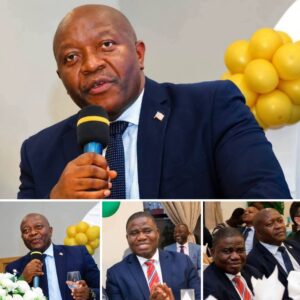
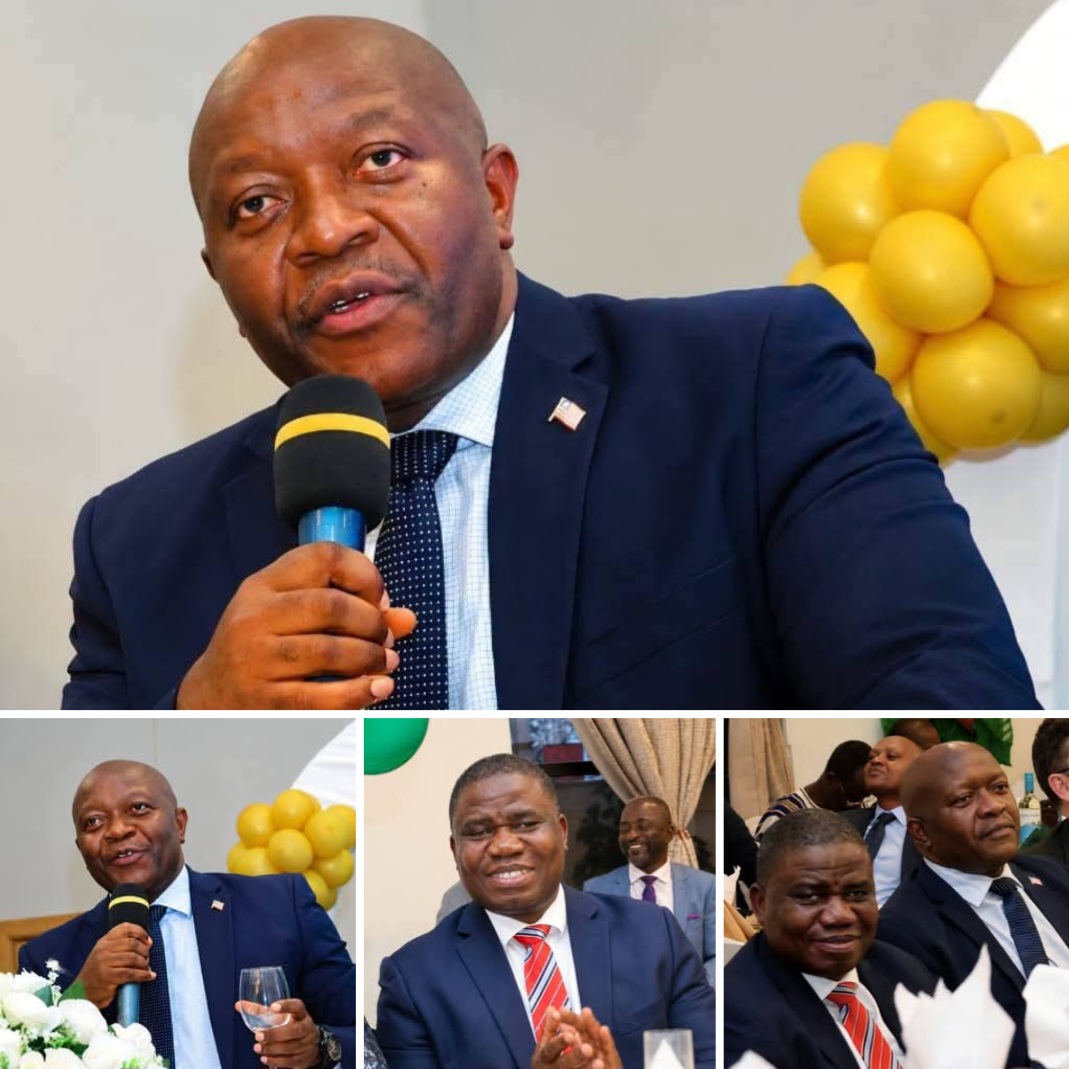
Liberia’s Minister of Finance and Development Planning, Augustine Kpehe Ngafuan, has paid an emotional tribute to Deputy Minister for Economic Management Dehpue Y. Zuo, describing him as one of the country’s finest economic minds as he prepares to leave national government for a senior assignment with the Economic Community of West African States (ECOWAS).
In farewell remarks delivered in honor of Zuo, Minister Ngafuan portrayed his longtime colleague as a public servant whose career has stretched from student leadership and scholarship mobilization to international economic diplomacy, multilateral negotiations and Liberia’s ongoing macroeconomic reform program.
Ngafuan said Zuo will depart for Abuja, Nigeria, to assume responsibilities as Commissioner for Economic Affairs and Agriculture at the ECOWAS Commission, an assignment that places him at the center of some of West Africa’s most consequential economic, agricultural, trade and regional-integration issues.
The ECOWAS Department of Economic Affairs and Agriculture brings together portfolios covering trade, taxation and customs, private-sector development, free movement, research and statistics, multilateral surveillance, agriculture and rural development, and environmental policy.
“Go, DZ. Go, Deep Dive. Go, Gentle Giant. Go and make Liberia proud. Go and raise the Liberian flag high,” Ngafuan said in a deeply personal conclusion to his tribute.
From ‘DZ’ to ‘Deep Dive’ and ‘Gentle Giant’
Ngafuan said Zuo is affectionately known within professional and political circles by several names: “DZ,” “Deep Dive” and “Gentle Giant”: each reflecting a different aspect of his personality and professional character.
“Deep Dive,” he explained, reflects Zuo’s approach to policy and public administration.
“He does not merely read a brief; he interrogates it,” Ngafuan said. “He does not merely attend a meeting; he comes prepared.
He looks beneath the surface, asks the difficult questions, studies the numbers, understands the implications and searches for the best path forward.”
The minister described Zuo as intellectually rigorous but personally humble, emphasizing that his ability to combine technical competence with humility has distinguished him throughout his career.
Ngafuan also highlighted Zuo’s religious faith, describing him as a man who understands public service as a responsibility requiring not only professional competence and hard work, but also prayer and personal conviction.
Zuo’s relationship with Ngafuan, according to the minister, predates their years in government.
The two first worked together during the late 1990s, when Ngafuan served as President of the University of Liberia Student Union (ULSU). Ngafuan recalled appointing Zuo to lead the ULSU Scholarship Committee.
The assignment became an early demonstration of Zuo’s capacity to mobilize resources and deliver results.
According to Ngafuan, the scholarship initiative helped increase the number of beneficiaries from approximately 475 students to nearly 1,500 an increase of more than 1,000 students, or roughly 216 percent.
For Ngafuan, those figures represented far more than an administrative achievement.
“They were young Liberians whose hopes were preserved; students whose education was made possible; families whose burdens were eased; and future leaders whose dreams were kept alive,” he said.
The episode, he suggested, foreshadowed the career Zuo would later build around mobilizing and managing financial and development resources at the national and international levels.
Zuo’s public-sector career later took him into Liberia’s Ministry of Foreign Affairs.
Ngafuan recalled that in 2013, while serving as Minister of Foreign Affairs and Dean of the Liberian Cabinet during President Ellen Johnson Sirleaf’s second term, he brought Zuo into the ministry as Assistant Minister responsible for international cooperation and economic integration.
The position exposed Zuo to some of the country’s most important diplomatic and economic engagements.
Ngafuan recalled traveling with him to meetings involving ECOWAS, the African Union and the United Nations, among other international institutions.
Those engagements, he said, demonstrated Zuo’s ability to navigate complex negotiations, master technical issues and represent Liberia with professionalism.
Zuo subsequently rose to become Deputy Minister of Foreign Affairs for International Cooperation and Economic Cooperation, an experience that provided a foundation for his eventual transition into economic management and regional diplomacy.
When Ngafuan returned to the Ministry of Finance and Development Planning in September 2024, he found Zuo serving as Deputy Minister for Economic Management.
The reunion came at a particularly important moment for Liberia, as the government was implementing an ambitious economic reform program supported by international financial institutions and development partners.
Ngafuan described Zuo’s role as one of the most demanding in Liberia’s economic-management architecture, requiring coordination across government, development partners, financial institutions and international organizations.
Among his responsibilities was supporting Liberia’s engagement with the International Monetary Fund (IMF) under the 40-month Extended Credit Facility (ECF) arrangement approved in September 2024.
The IMF’s ECF arrangement provides Liberia with access to SDR155 million, equivalent to about US$210 million, to support reforms aimed at restoring macroeconomic stability, improving debt sustainability, strengthening financial-sector stability and advancing governance reforms.
By April 2026, the IMF reported that Liberia had received approximately US$106 million in total ECF disbursements following completion of the third review.
Ngafuan also credited Zuo with helping Liberia secure significant development financing, including support for the country’s engagement with the IMF’s Resilience and Sustainability Facility (RSF).
In April 2026, the IMF Executive Board approved a 21-month RSF arrangement worth SDR193.8 million approximately US$266 million, equivalent to 75 percent of Liberia’s IMF quota.
The facility is designed to strengthen Liberia’s resilience to climate-related shocks, improve economic buffers and support reforms linked to climate adaptation and pandemic preparedness.
The IMF has subsequently reported continued progress in Liberia’s economic reform program.
In June 2026, IMF staff projected 5.5 percent real GDP growth for Liberia in 2026, supported largely by strong mining activity, particularly iron ore, as well as manufacturing and construction.
In January 2026, the IMF estimated that Liberia’s economy grew by 5.1 percent in 2025, compared with 4.0 percent in 2024. Inflation had also declined substantially, with average inflation falling to 4.4 percent in the fourth quarter of 2025 from 12.5 percent in the first quarter.
These figures provide the broader economic context in which Zuo served as one of Liberia’s senior economic managers.
Ngafuan described Zuo as a central figure in Liberia’s engagement with international development partners, saying his portfolio extended across aid coordination, debt management, financial-sector issues, economic policy and relations with multilateral institutions.
“He has managed aid. He has managed debt. He helps manage our relationship with the Central Bank of Liberia and the banking sector,” Ngafuan said.
The minister went further, characterizing Zuo as, in effect, “the foreign minister of the Ministry of Finance and Development Planning” because of his role in carrying Liberia’s economic priorities into negotiations and policy discussions with international partners.
His work involved institutions including the World Bank, African Development Bank, European Union and IMF, as Liberia sought to mobilize resources for development while maintaining fiscal discipline and macroeconomic stability.
Zuo’s move to ECOWAS comes at a time when West Africa faces major challenges involving food security, agricultural productivity, trade integration, climate vulnerability, youth employment, private-sector development and regional economic resilience.
The ECOWAS economic and agriculture portfolio covers a broad regional policy architecture, including trade, customs, taxation, private-sector development, agriculture, rural development, environmental policy, research and statistics and multilateral economic surveillance.
The assignment therefore places Zuo in a position where his experience in national economic management, international cooperation, development financing and regional diplomacy could directly inform policies affecting millions of West Africans.
For Liberia, Ngafuan said, the appointment should be viewed not as the loss of a public servant but as an opportunity for the country to contribute leadership and expertise to the wider West African project.
“Liberia’s gain at ECOWAS is not our loss,” Ngafuan said, describing the appointment as recognition of the quality of Liberian leadership and the contribution Liberians can make beyond their national borders.
Despite his pride in Zuo’s appointment, Ngafuan acknowledged that his departure would leave a significant gap at the Ministry of Finance.
He compared Zuo to a “battlefront commander” in Liberia’s continuing struggle against poverty, unemployment, economic vulnerability, infrastructure deficits and other structural development challenges.
The metaphor reflects the scale of Liberia’s economic-development agenda.
Although the economy has recorded stronger growth and improved macroeconomic stability, the country continues to face structural constraints, including limited competitiveness, financing needs, infrastructure gaps, financial-sector vulnerabilities and governance challenges.
The IMF has emphasized the need for Liberia to strengthen domestic revenue mobilization, improve public infrastructure, strengthen the financial regulatory framework, restructure weak banks and address governance weaknesses.
Against that backdrop, Ngafuan said Zuo’s departure should reinforce not diminish the responsibility of the ministry’s remaining leadership and technical staff to continue implementing reforms.
Perhaps the most emotional portion of Ngafuan’s remarks came when he moved beyond policy and official titles to recount decades of friendship.
He remembered the period when he and Zuo, alongside other young Liberians, lived in the Sinkor area of Monrovia and navigated the uncertainties of Liberia’s post-war period.
He recalled their years in student leadership, their service at the Ministry of Foreign Affairs, the Ebola crisis and their subsequent work together at the Ministry of Finance.
During the Ebola outbreak, Ngafuan said, Zuo played a dependable role as Liberia engaged international partners for assistance and solidarity during one of the country’s most difficult public-health emergencies.
He also recalled repeatedly placing Zuo under intense pressure while working to meet demanding government deadlines.
“I have put you many times in my pressure cooker,” Ngafuan said. “But never once did you boil; never once did you buckle; never once did you retreat.”
The remark drew on the minister’s personal knowledge of Zuo’s temperament and resilience, portraying him as a professional who could withstand pressure without losing focus.
Ngafuan also extended his appreciation to Zuo’s wife and children, acknowledging the sacrifices families make when one of their members commits to demanding public service.
He cited long working hours, international travel, missed family moments and the mental pressure associated with managing national economic responsibilities.
“This appointment is not only a tribute to his professional ability; it is also a tribute to the family that has stood with him,” Ngafuan said.
Zuo’s departure represents another chapter in Liberia’s longstanding engagement with regional integration.
Since ECOWAS was established in 1975, the organization has evolved from an economic cooperation framework into one of West Africa’s principal institutions for regional integration, trade, economic coordination and collective development.
The ECOWAS Commission today operates across areas ranging from economic affairs and agriculture to infrastructure, energy, digitalization, human development and peace and security.
For Liberia, the appointment of a senior economic official to a regional leadership role provides an opportunity to project the country’s policy experience and expertise into a broader West African setting.
For Zuo, it marks the transition from managing economic policy within one of the region’s smallest economies to helping shape policies affecting the wider ECOWAS community.
‘Go and Make Liberia Proud’
As his farewell message drew to a close, Ngafuan returned to the personal bond that has defined his relationship with Zuo for decades.
He said the outgoing deputy minister had earned the opportunity and urged him to take Liberia’s values, experience and aspirations with him to Abuja.
“Go with our prayers. Go with our confidence. Go with our appreciation,” Ngafuan said.
“Your Ministry family is proud of you, your country is proud of you, and your friends are proud of you.”
He concluded with a simple charge:
“Go, DZ. Go, Deep Dive. Go, Gentle Giant. Go and make Liberia proud. Go and raise the Liberian flag high.”
For a public servant whose career began with helping university students secure scholarships and has since taken him through foreign affairs, international negotiations, economic management and multilateral development finance, the next assignment represents a significant elevation.
But, as Ngafuan’s farewell made clear, it is also a continuation of a much longer journey, one that began in Liberia and now moves onto the broader West African stage.


