
By: Julius Konton
Liberia’s push to transform its energy sector is gathering momentum, with electricity access rising from 33% in 2025 to 38% in 2026, signaling steady though still challenging progress toward the government’s ambitious 75% national access target by 2030.
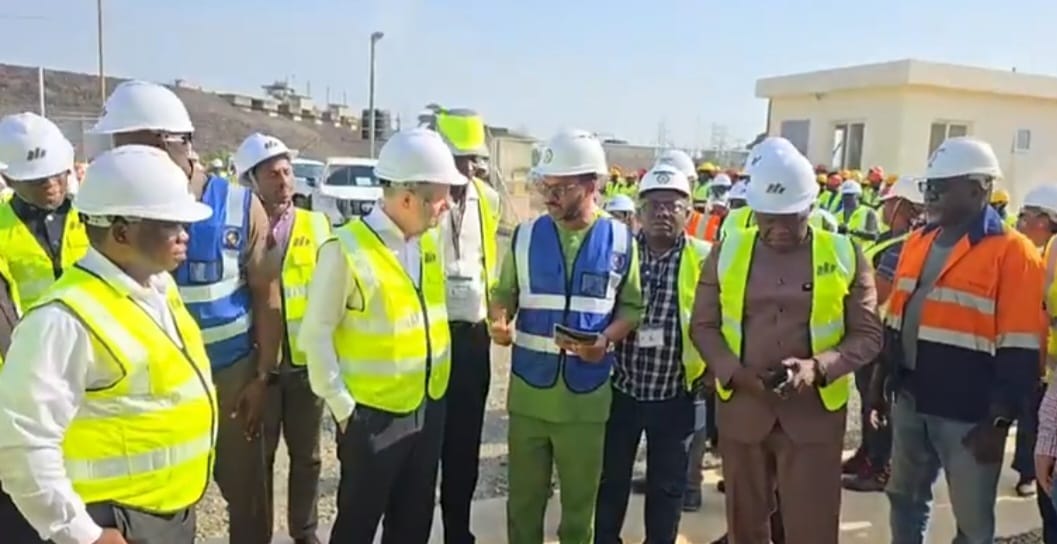
The update came as Finance and Development Planning Minister Augustine Kpehe Ngafuan praised the Liberia Electricity Corporation (LEC) for what he described as “visible and measurable progress” on ongoing power infrastructure projects during a high-level visit by a World Bank delegation.
From Vision to Reality: Energy Projects Move into Commissioning Phase
Minister Ngafuan highlighted the symbolic and practical significance of the transition from groundbreaking to commissioning, referencing his participation in the project’s launch in October 2024.
“It is good to break ground, but it is better to commission,” he stated, emphasizing that the journey from planning to execution reflects “strategies translated into action and outcomes now visible.”
The commissioning phase of key energy facilities launched in mid-March 2026 is being hailed as a critical milestone in Liberia’s infrastructure recovery after decades of post-war reconstruction.
Energy as the Engine of Economic Growth
Ngafuan underscored that electricity remains the single most critical constraint to Liberia’s economic expansion, warning that without reliable power, broader development interventions risk being ineffective.
“If we do not address the key constraints to growth and jobs, we will only scratch the surface,” he said.
Liberia, a nation of over 5.3 million people, has historically struggled with one of the lowest electricity access rates in West Africa. Following years of civil conflict (1989–2003), the country’s power infrastructure was almost entirely destroyed, leaving Monrovia dependent on expensive diesel generation for over a decade.
Government Signals Urgency in ‘Catch-Up’ Development Drive
Acknowledging the urgency of development, Ngafuan stressed that the government is accelerating reforms under President Joseph Nyuma Boakai, who has prioritized infrastructure, energy, and job creation.
“We are in a catch-up phase and in catch-up, we must sprint,” Ngafuan declared, reflecting growing public pressure for faster service delivery.
Despite progress, officials admit Liberia still faces a long road to universal access, particularly in rural areas where electrification rates remain below 15%.
World Bank Deepens Commitment to Liberia’s Power Sector
World Bank Managing Director Paschal Donohoe, who toured the solar farm and Mount Coffee hydropower facilities, described the energy initiative as a “frontier project driven by partnership and local expertise.”
He praised the increasing role of skilled Liberian engineers and technicians in executing complex infrastructure projects.
“What I have seen here gives me confidence that Liberia has the capacity to deliver large-scale development projects,” Donohoe said.
The World Bank has committed hundreds of millions of dollars to Liberia’s energy, transport, and education sectors over the past decade, making it one of the country’s largest development partners.
Expanding the Energy Mix: Hydro, Solar, and Beyond
Deputy Minister of Mines and Energy Charles Umehai revealed that Liberia is seeking to diversify its energy sources beyond hydropower.
Key priorities include:
Solar energy expansion
Biomass development
Untapped river-based hydropower potential
“Liberia has enormous energy potential we should not limit ourselves,” Umehai said, calling for increased investment and innovation.
Major Projects Driving Capacity Growth
According to LEC Deputy Managing Director Thomas Gonkerwon, Liberia’s energy strategy is anchored in large-scale infrastructure projects across the value chain.
Key Developments Include:
Mount Coffee Hydropower Plant rehabilitation, including repairs to Unit 1 after five years offline
Planned Mount Coffee expansion to boost renewable capacity to 130 MW hybrid output
A 20 MW solar farm already entering commissioning phase
Planned additional 20 MW solar + 20 MWh battery storage in Phase II
Proposed 200 MW utility-scale solar projects in Buchanan (Grand Bassa County) and Yekepa (Nimba County)
Development of the St. Paul II Hydropower Project, structured as a Public-Private Partnership (PPP)
He said that these initiatives form part of Liberia’s broader participation in the “Mission 300” electrification agenda, aimed at rapidly expanding energy access across Africa.
Strengthening Infrastructure and Institutions
Beyond generation, the government is investing heavily in:
Transmission and distribution networks
Loss reduction systems
Utility financial sustainability programs
World Bank-supported initiatives such as:
Renewable energy training programs
Power sector reform and liquidity improvement projects are also helping to build institutional capacity within LEC.
Education and Energy: Parallel Investments in Development
Ngafuan also highlighted the World Bank-funded model high school in Kakata, Margibi County, recently commissioned as part of broader human capital development efforts.
He praised Education Minister Dr. Jarso Jallah and international partners for translating investments into tangible outcomes.
Strategic Partnerships Expand: MCC Joins Energy Push
In a significant development, Liberia has attracted the Millennium Challenge Corporation (MCC) as a new partner in the energy sector, signaling growing international confidence in the country’s reform agenda.
Minisyer Ngafuan through yhe government pledged stronger coordination among partners including the World Bank and MCC to avoid duplication and accelerate results.
A Long Road Ahead, But Clear Progress
Despite persistent challenges, the finance minister maintain that Liberia is firmly on a path toward energy security.
“Where we were yesterday and where we are today are two different places,” Ngafuan noted. “We have miles to go but we are moving forward.”
With increasing investments, expanding partnerships, and a renewed political commitment, Liberia’s energy sector is emerging as a cornerstone of its broader economic transformation strategy one that could reshape the country’s development trajectory over the next decade.
