
By: Julius Konton
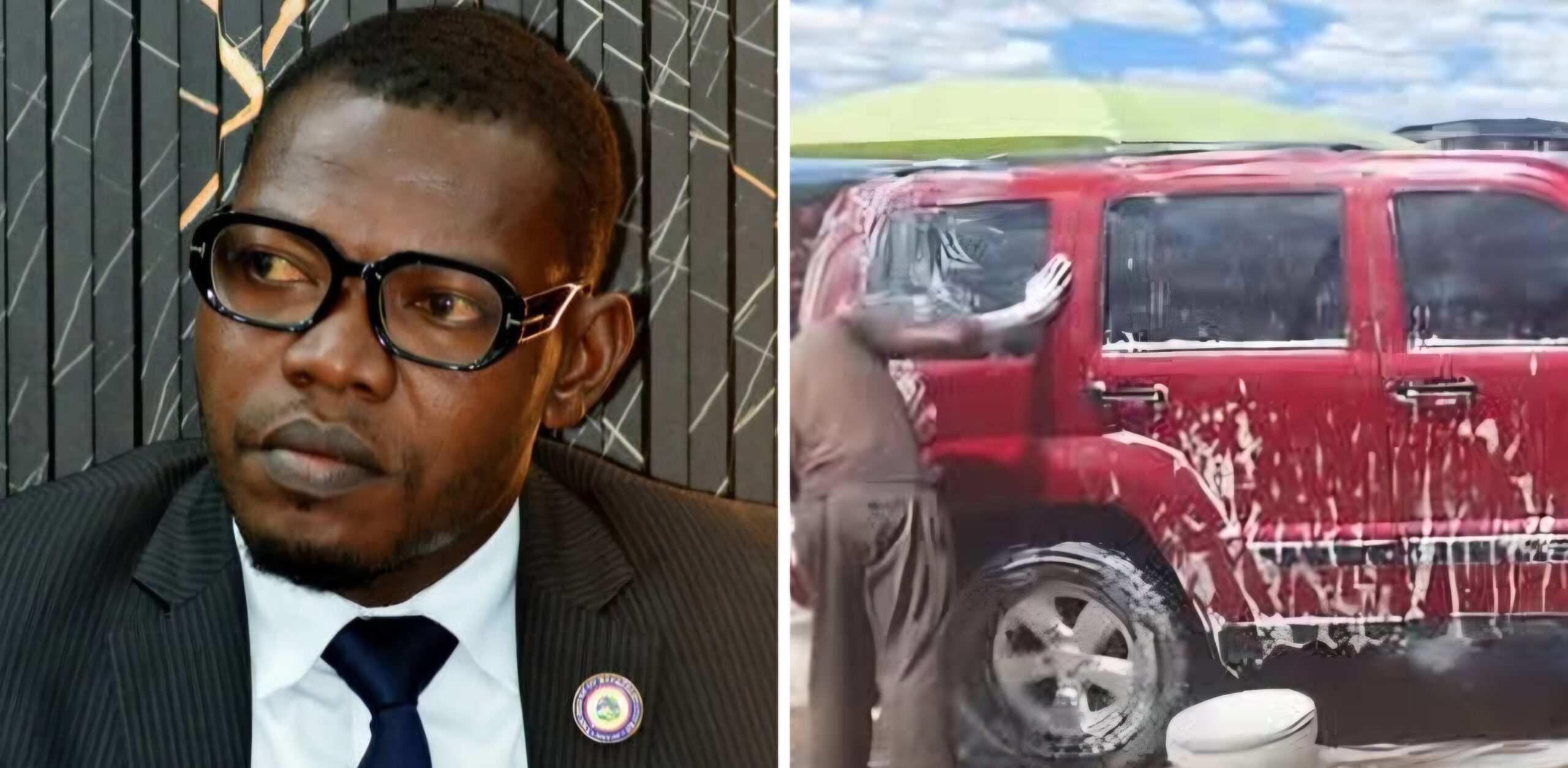
The Director of Press and Public Affairs at the House of Representatives, Robert Haynes, has issued a strong public warning against the growing practice of washing vehicles along major streets and highways in Liberia’s urban centers, describing it as a silent but significant contributor to the country’s deteriorating road infrastructure.
In a social media commentary that has sparked widespread public discussion, Haynes said the convenience of roadside car washing comes at a high long-term cost to taxpayers and road users alike.
“I strongly believe that washing cars on our main roads is not a good practice,” Haynes stated.
Infrastructure Damage and Rising Maintenance Costs
According to Haynes, the continuous flow of water from roadside car washing seeps into asphalt pavements, gradually weakening road bases and accelerating surface failure particularly during Liberia’s long and intense rainy season, which typically spans from April to October.
Liberia has invested hundreds of millions of US dollars in road rehabilitation over the past two decades, much of it funded through international partners such as the World Bank, the African Development Bank, and the European Union.
Despite these investments, the Ministry of Public Works estimates that more than 40 percent of paved urban roads require periodic maintenance due to premature wear, poor drainage, and overexposure to water.
“Water is one of the biggest enemies of asphalt roads,” Haynes explained.
“When it consistently penetrates the surface, it weakens the structure and leads to potholes far earlier than expected.”
Public Safety Concerns on Busy Roads
Beyond infrastructure damage, Haynes warned that roadside car washing presents serious road safety hazards.
Wet and soapy surfaces, particularly on heavily trafficked corridors, increase the risk of skidding for vehicles and motorcycles, a major concern in cities like Monrovia, where motorcycles account for an estimated 60 percent of daily commuter transport.
“Wet and soapy roads can cause vehicles and motorcycles to skid, putting both drivers and pedestrians at risk,” he emphasized.
Road safety data from Liberia’s transport authorities indicate that slippery road conditions contribute significantly to urban traffic accidents, especially during rainfall.
Drainage, Public Health, and Environmental Impact
Haynes also linked the practice to poor drainage and public health challenges.
Stagnant water created by uncontrolled roadside washing often clogs drains, accelerates road decay, and creates breeding grounds for mosquitoes exacerbating malaria, which remains one of Liberia’s leading public health concerns.
“Our roads are public assets built with taxpayers’ money,” Haynes said. “Maintaining them should be a shared responsibility.”
Balancing Livelihoods and Urban Order
While firm in his criticism, Haynes clarified that he does not oppose car washing as a livelihood.
Youth unemployment in Liberia remains high, with national estimates hovering around 30 to 35 percent, making informal jobs such as car washing an important source of income for many young people.
However, he urged authorities to establish designated car wash areas where water use can be properly managed and where the activity does not undermine road quality or public safety.
“Car washing should be done in appropriate locations, not on main roads where it causes long-term damage,” he said.
Call for Better Habits and Policy Action
As Liberia continues efforts to modernize its transport network and protect costly infrastructure investments, Haynes argued that public behavior must evolve alongside government action.
“If Liberia wants better roads, we must also adopt better habits,” he concluded.
“Protecting our infrastructure starts with simple actions like where we choose to wash our cars.”
His remarks add to a growing national conversation about urban management, civic responsibility, and the sustainability of Liberia’s post-war infrastructure gains.
