



By: Julius Konton
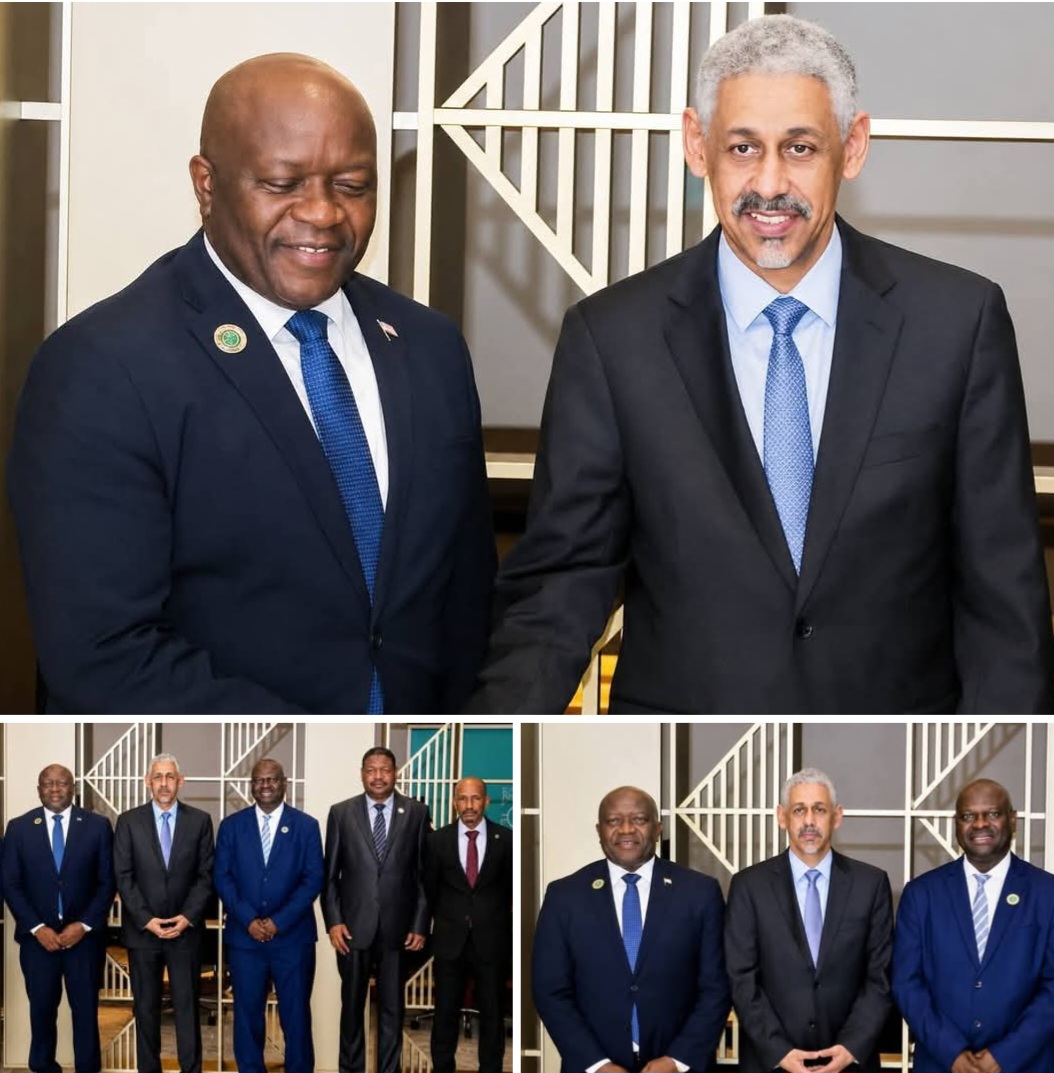
Members of African Development Bank (AfDB) Constituency 15, led by Liberia’s Finance and Development Planning Minister, Augustine Kpehe Ngafuan, held high-level discussions with Dr. Sidi Ould Tah, President of the African Development Bank Group, during the 2026 AfDB Annual Meetings, underscoring renewed efforts to strengthen economic resilience, infrastructure financing, and regional development cooperation amid mounting global uncertainties.
The engagement, described as strategic and forward-looking, brought together senior economic policymakers from Liberia, The Gambia, Sierra Leone, and Sudan to review development priorities, assess macroeconomic performance, and seek expanded institutional support for member countries facing evolving fiscal and geopolitical challenges.
Minister Ngafuan, who serves as Chair of Constituency 15 and Liberia’s Minister of Finance and Development Planning, led the delegation in expressing appreciation for the African Development Bank’s longstanding partnership across the constituency countries, particularly in the areas of macroeconomic stabilization, domestic resource mobilization, infrastructure expansion, agriculture, energy development, and emergency crisis response.
Constituency 15 is one of several voting blocs within the African Development Bank structure and serves as a platform through which member states coordinate policy priorities, development financing needs, and representation within the institution.
Present at the meeting were Seedy Keita, Minister of Finance of The Gambia; Alimamy Bangura, Alternate AfDB Governor for Sierra Leone; and Badreldien Ahmed, Alternate AfDB Governor for Sudan, reflecting a united regional front on shared economic priorities.
Speaking on Liberia’s recent economic trajectory, Minister Ngafuan highlighted encouraging macroeconomic indicators that signal growing resilience in one of West Africa’s recovering economies.
According to the Liberian Finance Minister, Liberia’s economy recorded an estimated Gross Domestic Product (GDP) growth of approximately 5.1 percent, alongside what he described as record domestic revenue mobilization and easing inflationary pressures , developments seen as critical milestones for a country still rebuilding from years of economic fragility, external shocks, and infrastructure deficits.
Liberia’s economy, historically dependent on extractive industries such as iron ore, gold, rubber, and timber, has in recent years pursued reforms aimed at expanding fiscal discipline, improving tax administration, and reducing dependence on donor assistance.
Analysts note that stronger domestic revenue collection remains essential for sustaining public investment and reducing fiscal vulnerabilities.
Minister Ngafuan further praised the African Development Bank for its support toward budget financing and efforts to strengthen resource mobilization in Liberia’s mining sector, which remains a major contributor to national revenue and export earnings.
He also cited the Bank’s role in supporting major infrastructure projects, particularly the Zwedru–Fish Town–Harper transport corridor, a flagship road network expected to improve trade connectivity, reduce travel times, stimulate agricultural commerce, and deepen regional integration in southeastern Liberia.
Infrastructure remains one of Liberia’s most pressing development challenges. Despite abundant natural resources, inadequate road connectivity has historically constrained economic growth, especially during rainy seasons when many communities become inaccessible.
Beyond Liberia, the delegation emphasized the need for continued AfDB engagement across member countries confronting fiscal stress, post-conflict recovery demands, climate-related vulnerabilities, and economic pressures linked to global instability.
Minister Ngafuan specifically stressed the importance of sustained financial and technical assistance in light of external economic shocks stemming from instability in the Middle East, warning that disruptions in global commodity and fuel markets continue to place pressure on African economies through inflation, rising import costs, and weakened fiscal space.
Another major issue raised during the engagement centered on institutional representation within the African Development Bank.
The Constituency 15 delegation advocated for stronger representation of member states within the Bank’s workforce, emphasizing that increased staffing opportunities for citizens of Liberia, The Gambia, Sierra Leone, Sudan, and Ghana would strengthen institutional inclusivity, technical expertise, and regional ownership of development programs.
Responding to the concerns, AfDB President Dr. Sidi Ould Tah thanked the Constituency 15 delegation for what he described as a candid and constructive presentation on macroeconomic trends, portfolio performance, and development constraints facing member countries.
Dr. Tah also welcomed the delegation’s support for his reform-oriented agenda, particularly his Four Cardinal Priorities and the proposed New Financial Architecture for Development (NAFAD) initiative, an emerging framework aimed at strengthening development financing systems and enhancing economic transformation across Africa.
On concerns regarding staffing and institutional representation, the AfDB President acknowledged the issue and assured the delegation that management would give due attention to workforce deployment and country representation once the Bank’s organizational structure receives formal approval from the Board.
“We have taken note of your concerns,” the President indicated, while emphasizing that staffing matters would be addressed within broader institutional reforms.
The meeting comes at a time when African economies are balancing post-pandemic recovery, debt sustainability concerns, inflationary pressures, climate financing gaps, and geopolitical disruptions affecting global trade and investment.
For Liberia and its Constituency 15 partners, the engagement signals a renewed push for stronger development financing, institutional inclusion, and infrastructure investment as governments seek to transform economic growth into long-term prosperity for millions of citizens across the region.


