
By: Julius Konton
With Liberia’s football governance at a critical crossroads, endorsements continue to mount for incumbent Liberia Football Association (LFA) President Mustapha I. Raji, as the countdown intensifies toward the Football House elections scheduled for April 18, 2026.
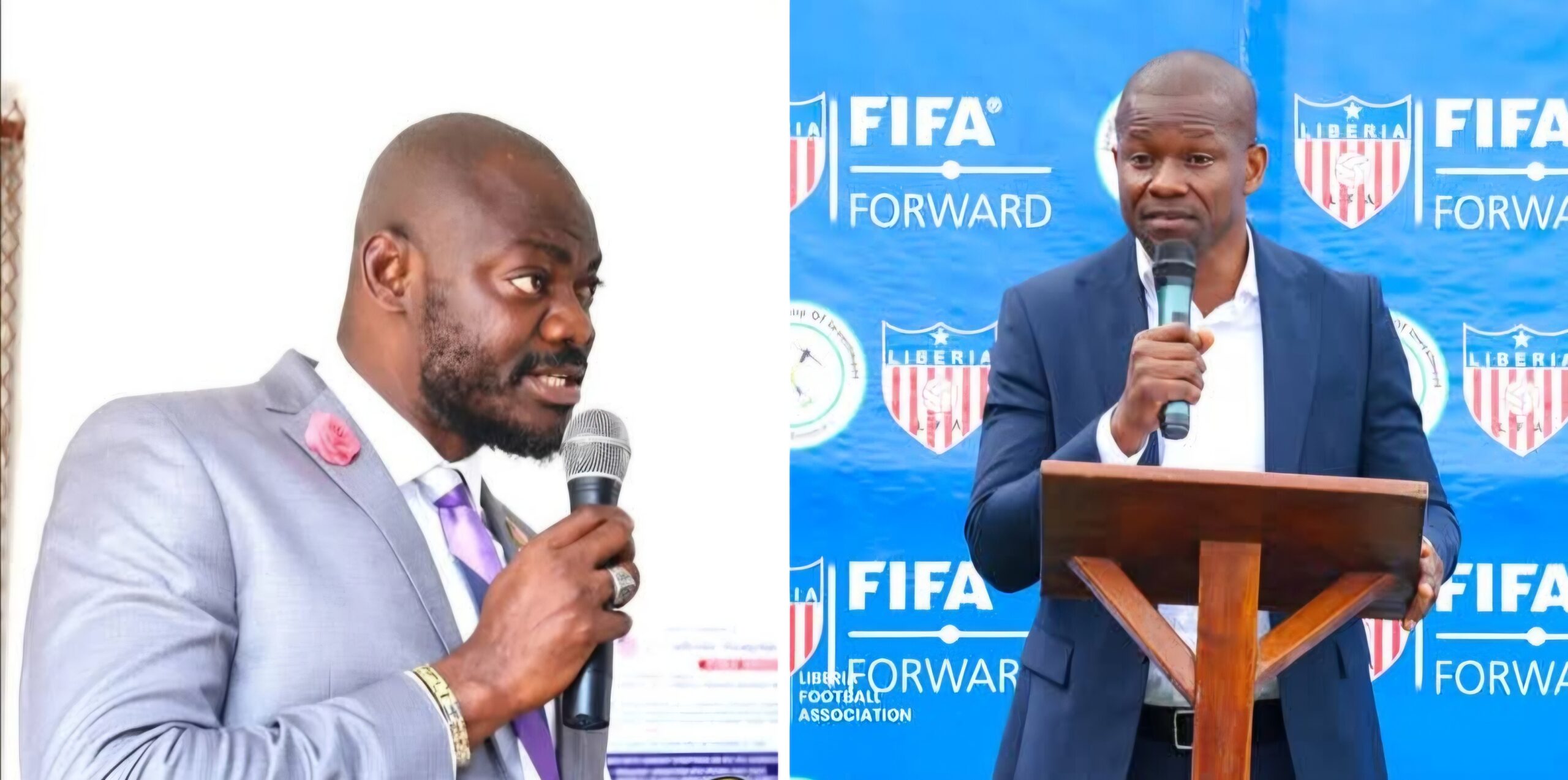
The latest and perhaps most technocratically significant endorsement comes from Rick W. Barsi-Giah, a highly credentialed public administrator and energy economist, whose backing further consolidates President Raji’s bid for a third term at the helm of the Liberia Football Association.
A Technocrat Enters the Football Governance Debate
Barsi-Giah, a Rice University trained Energy Economics graduate, currently serves as Vice President for Technical Services at the National Oil Company of Liberia (NOCAL).
His endorsement carries weight not only because of his academic pedigree but also due to his extensive experience in public-sector reform and institutional management.
He previously served as Deputy Minister for Technical Services at the Ministry of Information, Cultural Affairs and Tourism (MICAT), where he played a role in administrative restructuring and policy coordination.
Taking to his official Facebook platform, Barsi-Giah publicly declared his support for President Raji, framing the decision as one rooted in legality, continuity, and institutional order.
“I will support Mustapha Raji in his third-term bid.
He is honestly ending his tenure as provided by the LFA Statutes.
The victory is ours,” Barsi-Giah wrote.
Continuity Versus Change in Liberia Football
President Raji’s leadership tenure has coincided with a period of structural transition for Liberia football.
Since assuming office, the LFA has undergone governance reforms aligned with FIFA and CAF compliance frameworks, including administrative restructuring, increased club licensing enforcement, and expanded grassroots competitions.
According to LFA records, registered football clubs nationwide increased by over 30 percent between 2018 and 2025, while youth and women’s football programs expanded to all 15 counties, marking the widest geographic coverage in the Association’s history.
Supporters of continuity argue that sustained leadership is essential to consolidate these gains, particularly as Liberia seeks to improve its FIFA rankings and attract greater international development funding.
Stephen Johnson Adds Voice to Growing Coalition
Barsi-Giah joins a growing list of senior administrators and stakeholders endorsing the incumbent, including Stephen Johnson, Deputy Managing Director for Administration at the Liberia Civil Aviation Authority.
Johnson, in endorsing Raji, emphasized integrity and institutional stability as key considerations in the upcoming election.
“We need to maintain the sanctity of football in Liberia.
Raji knows where he wants the LFA to be.
We all have to rally around him and make sure he succeeds,” Johnson stated.
He further added a pointed warning against ethical erosion in sports leadership:
“Leaders are people with integrity and moral values, not crooks and common thieves.”
Election Stakes and Wider Implications
With the April 18 polls fast approaching, analysts note that the LFA election has implications beyond football.
The Association controls multimillion-dollar development inflows from FIFA, CAF, and international partners, alongside national prestige and youth engagement outcomes in a country where over 60 percent of the population is under the age of 25.
Political observers say endorsements from technocrats such as Barsi-Giah signal a broader confidence among professionals that stability at the LFA could translate into long-term institutional credibility and improved international standing.
As campaigning intensifies, the central question facing delegates remains whether Liberia football is best served by continuity under Raji’s leadership or a shift in direction.
For now, the growing wave of endorsements suggests that the incumbent enters the final stretch of the race with significant momentum and a coalition that spans governance, aviation, energy, and public administration.
The outcome on April 18 may well define the next chapter of football governance in Liberia.
