



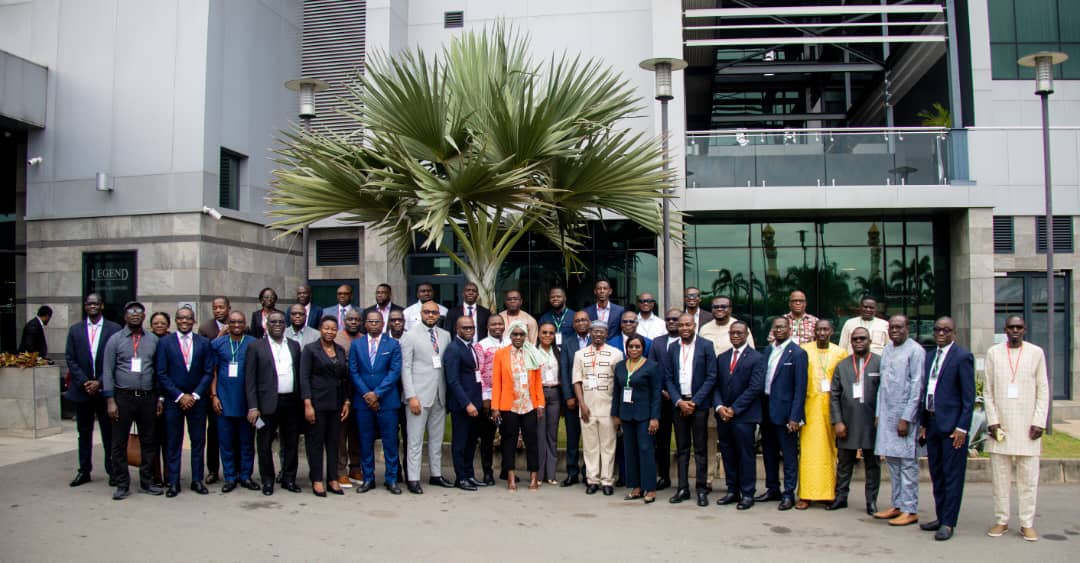
The ECOWAS Regional Fund for Agriculture and Food (RFAF), hosted by the ECOWAS Bank for Investment and Development (EBID), has officially launched a capacity-building program under the pilot phase of the West African Initiative for Climate-Smart Agriculture (WAICSA).
The five-day training, taking place from July 21 to 25, 2025, in Lagos, Nigeria, is aimed at strengthening the capacity of financial institutions across West Africa.
The goal is to equip them with the tools to effectively on-lend credit to agricultural small and medium-sized enterprises (Agri-SMEs) operating within the climate-smart agriculture value chain.
Among other things, Food insecurity and climate change continue to pose serious threats to the livelihoods of millions across the region.
In alignment with ECOWAS agricultural policies (ECOWAP), the RFAF seeks to promote sustainable agricultural practices and enhance climate resilience.
The training targets key personnel from financial intermediaries, focusing on Technical Assistance and Capacity Building for Agri-SMEs.
Moreover, Participants are being trained on how to assess, select, and finance climate-smart agricultural projects.
The program also introduces foundational knowledge of CSA practices, enabling institutions to support Agri-SMEs in boosting productivity, reducing climate vulnerability, and improving access to finance through dedicated credit lines.
As part of the training, WAICSA, in its pilot phase, targets six of the 15 ECOWAS member states.
Organizers say, Once validated, the initiative is expected to scale across the region.
At full implementation, WAICSA aims to improve food security for 90,000 smallholder farming households and transition over 185,000 hectares to climate-smart practices.
Moreover, it is projected to mitigate up to 2 million tons of CO₂ annually—equivalent to over 4 billion miles of driving.
As the region’s only blended finance facility focused exclusively on climate-smart agriculture, WAICSA is designed to increase access to affordable financing for smallholder farmers and Agri-SMEs.
By leveraging public and concessional capital, the initiative provides loans below USD 1 million at subsidized interest rates, ensuring accessibility to those who need it most.
Speaking at the opening, Alaine Traoré, representing Massandjé Touré-Litsé, Commissioner for Economic Affairs and Agriculture at the ECOWAS Commission, highlighted the significance of the initiative:
“Through this initiative, the Regional Fund is not only enhancing access to finance but also championing a transition toward sustainable and resilient agriculture.
By training financial intermediaries, we aim to build a robust ecosystem where Agri-SMEs can thrive and contribute meaningfully to food security in West Africa.”
Participating institutions include:
• Benin: CORIS Bank International
• Côte d’Ivoire: BAOBAB
• Ghana: VisionFund Ghana Micro Credit, Nsutaman Rural Bank Ltd, Advans Microfinance Bank, Agricultural Development Bank, VisionFund Microfinance Bank
• Senegal: CAURIE Microfinance, MEC FADEC Njambur, Crédit Mutuel du Sénégal
• Togo: ORABANK, African Lease, COOPEC–SIFA, COOPEC–AD
• Nigeria: Wema Bank
In this pilot phase, an initial disbursement of USD 10 million has been allocated for on-lending.
While over the next five years, total WAICSA funding is expected to reach USD 130 million, with USD 104 million for financing and USD 26 million for technical assistance.
Mr. Traoré further emphasized:
“Empowering financial institutions and Agri-SMEs with the right knowledge is essential to building a climate-resilient agricultural sector.
Through WAICSA, he pointed out that they are addressing systemic barriers to agricultural finance while promoting innovative and sustainable practices.”
The initiative also benefits from the support of development partners, including the German Government through GIZ’s EAT Programme and the Global Green Growth Institute (GGGI).
Their contributions have been instrumental in operationalizing this training and broader project implementation, he added.
Mrs. Léonie Awa Welly Diagwe, Director of Marketing, representing Crédit Mutuel Bank, Senegal, expressed appreciation for the opportunity:
“We are grateful to the ECOWAS Regional Fund for Agriculture and Food for this training.
It will help us uphold the highest standards of professionalism in implementing this initiative.”
“This milestone marks a significant step toward institutionalizing climate-smart agriculture in the ECOWAS region and lays the foundation for a more resilient and sustainable agricultural future,” she added.


