
By: Julius Konton
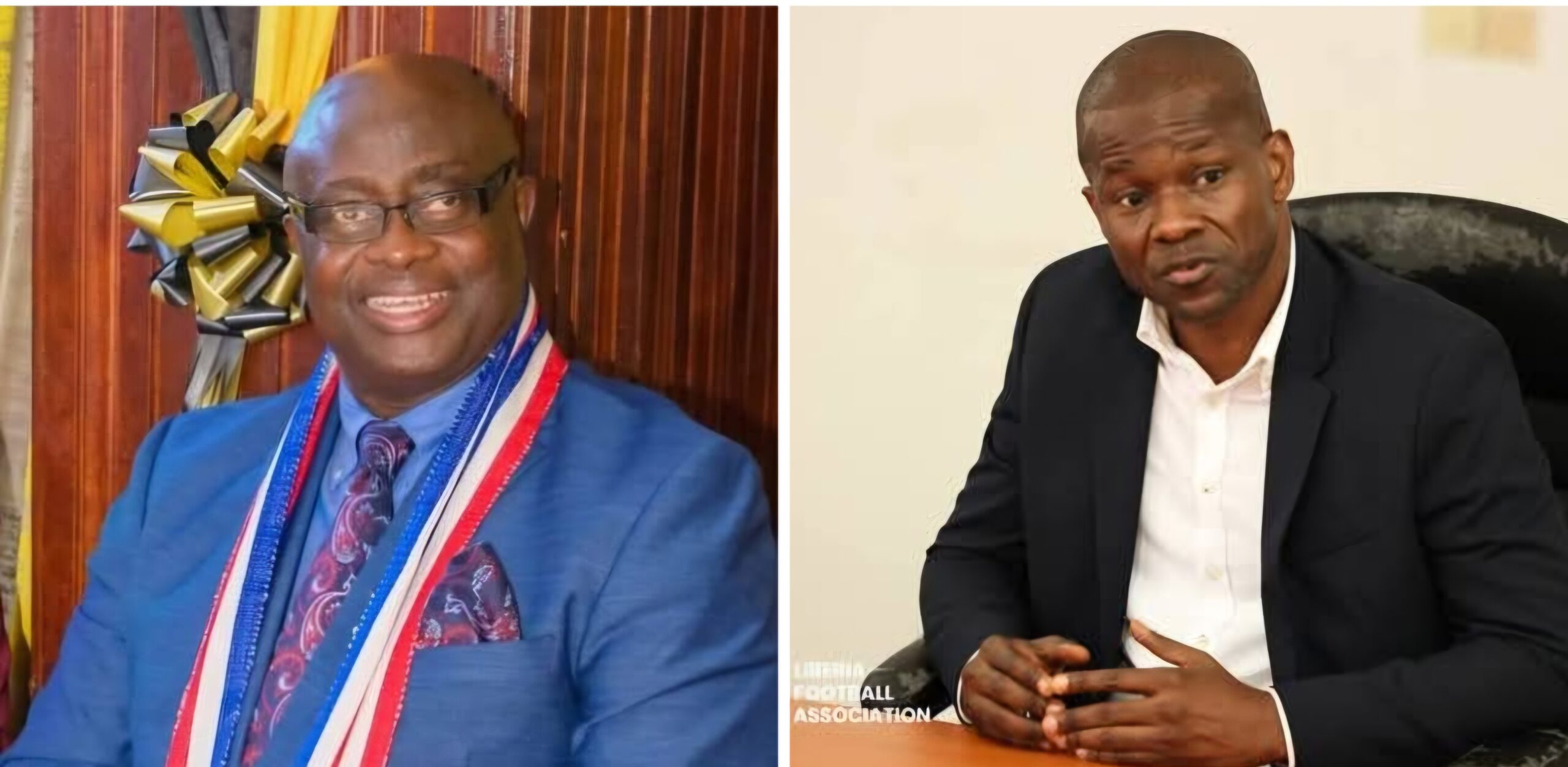
Former Minister of Youth and Sports D. Zeogar Wilson has thrown his full weight behind the re-election bid of Mustapha Raji, describing his leadership as the most transformative chapter in the modern history of the Liberia Football Association (LFA).
In a widely circulated video interview, Wilson who worked closely with Raji for six years portrayed the incumbent football boss as a reformer whose vision has re-anchored Liberian football where it matters most: at the grassroots.
“I worked with him long enough to know his passion is genuine,” Wilson said.
“His dreams are not just words, they are on display.
You can see them clearly in youth football: the Under-15, Under-17, and Under-20 programs.”
Rebuilding from the Foundation Up
Wilson emphasized that sustainable football development globally begins at the grassroots, a principle Liberia had long drifted away from due to years of institutional fragility and underinvestment.
According to him, Raji’s administration reversed that trajectory by prioritizing youth competitions, structured leagues, and talent identification pipelines.
Historically, Liberia’s football system leaned heavily on raw talent rather than organized development.
While the country famously produced a Ballon d’Or winner, structured youth systems lagged behind regional peers.
Wilson argued that Raji’s tenure marked a decisive break from that past.
“For a long time, grassroots football disappeared from our national focus.
Today, it is back and visibly so,” he said.
Women’s Football: From Struggle to Surge
One of the most notable shifts under Raji’s leadership, Wilson noted, has been the resurgence of women’s football.
He recalled earlier struggles to institutionalize the women’s game, even during the era of pioneering advocates such as the late Geraldine Doe Sheriff, affectionately known as “Lady Zico,” and trailblazers like Kiadiatu Daran.
“Those women were champions of the game, but the system was not ready,” Wilson reflected.
Today, the picture is markedly different.
Female leagues and clubs have proliferated across Liberia, participation numbers are rising steadily, and women’s football now features prominently in national planning mirroring broader continental trends where women’s participation has grown by more than 20% over the past decade.
Capacity Building and International Recognition
Beyond the pitch, Wilson highlighted sustained investment in human capital.
Liberian coaches and referees now routinely participate in certification courses and seminars at home and abroad, many supported through international football development programs.
A landmark achievement came when a Liberian referee officiated at a FIFA youth tournament, an unprecedented milestone for the country.
“For the first time in our history, one of our referees officiated at a youth World Cup.
That did not happen by accident,” Wilson said, pointing to improved governance and technical training under Raji’s leadership, in collaboration with FIFA.
Infrastructure: A First Since 1936
Perhaps the most tangible legacy of Raji’s administration lies in infrastructure, an area where Liberia historically lagged behind most African football nations.
Founded in 1936, the LFA operated for decades without a permanent headquarters.
That changed under Raji, making him the first president to deliver a dedicated home for the association.
Wilson also cited the construction and rehabilitation of multiple football facilities nationwide, including:
The Tusa Field
The SKD Practice Pitch
The Doris Williams Sports Stadium in Grand Bassa County
The Floyd Seh Tomah Sports Stadium in Nimba County
The Alpha Oldtimers Sports Pitch, currently under construction among others.
“This is the most infrastructure the LFA has ever seen in its entire history,” Wilson said.
Transparency and Governance
Addressing governance often a flashpoint in African football, Wilson stressed Raji’s openness and accountability, particularly regarding financial flows.
“When I served as minister, he was transparent with us especially with funds coming from FIFA.
He was transparent with the ministry and with the Liberian people,” he said.
Such transparency, Wilson argued, has restored confidence among stakeholders, partners, and sponsors, creating the conditions for long-term growth.
Praise from Former LFA Presidents
Wilson urged stakeholders to consider endorsements from across the football divide, noting that former LFA presidents including Edwin Melvin Snowe Jr. and Musa Bility have publicly praised Raji’s developmental strides despite past political rivalries.
“When former presidents acknowledge progress, that tells you something,” he said.
A Call to Stakeholders
With elections approaching, Wilson framed the decision as one of continuity versus disruption.
“Stakeholders, you know Mustapha Raji.
You work with him.
His success is your success.
Don’t throw that away,” he urged. “You are the voters. Give him a third term.”
He concluded by pointing to the growing prestige of the LFA league’s closing ceremonies where players now receive vehicles, cash prizes, and formal awards, incentives unheard of in earlier eras.
“This encouragement, this vision, this momentum, these are real, tangible changes,” Wilson said. “Let him finish the mission.”
As Liberia positions itself to reclaim its footballing stature in West Africa, the endorsement from a former youth minister adds significant weight to Mustapha Raji’s campaign framing his tenure not merely as administrative stewardship, but as a turning point in the country’s sporting history.
