
By: Julius Konton
The Chargé d’Affaires of Morocco to Liberia, Lahoucine Rahmouni, has underscored the critical role of capacity development and specialized training in strengthening governance, economic growth, and democratic institutions.
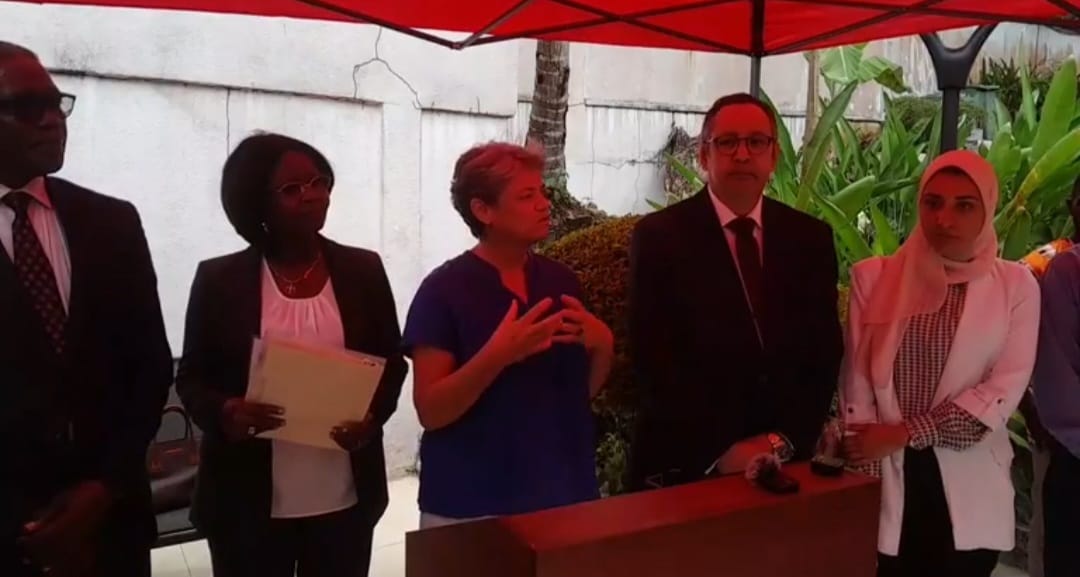
Speaking at a press conference during the Spring of the Francophone Liberia program (March 23-28) Rahmouni described culture and education as “the economic space of governance,” stressing that investment in human capital remains central to sustainable development and peacebuilding.
“Culture is not only a pillar of identity but also a driver of democracy, peace, and inclusive governance,” he noted.
Scholarships and Skills Training on the Rise
Morocco’s development cooperation with Liberia has increasingly focused on education and professional training.
According to Rahmouni, Rabat continues to provide fully funded university scholarships and specialized training programs tailored to Liberia’s development priorities.
In 2025 alone, Morocco awarded one hundred and five scholarships to Liberian students across diverse disciplines, including:
Medical Sciences
Engineering
Language Studies
Technical and vocational fields
Beyond academic opportunities, Morocco has expanded professional training initiatives targeting key sectors such as healthcare and public administration.
These programs are designed to complement Liberia’s national development strategy, with coordination through diplomatic channels.
“We have a wide range of training programs not only for students but also for professionals, particularly in the health sector,” Rahmouni added.
Notably, many Moroccan institutions offer French-language preparatory programs lasting up to nine months, enabling Liberian students to integrate more effectively into higher education systems in francophone countries.
Education as a Tool for Development
Education remains a cornerstone of Morocco’s broader engagement across Africa.
According to data from the African Union, student mobility and skills training are among the fastest-growing areas of intra-African cooperation, with thousands of scholarships exchanged annually between African nations.
Morocco itself hosts over 20,000 international students, a significant portion from Sub-Saharan Africa, reflecting its strategic investment in South-South cooperation.
Experts say such initiatives are vital for Liberia, where youth under the age of 35 make up more than 60% of the population, according to World Bank estimates, creating both an opportunity and an urgent need for skills development.
Support for Regional Dialogue and Stability
Addressing regional issues, Rahmouni welcomed ongoing diplomatic discussions between Liberia and Guinea, describing the situation as a bilateral matter best resolved through peaceful means.
“We believe the issue can be addressed through dialogue and negotiations,” he said, reaffirming Morocco’s support for diplomatic solutions in West Africa.
France and Francophone Bloc Highlight Development Cooperation
Also speaking at the event, the French Ambassador to Liberia, Isabelle Le Guellec, emphasized the longstanding ties between France and Liberia, particularly in the areas of education, governance, and development assistance.
France has historically supported Liberia through:
Capacity-building programs
Institutional strengthening
Educational exchanges
Infrastructure and health initiatives
The press conference brought together a wide array of Francophone diplomats, including representatives from Ivory Coast, Guinea, and Cameroon, reflecting growing multilateral engagement in Liberia.
Growing Diplomatic Engagement in Monrovia
The event also saw participation from diplomatic missions representing Lebanon, Egypt, Morocco, and the Honorary Consul of Belgium.
Meanwhile, the Ambassador of Ivory Coast currently heads the Francophone Ambassadors’ Group in Monrovia, a diplomatic bloc that promotes cooperation among French-speaking nations and partners.
Liberia’s participation in this body signals its increasing engagement with Francophone institutions despite being an Anglophone country.
A Strategic Shift Toward Human Capital
Analysts say Morocco’s emphasis on education and professional training reflects a broader shift in international development from infrastructure-heavy aid to human capital investment.
With Liberia continuing its post-conflict recovery and economic reform agenda, partnerships focused on skills development, education, and governance are expected to play a decisive role in shaping the country’s long-term growth trajectory.
As Rahmouni concluded, “Capacity development is not just support, it is a partnership for the future.”
