
By: Julius Konton
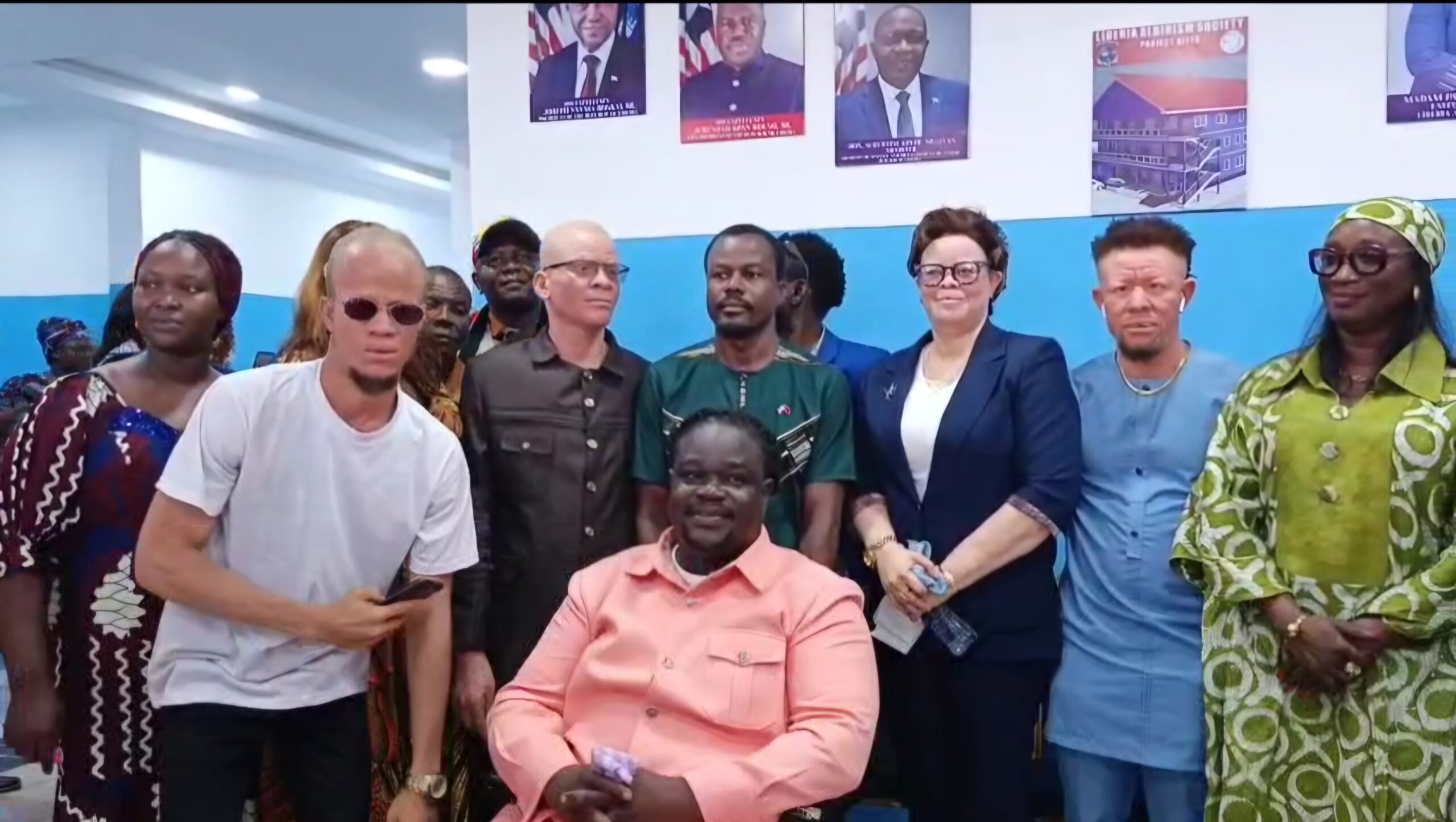
In a historic step for disability inclusion and human rights advocacy, the Liberia Albino Society (LAS) has officially dedicated its long-awaited multipurpose headquarters in District Fifteen, Montserrado County marking a defining moment in Liberia’s social development landscape.
The project, widely described by stakeholders as unprecedented, represents the first purpose-built headquarters in Liberia dedicated exclusively to persons living with albinism, a community that has historically faced deep-rooted stigma, discrimination, and limited access to healthcare and public services.
A Milestone for an Often Overlooked Community
Health experts estimate that one in every 17,000 to 20,000 people worldwide is born with albinism, with higher prevalence rates reported across sub-Saharan Africa.
In Liberia, while official census data on albinism remains limited, advocacy groups estimate that thousands of Liberians live with the condition, many of whom face heightened risks of skin cancer, visual impairment, unemployment, and social exclusion.
Against this backdrop, the LAS headquarters stands as more than a building, it is a symbol of dignity, resilience, and institutional recognition.
The modern facility includes:
A health unit designed to support dermatological and vision-related needs
Administrative offices for advocacy and coordination
Restroom facilities and meeting spaces
A multipurpose layout intended for training, outreach, and policy engagement
Government Applause and Commitment
Officially dedicating the facility, Liberia’s Minister of Gender, Children and Social Protection, Gbeme Horace-Kollie, praised the Liberia Albino Society for what she described as “exceptional leadership and uncommon determination.”
“This project is living proof that strong leadership and vision can transform lives even without vast resources,” Minister Horace-Kollie said.
“It is rare to see such a major infrastructure initiative led by a non-governmental, non-profit organization.”
She further urged beneficiaries to preserve and utilize the facility responsibly, emphasizing that its long-term impact depends on collective ownership and care.
Importantly, the minister reaffirmed the government’s commitment to supporting the welfare, protection, and social inclusion of persons living with albinism across Liberia.
A Dream Years in the Making
Speaking to journalists, LAS Executive Director Patricia N. C. Logan described the dedication as “a milestone and a dream fulfilled.”
“This headquarters represents hope not just for our members, but for future generations of persons living with albinism in Liberia,” Logan said.
She commended the Government of Liberia, LAS members, and development partners whose contributions , financial, material, and moral made the project possible.
While the top floor of the structure remains under construction, Logan expressed confidence that the visible progress would inspire additional government and donor support to complete the project and expand its services nationwide.
A Legacy Rooted in Advocacy
The Liberia Albino Society traces its origins to advocacy efforts initiated in 2006, driven by growing concern over discrimination, health vulnerabilities, and social exclusion faced by persons with albinism.
These efforts culminated in LAS’s official incorporation in December 2009, granting it legal recognition as a national advocacy body.
Since then, LAS has played a central role in:
Public education to counter myths and stigma
Advocacy for inclusive policies and legal protection
Health awareness campaigns on skin cancer prevention
Empowerment and social support for persons with albinism
Beyond Bricks and Mortar
Analysts say the LAS headquarters could serve as a model for disability-led development initiatives in Liberia, where civil society organizations often operate without permanent infrastructure.
The facility strengthens LAS’s capacity to engage policymakers, coordinate nationwide programs, and provide direct services to vulnerable populations.
As Liberia continues its broader push toward inclusion under international human rights frameworks, the dedication of the LAS multipurpose headquarters sends a powerful message: marginalized communities can and must be architects of their own future.
For Liberia’s persons living with albinism, the building is not just a headquarters, it is a home, a shield, and a platform for lasting change.
