


By: Julius Konton
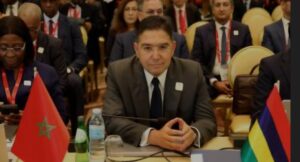
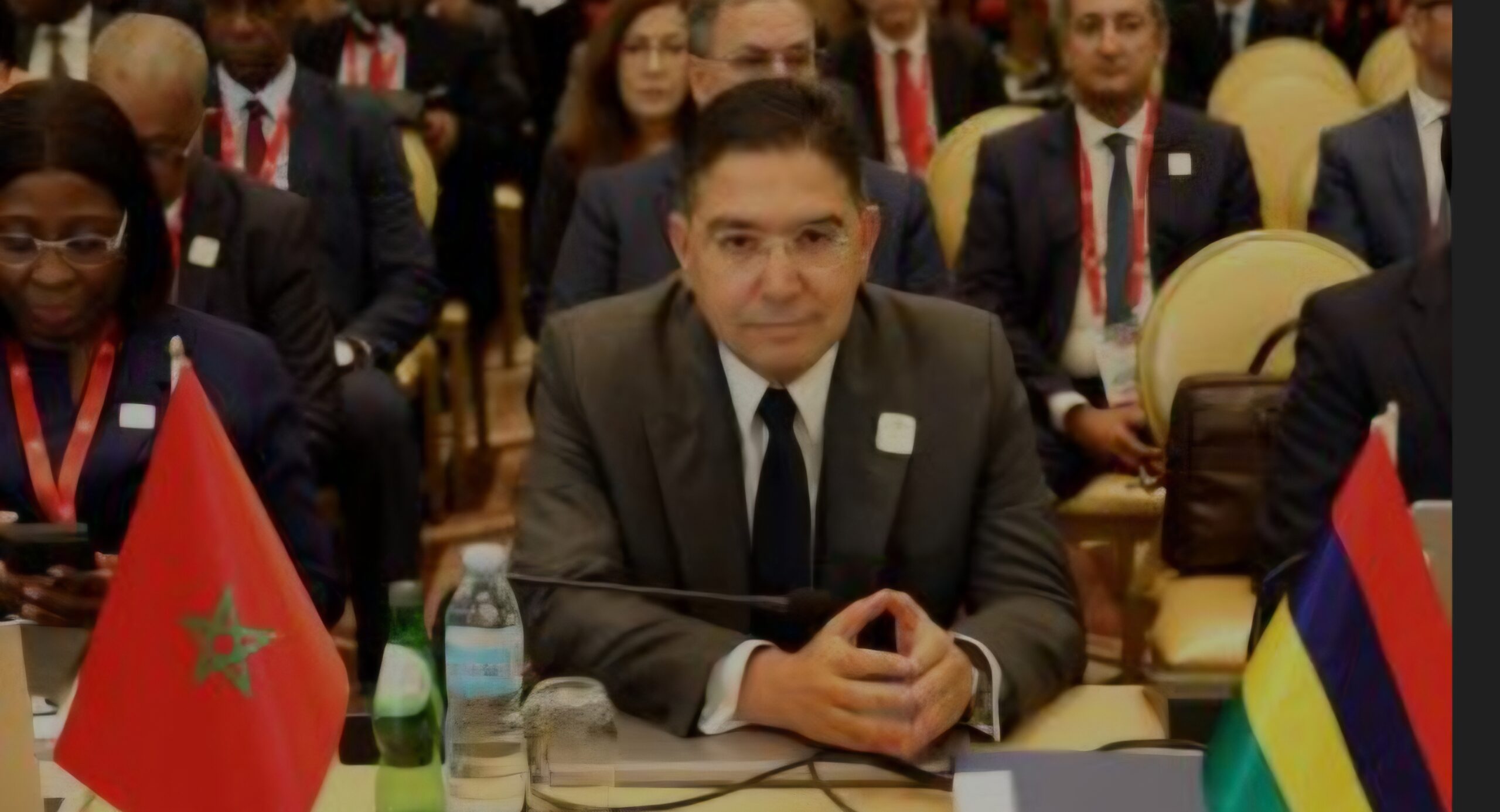
Morocco’s Foreign Minister, Nasser Bourita, has called for a fundamental shift in Africa’s approach to peace and security, urging the continent to place conflict prevention, rather than reaction to violence, at the center of its collective strategy.
Speaking Saturday in Luanda at the 26th Extraordinary Session of the African Union Executive Council, Bourita said African countries must go beyond responding to armed conflicts after they erupt and instead confront the political, economic and social conditions that allow instability to take root.
The extraordinary session, convened to strengthen and operationalize the African Peace and Security Architecture (APSA), is examining ways to improve conflict prevention and resolution mechanisms, strengthen early warning and early action, enhance the role of the AU Peace and Security Council and secure more sustainable financing for peace operations.
The Executive Council meeting on August 29 will be followed by the 21st Extraordinary Session of the AU Assembly on August 30.
“Prevention” should be understood as more than diplomatic intervention, Bourita argued.
It must include investment in the broader peace-security-development nexus, addressing structural inequalities, exclusion, weak institutions, poverty and other factors that can create conditions for violent conflict.
The Moroccan minister said his country fully supports the objectives of the Luanda meeting and stressed that implementation of the Luanda Action Plan must be accompanied by greater coherence between the African Union and the United Nations.
He also reaffirmed Morocco’s commitment to supporting the implementation of the action plan and its implementation matrix, while insisting that any financing mechanisms must remain consistent with the African Union’s established budgetary procedures.
The call comes as Africa continues to confront a complex security environment involving terrorism, violent extremism, civil wars, political instability, military coups, communal violence and competition over resources.
The African Union Commission has described the continent’s current security environment as increasingly complex, citing the expansion of terrorism and violent extremism, internal crises, interstate tensions and external shocks.
The scale of the challenge is reflected in recent conflict data.
The Africa Center for Strategic Studies reported that 23,968 fatalities linked to militant Islamist violence were recorded in Africa in 2025, a 24 percent increase from the previous year.
The organization also recorded 8,375 violent events linked to militant Islamist groups, the highest annual figure in its dataset.
More recent estimates indicate that the violence remains at historically high levels.
For the 12 months ending in mid-2026, militant Islamist violence was linked to 23,872 fatalities, with the Sahel accounting for about 42 percent of the reported deaths, followed by Somalia and the Lake Chad Basin at roughly 28 percent each.
The broader conflict picture is even more extensive.
ACLED data shows that political violence continues to generate large numbers of fatalities and expose millions of civilians to insecurity across the continent.
Its conflict database tracks battles, explosions, violence against civilians and other forms of political violence across African countries.
For Morocco, the answer lies in moving away from a predominantly reactive security model.
Bourita argued that sustainable peace cannot be achieved solely through military responses or crisis management.
Instead, African governments must invest in development, effective governance, social inclusion, economic opportunity and institutions capable of resolving disputes before they escalate into violence.
The United Nations has similarly emphasized the close relationship between peace, security, development, humanitarian action and human rights.
Its latest analysis of Africa stresses the urgency of accelerating development progress in conflict-affected countries and strengthening the rule of law as a foundation for inclusive development and conflict prevention.
UN analysis has also identified unemployment, lack of decent work, weak public services, inequality and limited access to justice as factors that can undermine social cohesion and contribute to instability.
That approach is particularly significant for a continent where large youth populations are entering labor markets that frequently struggle to create sufficient opportunities, while fragile states face additional pressures from climate shocks, displacement, organized crime and armed groups.
Financing is another central issue confronting the AU.
The African Union established its Peace Fund in 1993 as the principal financing instrument for continental peace and security activities.
In 2016, AU leaders agreed to capitalize the fund with $400 million from member-state contributions, linked to the 0.2 percent import levy.
By February 2026, the Peace Fund’s balance stood at approximately $400 million, while about $39 million had been disbursed over the preceding two and a half years to support peace and security initiatives.
The AU has also endorsed an expansion of the fund’s capitalization target to $1 billion, underscoring the growing financial demands of continental peace operations.
The financing question is critical because prevention requires sustained investment in early-warning systems, mediation, peacebuilding, institutional development and regional security mechanisms not simply funding after violence has already erupted.
The Luanda discussions reflect a broader evolution in Africa’s peace and security architecture.
The African Union was established in 2002, succeeding the Organization of African Unity, with a stronger mandate to respond to unconstitutional changes of government, armed conflict and threats to continental stability.
Its peace and security framework subsequently developed around institutions including the Peace and Security Council, the Panel of the Wise, the Continental Early Warning System, the African Standby Force and the Peace Fund.
The current summit seeks to make those mechanisms more responsive and effective.
According to the AU, the Luanda process is intended to reinforce African ownership of the continent’s peace and security agenda, improve coordination between continental and regional institutions and strengthen the practical implementation of APSA and the African Governance Architecture.
The meeting is expected to conclude with the adoption of a decision, the Luanda Action Plan and its implementation matrix.
For Bourita, however, the ultimate test will be whether those commitments translate into sustained action.
Africa, he argued, must invest not only in stopping wars but in preventing the conditions that produce them.
The message from Luanda is therefore both strategic and economic: lasting peace will require African governments to treat conflict prevention, development and security as interconnected priorities rather than separate policy challenges.


