
By : Julius Konton
The Government of Liberia has submitted a US$45 million draft supplementary budget to the National Legislature, aiming to expand public investment in health, education, infrastructure and security as President Joseph Nyuma Boakai Sr. pushes forward his development agenda.
The proposed increase, formally transmitted on Monday, would raise Liberia’s approved FY2026 national budget from US$1.249 billion to US$1.294 billion, representing a 3.6 percent increase.
Government officials say the measure is intended to accelerate service delivery and fund urgent national priorities under the administration’s ARREST Agenda for Inclusive Development (AAID).
Budget Submitted to Legislature
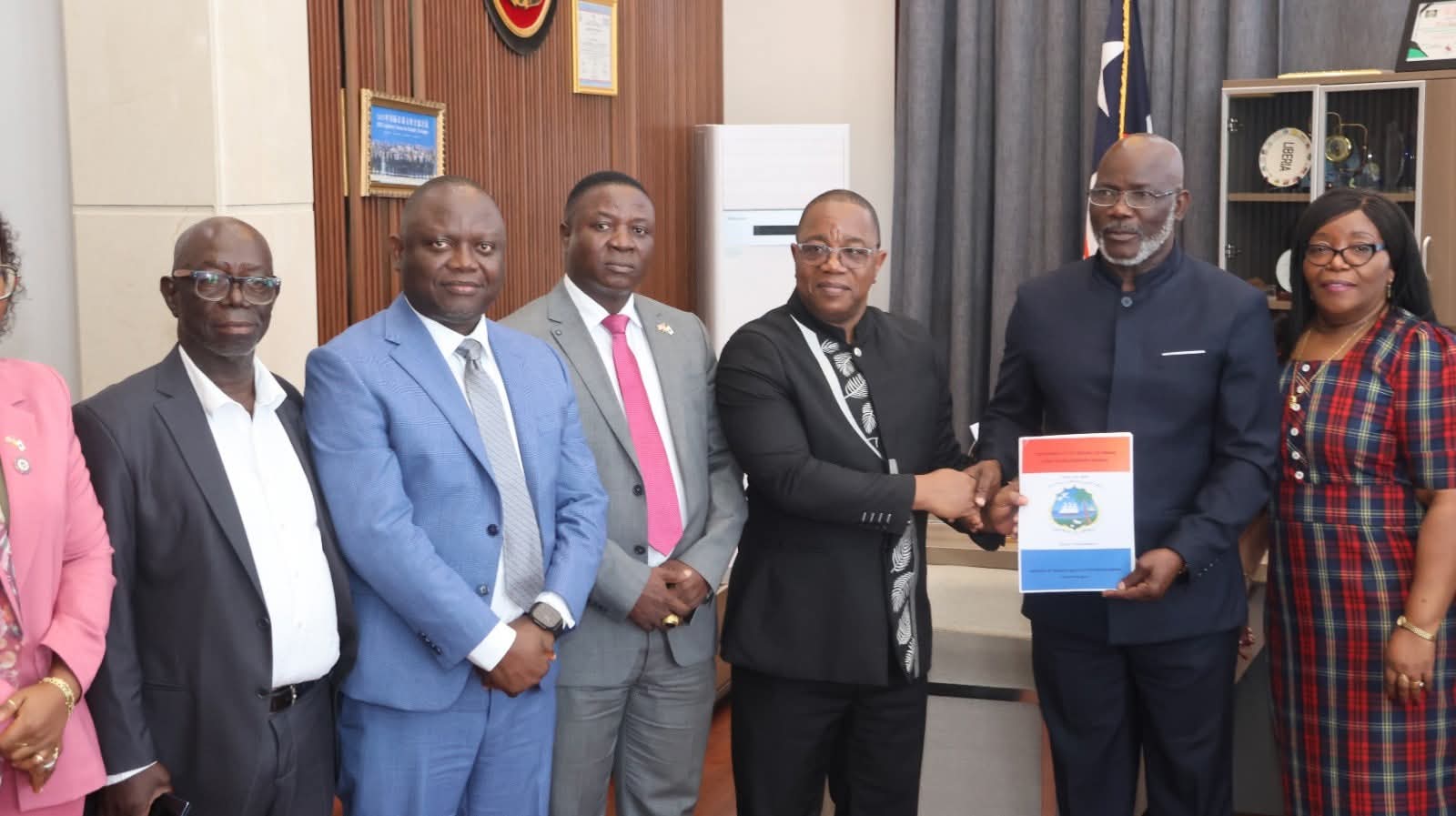
The supplementary budget was presented to House Speaker Richard N. Koon by Acting Finance Minister Anthony G. Myers on behalf of Finance and Development Planning Minister Augustine Kpehe Ngafuan, who is attending the World Bank and International Monetary Fund Spring Meetings in Washington, D.C.
Officials said the additional resources would come from two major sources:
US$40 million in delayed World Bank budget support originally expected in FY2025
US$5 million generated through stronger-than-expected domestic revenue performance in FY2025
The government credited improved tax policy enforcement and more efficient revenue administration for the domestic gains.
Major Focus on Social Spending
According to the Finance Ministry, more than 40 percent of the supplementary budget US$19.3 million will go to Health, Education and Social Development Services, underscoring the administration’s emphasis on human capital development.
Education Sector: US$7.3 Million
The education allocation is expected to support:
Teacher enrollment and staffing
Expansion of school feeding programs
Settlement of outstanding obligations to the West African Examinations Council (WAEC)
Health Sector: US$10.9 Million
Funding for health will cover:
Drug response and medical supply initiatives
Acquisition of land for construction of a National Children’s Hospital
Social Development: US$1.05 Million
The social services package will target:
Community welfare programs
Assistance to vulnerable populations
Infrastructure and Basic Services Receive Strong Support
The proposal also dedicates US$7.2 million (15.9 percent) toward infrastructure and essential public services.
Among the headline projects is US$4.02 million for technical preparation and rollout of the government’s widely discussed “yellow machines” initiative, expected to strengthen road works, sanitation and public maintenance capacity.
Security and Rule of Law Funding
An additional US$18.5 million has been allocated to other priority areas, including US$5.1 million for national security, justice systems and responses to emerging threats in the country’s security environment.
Acting Minister Myers described the supplementary package as a strategic shift toward stronger safety nets, wider access to services and infrastructure investments capable of driving inclusive economic growth.
Legislature Welcomes Proposal
Speaker Koon praised President Boakai and the Finance Ministry’s technical team for what he called forward-looking investment in social development.
He specifically highlighted funding for the proposed National Children’s Hospital and transportation support for the University of Liberia, saying both initiatives could significantly improve service delivery and educational access.
Economic Context
If enacted, the revised FY2026 budget would also represent 47 percent year-on-year growth, equivalent to roughly US$414 million above the previous fiscal year’s spending plan.
The increase reflects the government’s effort to balance fiscal discipline with urgent development demands in a country still rebuilding infrastructure, improving healthcare systems and expanding access to quality education after years of economic and structural challenges.
The supplementary budget now moves to lawmakers for debate and possible enactment.
Approval would give the Boakai administration additional fiscal space to pursue flagship reforms and social investment programs during the 2026 fiscal year.
For many Liberians, the debate in the coming weeks will center on whether the new spending can translate into visible improvements in jobs, roads, schools, hospitals and living standards nationwide.
