



By: Julius Konton
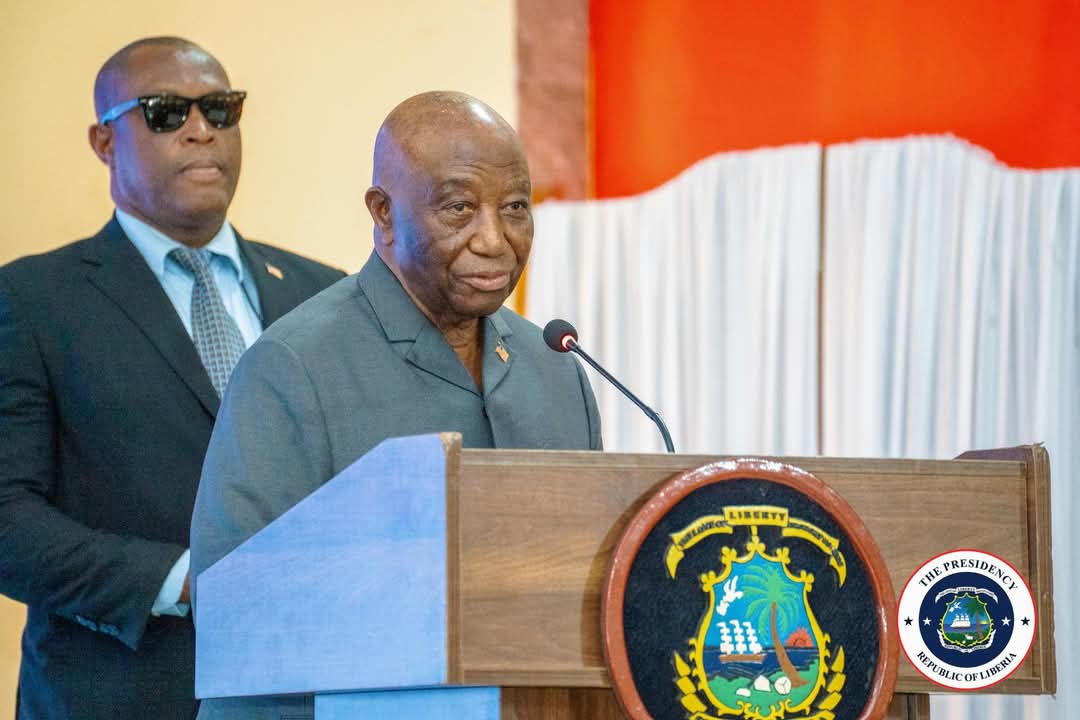
President Joseph Nyuma Boakai, Sr. on Monday issued a sweeping call for the transformation of Liberia’s infrastructure landscape as he officially opened the National Infrastructure Conference in Gompa City, Nimba County, describing infrastructure as the backbone of national dignity, economic recovery, and social inclusion.
Addressing a high-level audience that included cabinet ministers, lawmakers, diplomats, development partners, private-sector leaders, academics, and members of the Liberian diaspora, President Boakai said the conference marked a decisive turning point in Liberia’s post-conflict reconstruction journey.
The event also featured Ghana’s Minister of Works, Kenneth Adjei, as guest speaker, underscoring growing regional collaboration on infrastructure development in West Africa.
A Historic Setting, A National Imperative
Hosting the conference in Nimba County, long regarded as the historical heart of Liberia’s mining industry, carried deep symbolic meaning.
Nimba once accounted for a significant share of Liberia’s export earnings during the iron ore boom of the 1960s and 1970s, but decades of conflict and underinvestment severely eroded its infrastructure.
President Boakai noted that the conference had been nearly two years in preparation, conceived out of concern over the “visible deterioration” of roads, public buildings, power systems, and water infrastructure, much of it a lingering legacy of Liberia’s 14-year civil conflict.
“Across Liberia, roads have deteriorated, public facilities have decayed, electricity has remained unreliable, and access to safe water and sanitation is still far from universal,” Boakai said.
“These realities have imposed daily hardship on our people and constrained economic growth.”
Infrastructure Deficit: A Drag on Growth
Liberia continues to face one of the largest infrastructure gaps in West Africa.
According to national planning estimates and development partner assessments:
Less than 20 percent of Liberia’s road network is paved, with many rural communities cut off during the rainy season.
National electricity access remains below 30 percent, with rural access in single digits.
Access to safely managed drinking water and sanitation services remains uneven, particularly outside Monrovia.
Infrastructure constraints are estimated to reduce Liberia’s potential GDP growth by 2–3 percentage points annually, according to regional development benchmarks.
President Boakai stressed that infrastructure must no longer be viewed merely as physical assets, but as tools for human development, equity, and national confidence.
“Roads and bridges are not just concrete and steel,” he said. “They are pathways to opportunity.
Energy systems are not just wires and turbines; they are engines of productivity.
Water systems are not just pipes; they are instruments of dignity and health.”
From Repair to Transformation
Unlike previous forums focused on rehabilitation alone, the National Infrastructure Conference aims to rethink how Liberia builds, emphasizing resilience, climate adaptation, innovation, and long-term economic competitiveness.
Boakai emphasized that rebuilding must be done “smarter and better,” ensuring that new infrastructure:
Is resilient to climate change and extreme weather;
Generates employment and stimulates local industry;
Supports inclusive growth and regional balance;
Aligns with global standards and technological innovation.
The President linked the conference directly to his administration’s ARREST Agenda, which prioritizes Agriculture, Roads, Rule of Law, Education, Sanitation, and Tourism, and aligns Liberia’s development strategy with Africa’s Agenda 2063 and the United Nations Sustainable Development Goals (SDGs).
Infrastructure as National Healing
Reflecting on Liberia’s post-war experience, Boakai said infrastructure rebuilding is also an act of national healing, restoring symbols of unity and shared purpose destroyed during years of conflict.
“While the scars of war remain visible, they present an opportunity to start again and build better,” he said.
“Infrastructure reconstruction is about restoring hope, cohesion, and confidence in the future of our nation.”
Call to Action and Global Partnerships
The conference, Boakai said, is not a ceremonial event but a call to action for policymakers, engineers, financiers, and development partners to move from fragmented interventions toward coordinated national systems.
He invoked global perspectives on infrastructure, quoting leaders who emphasized that economic prosperity follows sustained investment in roads, rail, energy, and water systems.
“We will be wealthy and prosperous when our infrastructure is good,” Boakai declared, echoing former U.S. President John F. Kennedy’s observation that strong infrastructure is a cause not a consequence of national wealth.
President Boakai concluded by thanking the Ministry of Public Works, international partners, and regional guests for their commitment to Liberia’s development, before formally declaring the National Infrastructure Conference officially open.
The multi-day conference is expected to produce policy recommendations, financing strategies, and implementation frameworks aimed at reshaping Liberia’s infrastructure future and accelerating its path toward sustainable growth.


