


By: Julius Konton
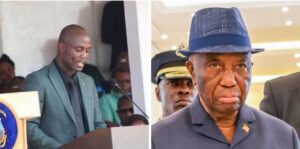
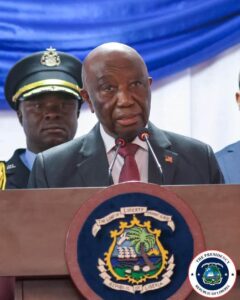
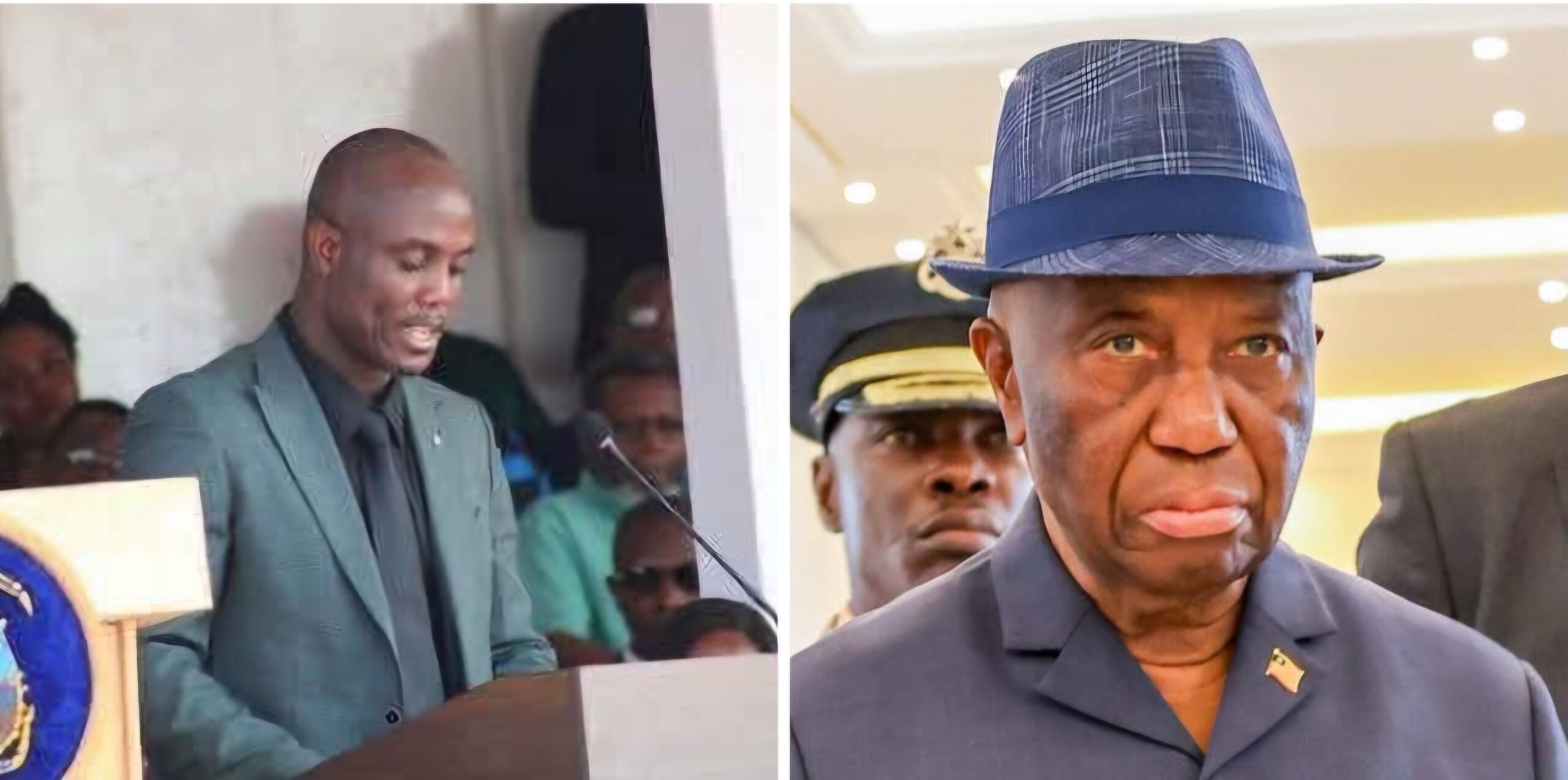
President Joseph Nyuma Boakai has moved to place Liberia’s anti-narcotics campaign under the leadership of one of the country’s most experienced security figures, appointing retired Major General Daniel Dee Ziankahn Jr. as Director General of the Liberia Drug Enforcement Agency (LDEA), subject to confirmation by the Liberian Senate.
The appointment, announced Monday following a marathon National Security Council meeting, represents one of the most significant leadership changes in Liberia’s drug-control apparatus in recent years and comes at a moment when the country is confronting increasingly sophisticated transnational trafficking networks, widespread concern over synthetic drugs such as Kush, and questions over institutional integrity within law-enforcement agencies.
Ziankahn, a former Chief of Staff of the Armed Forces of Liberia and former Minister of National Defense, most recently served as Military Adviser to President Boakai. His new assignment places a retired senior military commander at the center of the government’s campaign against narcotics trafficking and organized crime.
The President has also appointed Precious Rue as Deputy Director General for Operations and Prince Mulbah as Deputy Director General for Administration.
Both appointments, like Ziankahn’s, are subject to Senate confirmation.
All three officials are expected to begin serving in an acting capacity immediately pending legislative confirmation.
The leadership shake-up comes as Liberia finds itself increasingly exposed to the international cocaine trade.
In June, authorities seized approximately 237.6 kilograms of cocaine at Roberts International Airport, a shipment valued at more than US$19 million, according to the LDEA.
The case was elevated to a Joint National Security investigation because of its suspected transnational dimensions.
Weeks later, Liberian authorities uncovered an even larger shipment in Duazon, near Monrovia, involving nearly 4,000 kilograms of cocaine.
The seizure was described as one of the largest drug interceptions in Liberia’s history and was estimated by authorities at roughly US$317 million.
The cases have dramatically altered the scale of Liberia’s narcotics challenge.
For a country historically viewed primarily as a transit point rather than a major destination market for international cocaine trafficking, the size and sophistication of the recent seizures have intensified concerns about Liberia’s vulnerability to organized criminal networks seeking access to West African maritime, aviation and road corridors.
The regional dimension is equally significant.
West Africa has increasingly been identified as an important transit corridor for cocaine originating in South America and destined for European markets.
Official LDEA figures illustrate that the problem extends well beyond headline-making cocaine seizures.
During the first quarter of 2026, the agency reported arresting 233 suspects nationwide in connection with drug trafficking and other narcotics offenses.
Of those arrested, 193 were men, or 83 percent, while 40 were women, representing 17 percent.
Liberians accounted for 195 suspects, followed by 17 Nigerians, 12 Sierra Leoneans and nine Guineans.
The agency said it seized 422.08 kilograms of assorted narcotics during the quarter.
That included:
248.56 kilograms of marijuana
115.66 kilograms of Kush
57.30 kilograms of Tramadol
0.56 kilograms of cocaine
The combined street value was estimated at more than US$433,950 and LD$103 million.
The LDEA also reported confiscating approximately US$1.337 million at the Bo-Waterside border, money suspected of being linked to transnational drug-trafficking activities.
The agency says the first-quarter seizure volume represented a 91.86 percent decline from the 5,186.17 kilograms recorded in the final quarter of 2025.
That reduction, however, should not necessarily be interpreted as evidence that trafficking itself has declined.
Drug seizures are influenced by enforcement activity, intelligence, trafficking patterns and the availability of surveillance and logistics.
The emergence of multi-tonne cocaine shipments demonstrates that large trafficking operations can coexist with lower aggregate seizure figures.
Liberia’s narcotics problem is also changing in character.
While marijuana remains among the most frequently seized substances, Kush has emerged as a major public-health and security concern, particularly among young people.
During January and February alone, the LDEA reported arresting 170 suspects and confiscating 331.84 kilograms of assorted narcotics, with an estimated street value of approximately US$391,475.
Authorities also seized US$150,000 in suspected drug-trafficking proceeds during an operation at Bo-Waterside.
The figures underline the dual nature of Liberia’s drug crisis: the country must simultaneously confront mass-market and community-level substances while preventing sophisticated international syndicates from establishing Liberia as a storage, transit or distribution hub.
Ziankahn brings to the LDEA a background rooted not in conventional drug enforcement but in military command and national security.
He previously served as Chief of Staff of the Armed Forces of Liberia, where he was involved in the continuing professionalization of the post-war armed forces.
He later became Minister of National Defense and subsequently served as a military adviser to President Boakai.
His appointment therefore signals that the government increasingly views narcotics trafficking not simply as a criminal-justice problem but as a national-security threat involving borders, organized crime, money laundering, corruption and international criminal networks.
The LDEA itself is a relatively young institution by international standards.
The agency traces its origins to the National Drug Committee established in 1993 during the presidency of Amos Sawyer.
In 1998, the committee was transformed into the Liberia Drug Enforcement Agency under legislation signed during the administration of President Charles Taylor.
Today, the LDEA operates under the supervisory authority of the Ministry of Justice and is responsible for investigating drug crimes, disrupting trafficking networks, protecting Liberia’s borders from illicit narcotics and supporting the prosecution of offenders.
The agency’s present legal authority is anchored in Liberia’s drug-control legislation, including the Controlled Drugs and Substances Act of 2023.
President Boakai’s appointments also come amid a difficult debate over institutional accountability.
The President has indefinitely suspended former LDEA Officer in Charge Fitzgerald Biago from the Liberia National Police over what the administration describes as ethical transgressions and has ordered a further investigation.
Importantly, the Ministry of Justice investigation reviewed by the President did not establish Biago’s involvement in illegal narcotics trafficking, according to the presidential statement.
The administration says the investigation instead identified ethical concerns requiring additional scrutiny.
That distinction could prove important as the government seeks to rebuild public confidence in the institutions responsible for enforcing Liberia’s drug laws.
The LDEA has itself acknowledged integrity challenges and the need for stronger internal controls.
Its first-quarter report cited investigations involving alleged misconduct and evidence tampering, while also reporting the introduction of mandatory random drug testing for personnel and improvements to evidence-management procedures.
Beyond the leadership changes, the LDEA has been attempting to strengthen its institutional capacity.
During the first quarter, 110 action agents were vetted and enrolled for formal recruit training, while 30 senior personnel began leadership and management training.
The agency also introduced vehicle tracking and risk-management systems, strengthened evidence-management procedures and began developing new standard operating procedures.
In July, the LDEA launched another specialized capacity-building program involving 30 officers, focused on strengthening professional competencies against illicit trafficking, transnational organized crime and related offenses.
Yet the agency continues to report significant operational constraints, including inadequate surveillance technology, limited logistics, weak border infrastructure, insufficient specialized training and delays in the adjudication of drug cases.
For President Boakai, the appointment of Ziankahn is therefore about more than replacing an agency director.
It is a test of whether Liberia can build an anti-drug system capable of operating across the entire criminal chain from street-level dealers and local distribution networks to international traffickers, financial facilitators, corrupt officials and the movement of illicit proceeds.
The challenge is formidable.
A government that successfully intercepts multi-million-dollar cocaine shipments but fails to prosecute cases efficiently, protect evidence, secure borders or prevent corruption within law-enforcement institutions will struggle to dismantle the networks behind the trade.
Conversely, a stronger LDEA working alongside the Liberia National Police, Ministry of Justice, Financial Intelligence Agency, Customs authorities, international partners and neighboring countries could transform Liberia from a vulnerable transit corridor into a more difficult operating environment for traffickers.
President Boakai has ordered the new LDEA leadership to work closely with the Joint Security, the Ministry of Justice and international partners to strengthen border controls, intelligence gathering and enforcement operations and to dismantle drug-trafficking networks.
“Our fight against drugs is a fight for the future of Liberia,” the President declared.
He added that the government would strengthen institutions, enforce high ethical standards and pursue those who seek to profit from narcotics trafficking.
For Ziankahn, the assignment begins against a backdrop unlike any the LDEA has faced in recent years: record-scale cocaine interceptions, a growing Kush crisis, institutional credibility concerns and increasingly sophisticated international trafficking networks.
The coming months will determine whether the appointment becomes merely another change at the top of Liberia’s anti-drug agency or the beginning of a fundamentally tougher and more coordinated national drug-enforcement strategy.


