




By: Julius Konton
The Government of Liberia has intensified efforts to restore the nation’s historic coffee sector, with plans to produce more than 1 million Liberica coffee seedlings through the Central Agricultural Research Institute (CARI), officials announced during a high-level field monitoring visit this week.
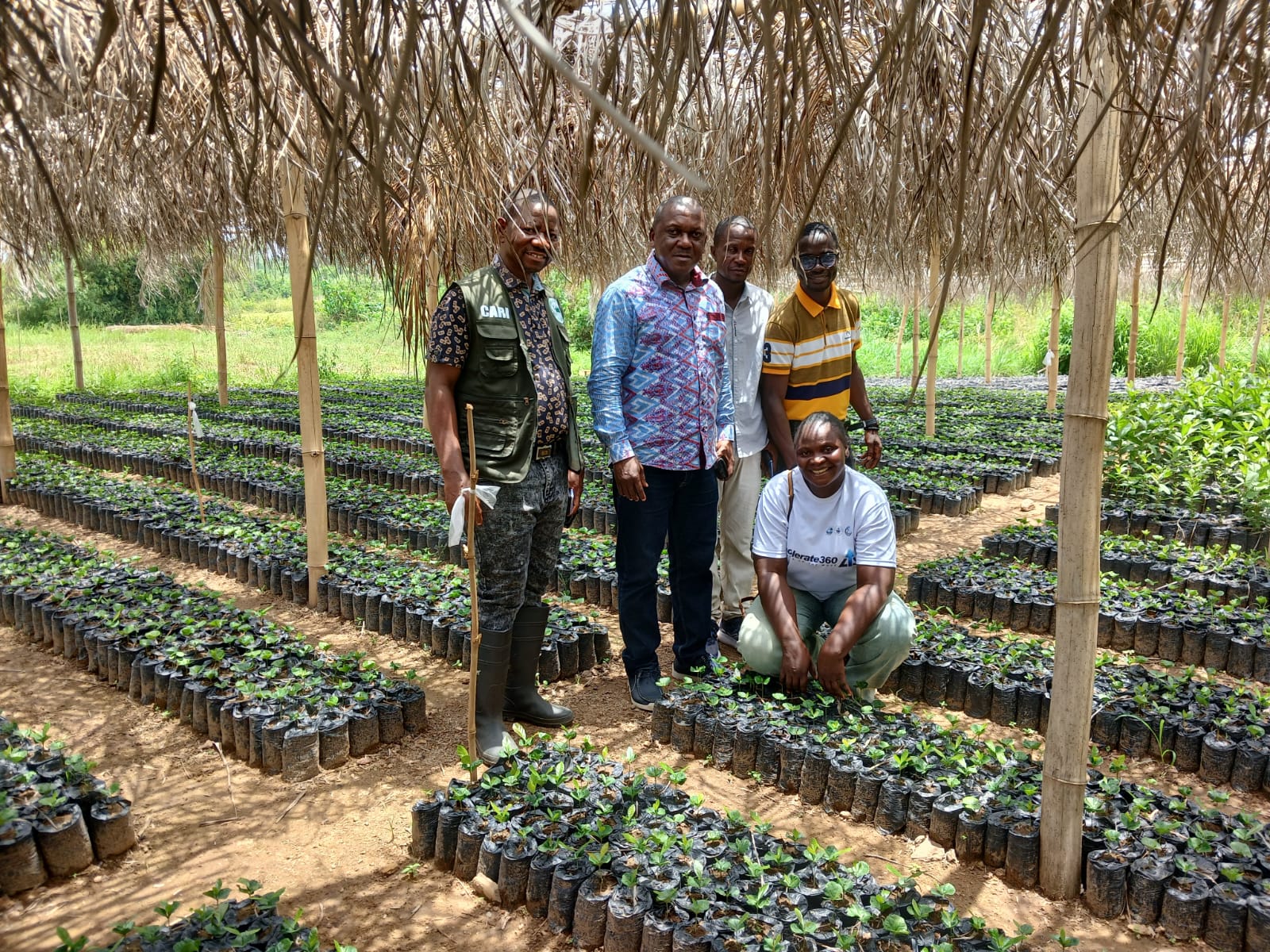
Assistant Minister for Development Planning at the Ministry of Finance and Development Planning, J. Wellington Barchue, led a Monitoring and Evaluation team to inspect ongoing agricultural interventions at CARI’s seed garden and the Seeds for Liberica Coffee Nursery Farm, where more than 400,000 Liberica coffee seedlings are currently under cultivation.
The visit forms part of the government’s broader performance monitoring strategy under President Joseph Nyuma Boakai’s ARREST Agenda for Inclusive Development, which prioritizes Agriculture, Roads, Rule of Law, Education, Sanitation, and Tourism.
Liberica Coffee: Liberia’s Indigenous Treasure
Minister Barchue described Liberica coffee as one of Liberia’s most valuable agricultural assets, emphasizing that the variety was first discovered in Liberia and remains highly resistant to disease.
“Liberica coffee is Liberia’s traditional coffee. It was first discovered here and has enormous potential for economic transformation,” Barchue said.
Globally, Liberica coffee accounts for less than 2% of world coffee production, making it one of the rarest commercial coffee species.
Unlike the more common Arabica and Robusta varieties, Liberica is known for its larger beans, strong aroma, and resilience to climate stress and plant diseases.
Agricultural experts believe Liberia could leverage this niche market to attract specialty coffee buyers in Europe, North America, and Asia.
400,000 Seedlings Ready, 475,000 Distribution Target Set
According to officials, CARI distributed more than 300,000 Liberica seedlings in 2025 across five counties and 25 farming communities.
This year, production has increased significantly, with authorities targeting the distribution of over 475,000 seedlings, while long-term plans aim for 1.1 million seedlings by the end of next year.
“This initiative is one of the many drivers that will ensure the success of the ARREST Agenda,” Minister Barchue stated.
He added that the Ministry of Finance and Development Planning remains committed to strengthening Liberia’s agricultural value chain and supporting institutions delivering measurable impact.
CARI Expands Research and Farmer Support
Speaking during the tour, Dr. James S. Dolo, Head of the Crops Program at CARI, explained that the institute operates seven thematic research programs, with crops being one of its most active divisions.
Within the crop program are four specialized sub-units, including tree crops, where Liberica coffee rehabilitation is being spearheaded.
“We are recovering Liberica coffee so Liberia can regain control of its coffee heritage,” Dr. Dolo said.
He noted that the country’s coffee industry suffered major setbacks during Liberia’s civil conflict between 1989 and 2003, when many plantations were abandoned and seed stock nearly disappeared.
Now, with support from the European Union-funded Seeds for Liberica initiative, CARI is restoring planting materials and helping farmers return to coffee cultivation.
Beyond Coffee: Diversifying Liberia’s Agriculture
Dr. Dolo revealed that CARI is also producing improved seedlings for several other priority crops, including:
Cocoa
Oil Palm
Avocado
Guava
Soursop
Other fruit and tree crops
He emphasized that seedling production is demand-driven.
“If a farmer needs one thousand seedlings, they inform us in advance and we supply them.
We do not want seedlings to waste in the nursery,” he said.
CARI’s broader mandate includes adaptive and applied research to improve national food security and help farmers become self-sufficient.
Funding and Mobility Challenges Persist
Despite progress, researchers highlighted severe operational challenges, particularly inadequate budget allocations for research.
Dr. Dolo disclosed that some scientists are using personal funds to conduct field experiments.
“That is not how research should function,” he said.
Ms. Dennis Kaway, Head of the Tree Crops Unit at CARI, echoed the concerns, calling for increased government support for research and mobility.
“We want to do more. With limited resources, we are already discussing over 400,000 seedlings. If supported, we can achieve much more,” she said.
She added that the institute lacks transportation to monitor farmers in remote areas, detect crop diseases, and provide extension support.
“We need to follow up with farmers. We need to know what diseases are affecting crops in the field, but we cannot do so without mobility support,” she explained.
1,650 Acres of Opportunity
Officials also noted that CARI’s operations extend far beyond its main roadside facilities.
The institute manages approximately 1,650 acres of land, much of which is being used for active research, nursery development, and crop production.
Dr. Dolo urged Liberians and development partners to recognize the institution’s strategic role in rebuilding national agriculture.
Government Pledges Continued Oversight
Minister Barchue concluded the visit by assuring CARI and other public institutions of continued field monitoring and direct engagement.
“We will keep visiting projects, assessing progress, documenting challenges, and finding solutions from central government,” he said.
A New Era for Liberian Coffee
Once overshadowed by war and neglect, Liberia’s indigenous Liberica coffee is emerging as a symbol of national recovery and economic opportunity.
With expanding seedling production, renewed international support, and stronger government oversight, experts say Liberia could reclaim its place on the global coffee map while creating jobs and incomes for thousands of rural farmers.


