
By: Julius Konton
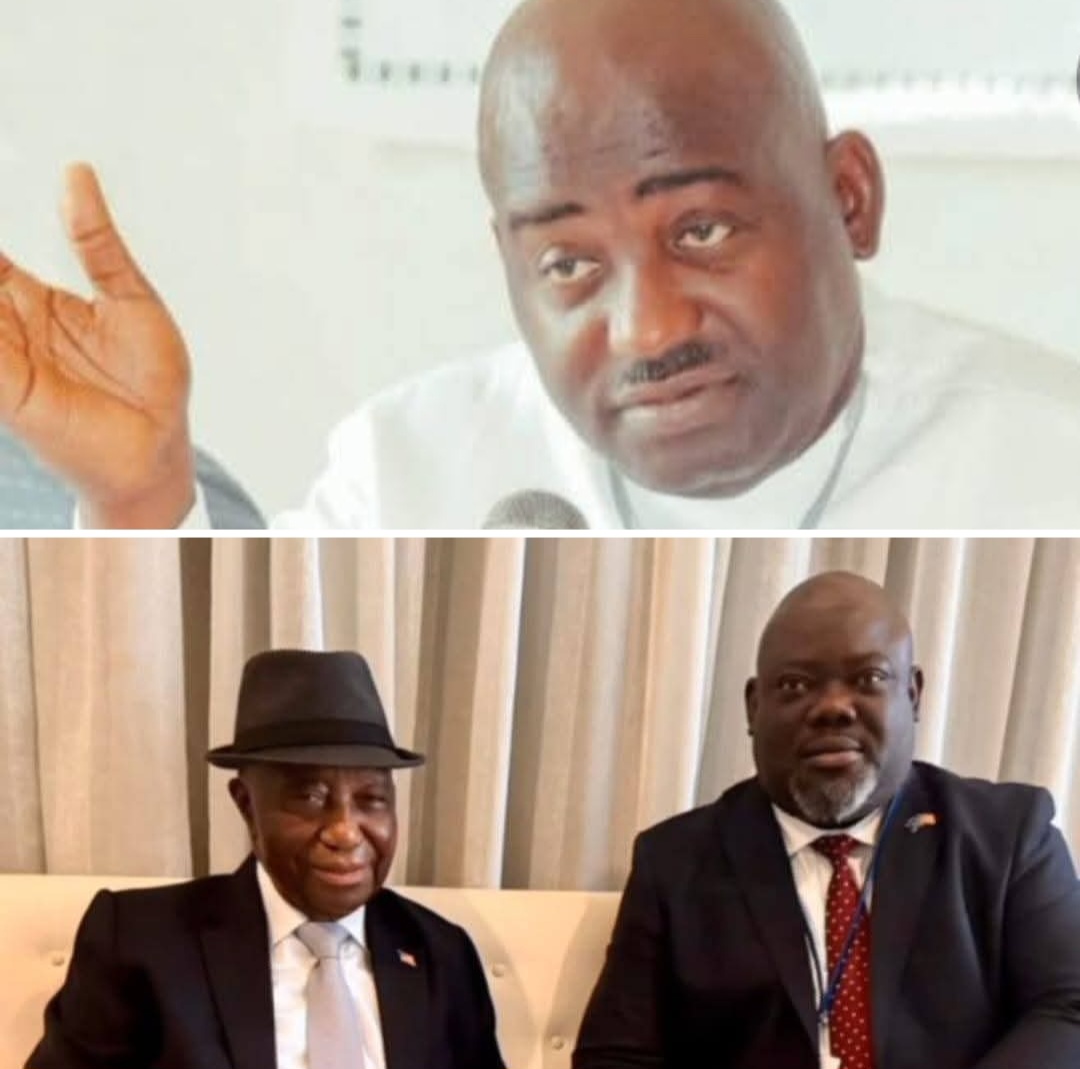
In one of the most controversial and politically charged statements to emerge from Liberia’s fragile legislature in recent months, Nimba County District Seven Representative Musa Hassan Bility has publicly described Deputy Speaker Thomas P. Fallah as the de facto head of the House of Representatives casting serious doubt on the authority of Speaker Richard Nagbe Koon and raising broader questions about power, loyalty, and governance in Liberia’s post-election political order.
Speaking during a local radio interview in Monrovia, Bility bluntly characterized Fallah as “Liberia’s Prime Minister”, asserting that the Deputy Speaker not the Speaker is the individual effectively “running the show” in the 73-member House of Representatives.
“I can admit it without fear, Thomas Fallah is more powerful in the House than any other lawmaker,” Bility declared. “That is the reality”, he re-emphasized.
A Legislature of 73, But Power Concentrated in One?
Liberia’s House of Representatives is constitutionally designed as a collective body of 73 elected lawmakers, each theoretically equal in legislative authority.
Yet Bility’s remarks suggest a very different political reality, one where informal influence, executive proximity, and elite alliances outweigh institutional hierarchy.
Political analysts note that while the Speaker is the formal head of the House, Deputy Speakers in Liberia have historically wielded disproportionate influence, especially when aligned with the Executive Mansion.
What makes Bility’s statement explosive is not merely the claim of Fallah’s dominance, but the implication that institutional checks within the legislature are failing.
From Opposition Firebrand to Executive Insider
Bility’s commentary took an even sharper edge when he revisited Fallah’s political evolution.
As a former opposition lawmaker from Montserrado County District Five, Fallah was once among the fiercest critics of now-President Joseph Nyuma Boakai, particularly during heated political confrontations in Lofa County.
“Gas and fire, he gave Boakai hell,” Bility recalled. “But look at where he is today.
He has moved himself from the line of fire and has now become the darling boy of the President”. Bility explained.
This dramatic political transformation, Bility argued, is not accidental but strategic evidence of Fallah’s ability to navigate Liberia’s volatile political terrain with precision.
Leverage Across the Executive Triangle
According to Bility, Fallah’s power does not stop at the Legislature.
He claims the Deputy Speaker enjoys extraordinary leverage with both President Boakai and Vice President Jeremiah Kpan Koung, positioning him as a central figure in Liberia’s current and future political calculations.
In a striking hypothetical, Bility suggested that if President Boakai were to step aside from a future presidential race and endorse Vice President Koung, Thomas Fallah would almost certainly emerge as a vice-presidential contender, i am not just saying this but I know it”, he maintained.
Such a claim underscores a deeper concern:
The merging of legislative authority with executive ambition, a dynamic that critics say undermines separation of powers in Liberia’s constitutional democracy.
Chaos in the House: A Crisis of Governance
Despite his sharp criticism, Bility stopped short of portraying Fallah as the problem.
Instead, he issued a public appeal calling on the Deputy Speaker to use his vast influence to restore order and sanity to a House increasingly marred by disorder, factionalism, and procedural breakdowns.
“The chaos is hurting us,” Bility warned. “It is hurting lawmakers, the institution, and public confidence”, he reechoed.
Recent sessions of the House have been characterized by walkouts, contested rulings, and leadership disputes, developments that governance watchdogs say threaten legislative productivity at a time when Liberia faces mounting economic pressure, unemployment, and public-sector reform demands.
A Political Admission, or an Institutional Alarm?
Bility framed his remarks as an act of political honesty rather than hostility.
“I am a political fighter,” he said, “but when someone is stronger, you admit it.”
Yet critics argue that such admissions, especially when aired publicly signal a dangerous normalization of personalized power within democratic institutions.
For ordinary Liberians, the controversy raises a fundamental question: Who truly governs in Liberia, the institutions established by law, or the individuals who master influence behind the scenes?
As the House of Representatives struggles to regain stability, all eyes now turn to Deputy Speaker Thomas Fallah, not just as a legislative officer, but as the man many believe holds the balance of power in Liberia’s lower chamber.
Whether he uses that power to unify the House or further entrench elite dominance will define the credibility of Liberia’s legislature in the years ahead.
