
By Stephen N. Sonpon
Naymote Partners for Democratic Development, with support from the United Nations Development Programme (UNDP) and the UN Peacebuilding Fund (PBF), is empowering Liberian citizens to play a stronger role in ensuring transparency, accountability, and inclusive governance.
Through the project Themed: “Empowering Citizens and Communities to Foster Social Accountability and Transparency in Governance and Public Service Delivery,” 75 trained Social Accountability Monitors have been deployed across all 15 counties.
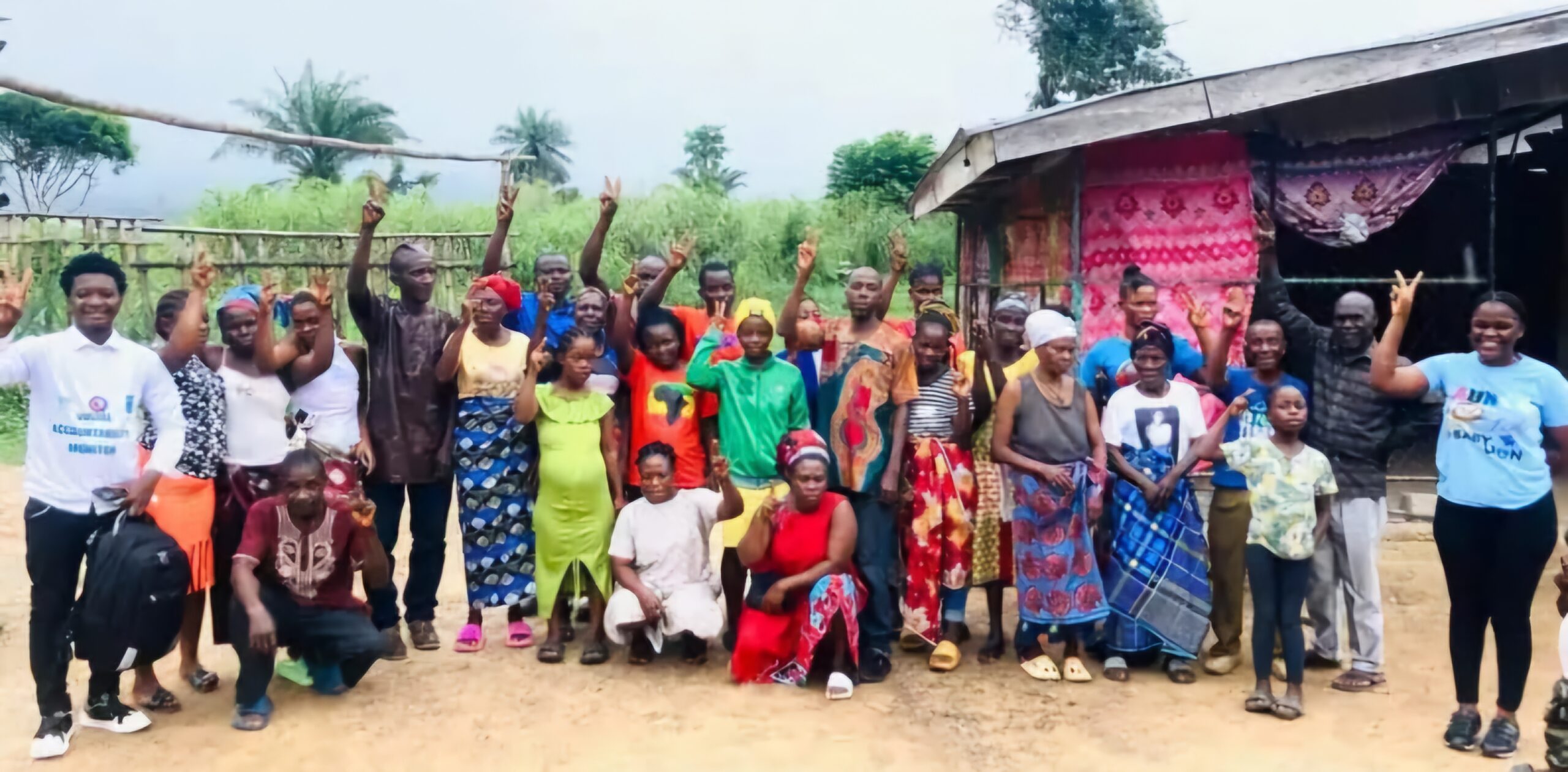
Organized under Naymote’s County Accountability and Advocacy Teams (CAATs), these monitors are tracking local development projects, engaging communities, and holding government institutions accountable for public service delivery.
Between June and August 2025, CAATs monitored 375 development projects nationwide.
Findings revealed that 80 percent—about 300 projects—are currently ongoing, underscoring significant government investment in infrastructure and social services.
CAATs also facilitated direct engagement with 2,166 citizens and 125 county officials through public forums and stakeholder dialogues.
Their work has been praised for fostering transparency and community participation.
“We are aware of Naymote’s work and the level of transparency and independence in their reports about government commitments,” said Momoh S. Kamara, County Education Officer in Lofa. “We want the CAAT to monitor projects under the Ministry of Education so our people can learn about what we are doing and hold us accountable.”
District Agriculture Officer, Calvin Tubah echoed this sentiment: “The Ministry of Agriculture is doing a lot of projects across the county, and none has been tracked by the CAAT team.
We are appealing to CAAT to monitor our projects and report so citizens can understand our impact. Their reports will add value to our work.”
Despite progress, CAATs have flagged several challenges, including project delays, weak contractor performance, limited access to project documentation such as Bills of Quantities (BOQs), and low citizen involvement in project selection.
Maryland County, the situation at Pomuken Public School highlights these gaps: the institution has just one volunteer teacher and lacks basic facilities such as blackboards, benches, latrines, textbooks, and safe drinking water for its 40 students.
“We’ve been forgotten for too long,” said Sarah Wesseh, a resident of Karluway District. “Politicians come here during elections and make promises, but nothing changes. Our children deserve better schools, roads, and healthcare.”
On August 15, residents of Karluway reiterated long-standing grievances, pointing to dangerous road conditions and unsafe bridges that have reportedly caused fatalities.
Similar concerns exist in Gbarpolu and Bong Counties, where magisterial courts are in despair, and in Lofa County, where sections of the Voinjama Multilateral High School are deteriorating.
CAAT’s grassroots monitoring has sparked greater civic awareness. Citizens are increasingly demanding accountability through radio talk shows, community meetings, and public forums.
“Before CAAT, we didn’t know how county funds were used,” said James Kollie, a youth leader in Bong County. “Now we attend forums, ask questions, and follow the projects. It’s empowering.”
Using ComCare, a digital tool for real-time monitoring, CAATs collect gender-responsive data on public spending and service delivery.
Findings are regularly shared with county administrations and councils, alongside actionable recommendations.
The initiative is funded by the UN Peacebuilding Fund and facilitated by UNDP Liberia in partnership with Naymote Partners for Democratic Development.
It marks a milestone in advancing community-driven governance and reinforces Liberia’s commitment to building inclusive, transparent, and accountable development systems.
