
By: Julius Konton
President Joseph Nyuma Boakai has issued one of his strongest warnings yet on the governance of Liberia’s vast natural resources, declaring that his administration will take decisive steps to protect the country’s mineral wealth amid mounting concerns over transparency, illicit extraction, and limited national benefit.
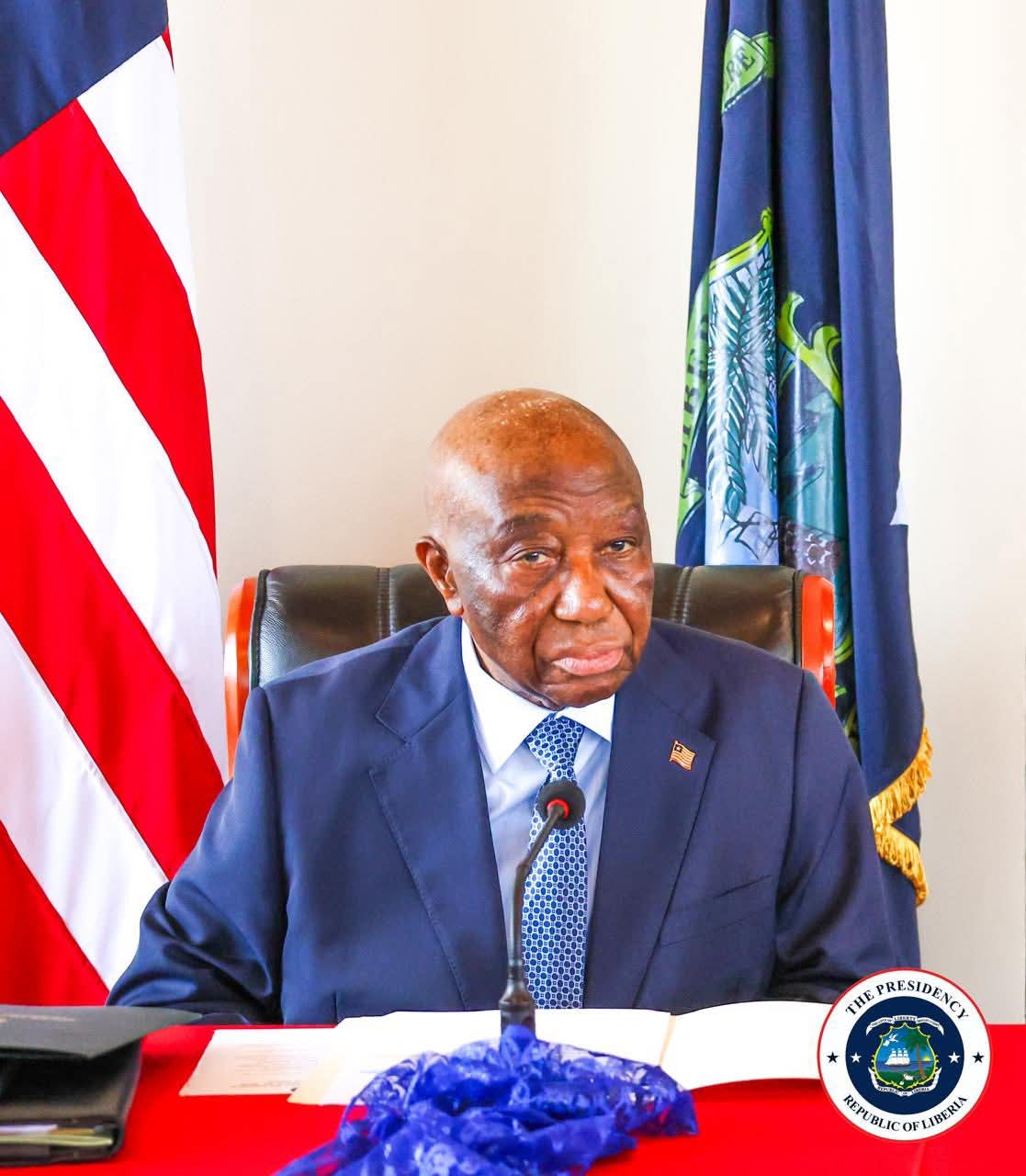
Speaking at the Executive Mansion during the opening of the government’s third Cabinet Meeting of 2026, Boakai pledged a new era of accountability under the theme: “Positioning Liberia for Mineral-Led Development and National Prosperity.”
Yet beneath the optimism lies a controversial admission Liberia may not fully know what is being extracted from its own soil.
“Often, we do not fully know what resources are being extracted,” the President stated, suggesting that mining companies may be underreporting or masking the true value of exports.
A RESOURCE-RICH NATION, A DEVELOPMENT PARADOX
Liberia is widely regarded as one of West Africa’s most resource-endowed nations, with significant deposits of iron ore, gold, diamonds, and critical minerals.
According to data from the World Bank and the Extractive Industries Transparency Initiative, the mining sector accounts for over 50% of Liberia’s export earnings, yet contributes a far smaller share to national employment and infrastructure development.
Historically, Liberia’s extractive industries have been dominated by foreign concessionaires dating back to the early 20th century, when iron ore exports surged under agreements widely criticized for offering limited local benefits.
During the post-war reconstruction period following the Second Liberian Civil War, the sector was revived with renewed foreign investment but governance gaps persisted.
Critics argue that Liberia exemplifies the so-called “resource curse,” where countries rich in natural resources experience slower economic growth, weaker institutions, and higher levels of corruption.
TRANSPARENCY UNDER FIRE
In a striking acknowledgment, Boakai identified limited transparency as one of the government’s greatest challenges.
His remarks echo longstanding concerns raised by international watchdogs that Liberia’s monitoring systems are underdeveloped, allowing discrepancies between declared and actual mineral exports.
Industry analysts estimate that millions of dollars in potential revenue are lost annually due to underreporting, smuggling, and weak enforcement mechanisms particularly in the artisanal and small-scale mining (ASM) sector, which employs tens of thousands of Liberians but operates largely informally.
To address this, the government is pursuing reforms that include:
Finalization of gold refinery regulations
Development of a new mining law
Strengthening of exploration oversight frameworks
Amendment of the Whistleblower Act to incentivize reporting of illegal mining
Formalization of the ASM sector, a move seen as both economically vital and politically sensitive
THE HUMAN AND ENVIRONMENTAL COST
Beyond revenue concerns, Boakai highlighted the environmental and social toll of unregulated mining activities.
“Issues such as water pollution and environmental degradation are serious concerns,” he said.
Communities in mining regions including Grand Bassa, Nimba, and Bong Counties have repeatedly reported contaminated water sources, deforestation, and displacement linked to mining operations.
According to environmental assessments, over 30% of mining-affected communities lack access to safe drinking water, raising questions about whether economic gains are coming at an unsustainable cost.
LEGACY CONTRACTS AND LIMITED INFRASTRUCTURE
The President also confronted a politically sensitive issue: legacy concession agreements signed by previous administrations.
Many of these deals, critics say, prioritized rapid investment over long-term national benefits.
Infrastructure gaps remain glaring. Key transport corridors such as routes connected to major mining zones like Tubmanburg were originally designed to facilitate mineral exports rather than broader economic development.
Boakai struck a cautious tone:
“We are not going to say this is how we met it, and this is how it will remain,” he said, while emphasizing the need to respect existing agreements that guarantee investor profitability.
CAPACITY GAPS AND LOCAL EXPERTISE
A central pillar of the President’s reform agenda is human capital development. Liberia currently faces a shortage of trained geologists, mining engineers, and regulatory experts an issue that limits the government’s ability to independently verify extraction activities.
Experts note that fewer than 200 certified mining professionals are currently active in Liberia, a figure widely seen as insufficient for a sector of such scale.
Boakai urged increased investment in education and technical training, arguing that “local expertise is essential to protecting national interests.”
LOCAL GOVERNANCE: A HIDDEN WEAKNESS?
In another controversial assertion, the President challenged the widely held belief that corruption is primarily a central government issue.
He warned that local officials often perceived as less corrupt may simply operate with less scrutiny.
Reports of unauthorized mining operations and informal licensing at the county level have raised alarms, suggesting that decentralization without accountability could exacerbate resource mismanagement.
GLOBAL LESSONS AND HIGH STAKES
Liberia’s renewed push for reform comes at a time when global demand for minerals especially gold and strategic resources continues to rise.
Countries such as Botswana and Norway are often cited as examples of how resource wealth can be effectively managed through transparency, sovereign wealth funds, and strong institutions.
Whether Liberia can replicate such success remains uncertain.
A PROMISE UNDER SCRUTINY
Boakai’s declaration, “We will protect the resources of our country”, is likely to resonate with a population that has long questioned who truly benefits from the nation’s natural wealth.
Yet skepticism remains high.
With billions of dollars in untapped resources at stake, analysts warn that implementation not rhetoric will determine whether Liberia can transform its mineral wealth into broad-based prosperity.
For now, the President’s remarks have set the stage for what could become one of the most consequential governance battles of his administration.
