
By: Julius Konton
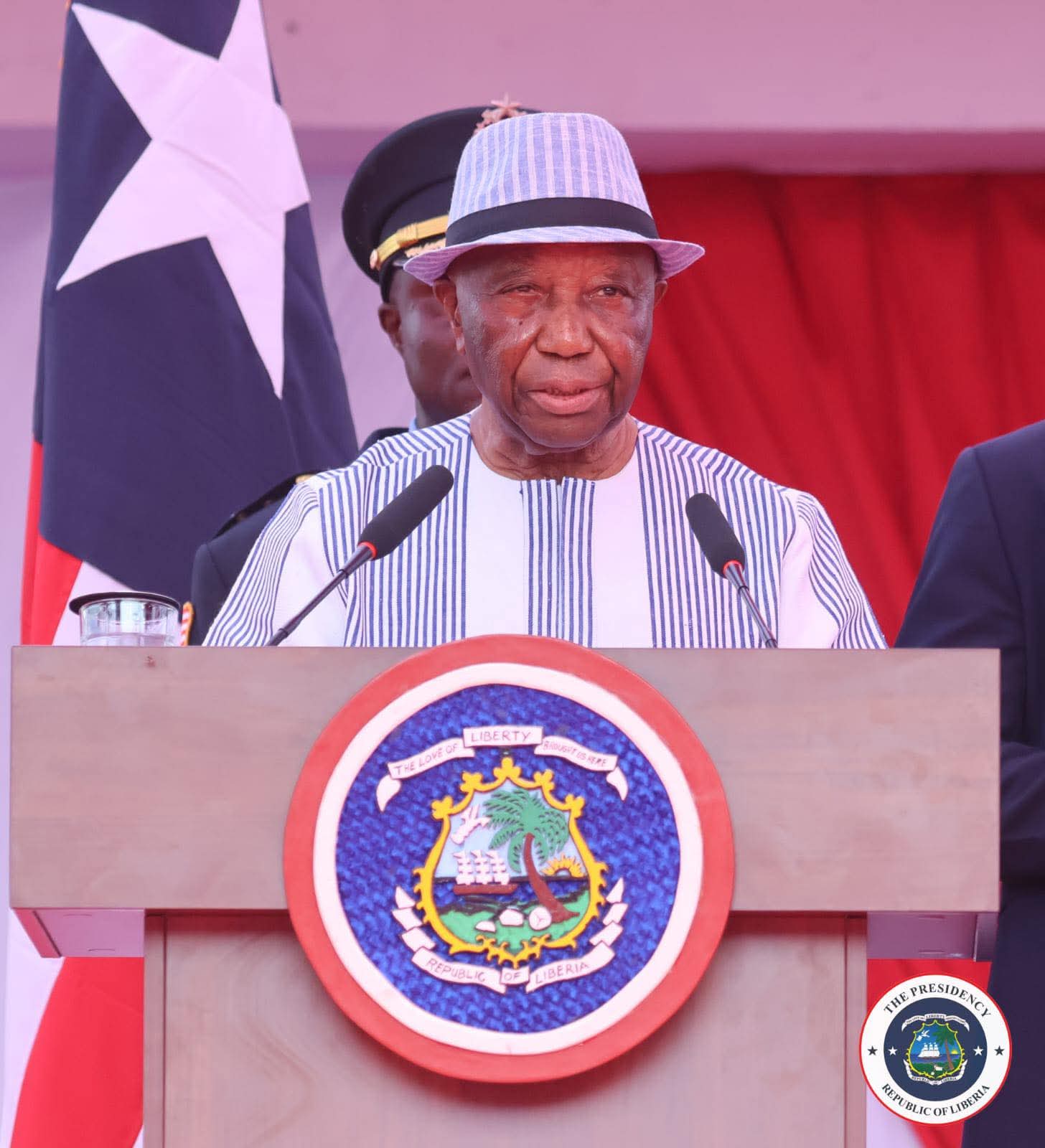
President Joseph Nyuma Boakai’s third State of the Nation Address (SONA), delivered in late January in accordance with Liberia’s constitutional mandate, presented a confident narrative of economic stabilization and renewed growth.
Yet behind the optimistic figures lies a more complex and contested reality one that reflects both genuine macroeconomic progress and persistent structural fragility in one of West Africa’s most aid-dependent economies.
The speech marked a critical political moment for Boakai, whose administration inherited an economy still recovering from years of post-war underinvestment, governance deficits, the Ebola crisis, and the economic aftershocks of COVID-19 and global inflation shocks.
The Growth Story: Strong Numbers, Narrow Base
President Boakai announced that Liberia’s economy grew by 5.1 percent in 2025, outperforming both the 4.6 percent IMF forecast and 4.0 percent growth recorded in 2024.
The administration credited this expansion to robust performance in mining, agriculture, fisheries, and services, with mining alone expanding by 17 percent and exports surging by 31.5 percent to approximately US$2.1 billion.
Historically, Liberia’s growth has been extractive-led, a pattern dating back to the iron ore boom of the 1960s and later reinforced by foreign concessions in rubber, timber, and minerals.
Critics argue that while headline growth figures are impressive, they remain highly concentrated, capital-intensive, and insufficiently linked to employment creation.
According to World Bank estimates, the extractive sector employs less than 5 percent of Liberia’s formal workforce, raising questions about how much of the reported growth translates into household income gains for the majority of Liberians.
Inflation and Currency: A Rare Win for Monetary Policy
One of the administration’s most notable claims was the reduction of inflation to 4 percent by December 2025, down from nearly 10 percent in 2024, the lowest level in over two decades.
The Liberian dollar also reportedly appreciated by at least 3 percent against the US dollar, reversing years of steady depreciation.
Economists acknowledge this as a genuine achievement, reflecting tighter fiscal controls, improved foreign exchange liquidity, and easing global import prices.
However, Liberia remains a dual-currency economy, where over 70 percent of major transactions are conducted in US dollars, limiting the real impact of exchange rate gains on everyday prices.
Market surveys in Monrovia continue to show high food price volatility, especially for imported rice and fuel, two politically sensitive commodities.
Reserves, IMF Targets, and the Donor Dilemma
The external sector figures were another centerpiece of Boakai’s address.
Gross international reserves rose from US$475 million in 2024 to US$576 million in 2025, while net reserves reportedly exceeded IMF targets, potentially reaching US$280 million.
Liberia also met nearly all IMF Performance Criteria under its Extended Credit Facility (ECF) in mid-2025, reinforcing investor confidence and donor trust.
Yet, in a striking admission, the President revealed that donor support was abruptly slashed in the second quarter of 2025, disrupting social and infrastructure projects, triggering job losses, and exposing the country’s continued vulnerability to external financing shocks.
Despite reaffirmed commitments totaling US$381 million for 2025, including US$63 million in direct budget support, analysts note that Liberia still relies on external aid for over 40 percent of its national budget, a structural weakness successive governments have failed to resolve.
Digital Finance and the Inclusion Promise
The administration highlighted progress in financial inclusion, citing 275,000 digital transactions worth LRD 375 million and US$2.7 million by December 2025. The goal: raising inclusion from 52 percent in 2024 to over 70 percent by 2029.
While promising, financial analysts caution that digital transaction volume remains modest relative to Liberia’s population of over 5.3 million, and that weak electricity access below 30 percent nationwide continues to constrain scale.
Central Bank Reforms: Quiet but Significant
For the first time in decades, the Central Bank of Liberia recorded consecutive operational surpluses in 2024 and 2025, issuing US$44.4 million in securities, rolling over US$132.1 million, and managing 7.6 billion Liberian dollars in domestic instruments.
Governance reforms at the Bank have been welcomed, particularly after years of controversy over currency printing scandals and accountability failures under previous administrations.
MCC Compact: A Strategic Signal from Washington
The reaffirmation of Liberia’s eligibility for a second Millennium Challenge Corporation (MCC) Compact by the United States in December 2025 stands as a major diplomatic and economic endorsement.
The planned focus on energy and job creation reflects recognition that infrastructure deficits especially unreliable power remain Liberia’s single largest constraint to growth.
Historically, Liberia’s first MCC Compact (2015–2021) delivered mixed results, making implementation and governance of the second compact a test of Boakai’s reform credentials.
The Verdict: Progress, But Not a Breakthrough
President Boakai’s third State of the Nation Address presented a narrative of discipline, recovery, and regained credibility and in macroeconomic terms, much of it is defensible.
Inflation is down. Reserves are up. IMF confidence has returned.
Yet the speech also underscored a familiar Liberian paradox: strong national indicators coexisting with persistent poverty, donor dependence, weak job creation, and fragile social safety nets.
As Liberia looks toward projected 6 percent average growth between 2026 and 2028, the central question remains unresolved: Can macroeconomic stability finally translate into broad-based prosperity or will it remain a technocratic success story disconnected from lived reality?
For President Boakai, the next State of the Nation Address may matter less than what Liberians feel in their markets, paychecks, and power sockets.
