



By: Julius Konton
Liberian national Dehpue Yenpea Zuo has formally assumed responsibility as the incoming Commissioner for Economic Affairs and Agriculture at the Economic Community of West African States (ECOWAS), pledging to advance regional economic integration, strengthen agricultural value chains and help build a more resilient and food-secure West Africa.
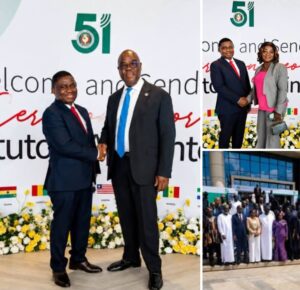
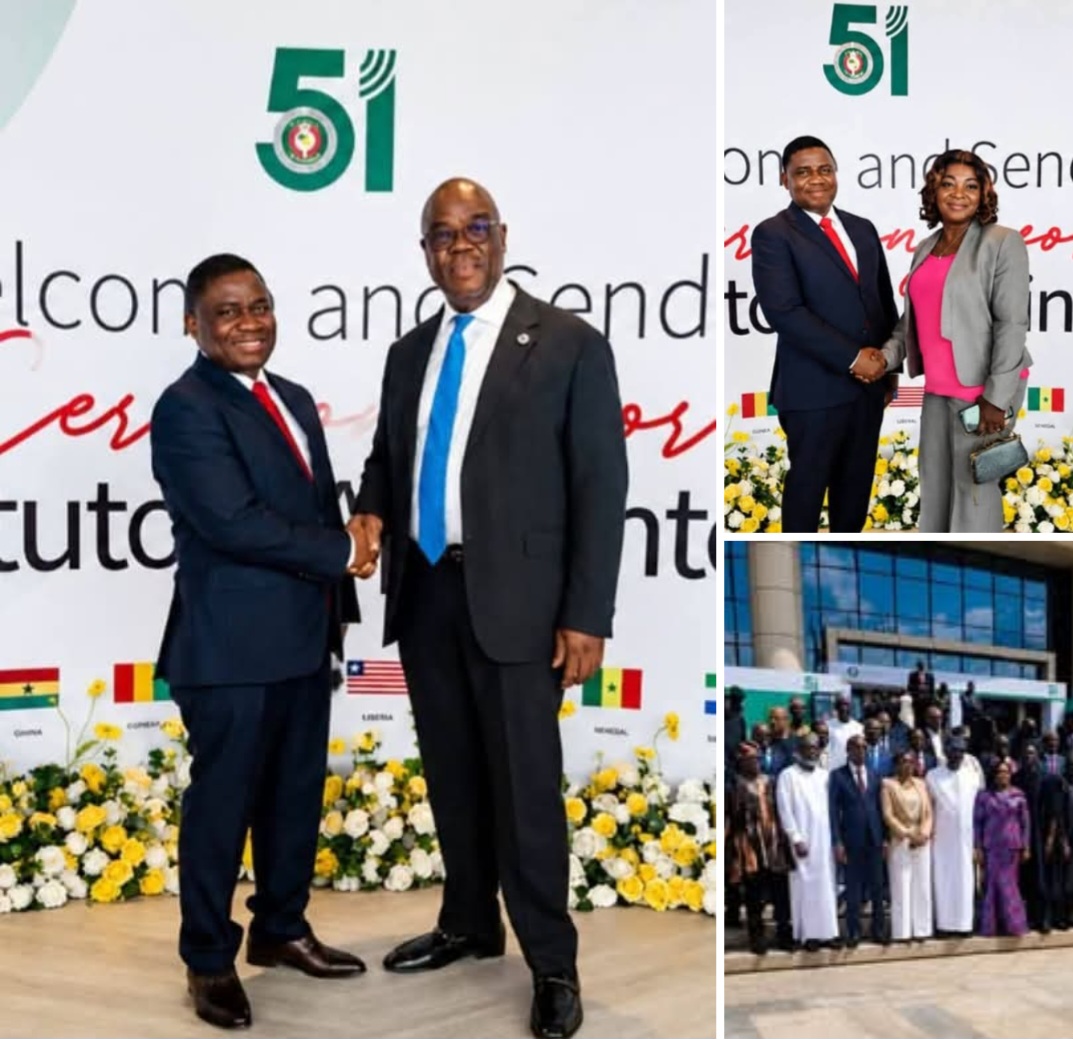
Zuo made the commitment on Monday, August 31, 2026, during a formal hand-over ceremony for newly appointed statutory officials of the ECOWAS Commission at the organization’s new headquarters in Abuja, Nigeria.
The ceremony brought together senior Nigerian government officials, ECOWAS leadership, outgoing and incoming commissioners, directors, technical officials, development partners, members of the diplomatic community and the press.
In his acceptance remarks, Zuo described his appointment as both an honor and a significant responsibility, expressing gratitude to the leadership of ECOWAS and acknowledging the confidence placed in him by Liberian President Joseph Nyuma Boakai Sr. and the Liberian people.
He also paid tribute to ECOWAS Commission President Dr. Omar Alieu Touray and his predecessor, Commissioner Kalilou Sylla, recognizing their contributions to the regional organization’s economic development, agricultural transformation, food-security initiatives and integration agenda.
Zuo said his new assignment should not be viewed simply as a national appointment, but as a responsibility to the entire West African Community.
He argued that the Department of Economic Affairs and Agriculture occupies a strategic position within ECOWAS because of its role in promoting sustainable economic growth, strengthening regional trade, increasing agricultural productivity and improving the resilience of member states.
According to Zuo, West Africa is confronting a combination of economic vulnerability, food insecurity, climate-related pressures, disruptions to regional commerce and the challenge of creating meaningful opportunities for a rapidly growing young population.
Rather than viewing those pressures solely as threats, however, he said ECOWAS should transform them into opportunities for innovation, cooperation and institutional reform.
“Our region continues to face complex challenges, including economic vulnerability, food insecurity, climate change, disruptions in regional trade, and the pressing need to create opportunities for our young and growing population,” Zuo said.
He added that the region possesses significant economic assets that, if effectively coordinated, could provide the foundation for stronger and more sustainable development.
One of the most significant elements of Zuo’s portfolio will be the broader ECOWAS economic integration agenda, including efforts linked to the proposed ECO single currency.
Zuo said the Department of Economic Affairs and Agriculture has an important role in meeting the timeline for the introduction of the ECO and in advancing key pillars of ECOWAS Vision 2050, which seeks to create a more integrated, peaceful, prosperous and stable West Africa.
The ECO project has long been presented as a major component of deeper regional economic integration, although its implementation has faced significant economic, political and institutional challenges.
Zuo’s remarks therefore place his new portfolio at the center of one of ECOWAS’s most ambitious long-term projects.
Beyond monetary integration, Zuo placed strong emphasis on agriculture and food systems, sectors that remain critical to livelihoods across West Africa.
He pledged to work with ECOWAS member states, technical institutions, development partners, private-sector investors, farmers’ organizations and other stakeholders to strengthen agricultural production and regional value chains.
Among the priorities he identified are greater investment in agriculture and agribusiness, stronger food systems, improved intra-regional trade and deeper economic cooperation.
The incoming commissioner said ECOWAS must move beyond policies and programs that produce limited practical results and instead focus on initiatives capable of delivering measurable benefits to ordinary citizens.
His proposed approach places particular emphasis on connecting farmers and producers to markets, expanding value addition and encouraging private-sector investment across the agricultural economy.
Zuo also called for a stronger regional pact around private-sector development, arguing that ECOWAS possesses enormous economic potential through its large consumer market, entrepreneurial population and expanding regional trade opportunities.
He cited the ECOWAS Trade Liberalization Scheme (ETLS) and the African Continental Free Trade Area (AfCFTA) as important instruments for unlocking greater commercial opportunities.
He further pointed to the role of major West African business leaders, including Nigerian industrialist Aliko Dangote, as evidence of the capacity of African private enterprise to respond to major economic challenges and invest at scale.
Zuo argued that ECOWAS should deliberately harness such private-sector capacity as part of a broader strategy to transform the regional economy.
As he begins his tenure, Zuo said he intends to promote a working culture centered on cooperation, transparency, accountability, professionalism and measurable results.
He acknowledged that delivering ECOWAS’s ambitious objectives would require more than the efforts of one commissioner or department.
Instead, he called for stronger collaboration among member states, ECOWAS institutions, development partners, farmers, businesses and civil society.
“Achieving our objectives will require dedication, professionalism, and unity of purpose,” he said, expressing confidence that collective action could produce meaningful progress toward a more prosperous, food-secure and integrated West Africa.
Zuo’s assumption of office comes at a critical juncture for ECOWAS, as the regional bloc navigates economic pressures, food-security concerns, shifting regional trade patterns and broader questions about the future direction of West African integration.
For Liberia, his appointment also represents an opportunity to strengthen the country’s voice within the region’s economic policy architecture.
With the new commissioner pledging to focus on economic growth, agriculture, regional trade, private investment and the long-term integration agenda, his tenure is expected to attract close attention from governments, businesses, farmers and development partners across West Africa.
Zuo concluded by reaffirming his commitment to serving the ECOWAS Community with integrity, determination and a strong sense of duty.
“I accept this charge with honor and with a full sense of duty,” he said.


