



By: Julius Konton
Morocco and Senegal have reaffirmed the exceptional strength of their bilateral relationship, sending a powerful message that one of Africa’s most compelling football rivalries remains part of a much broader partnership built on history, culture, diplomacy and shared continental interests.
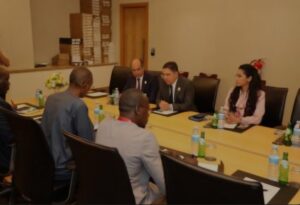
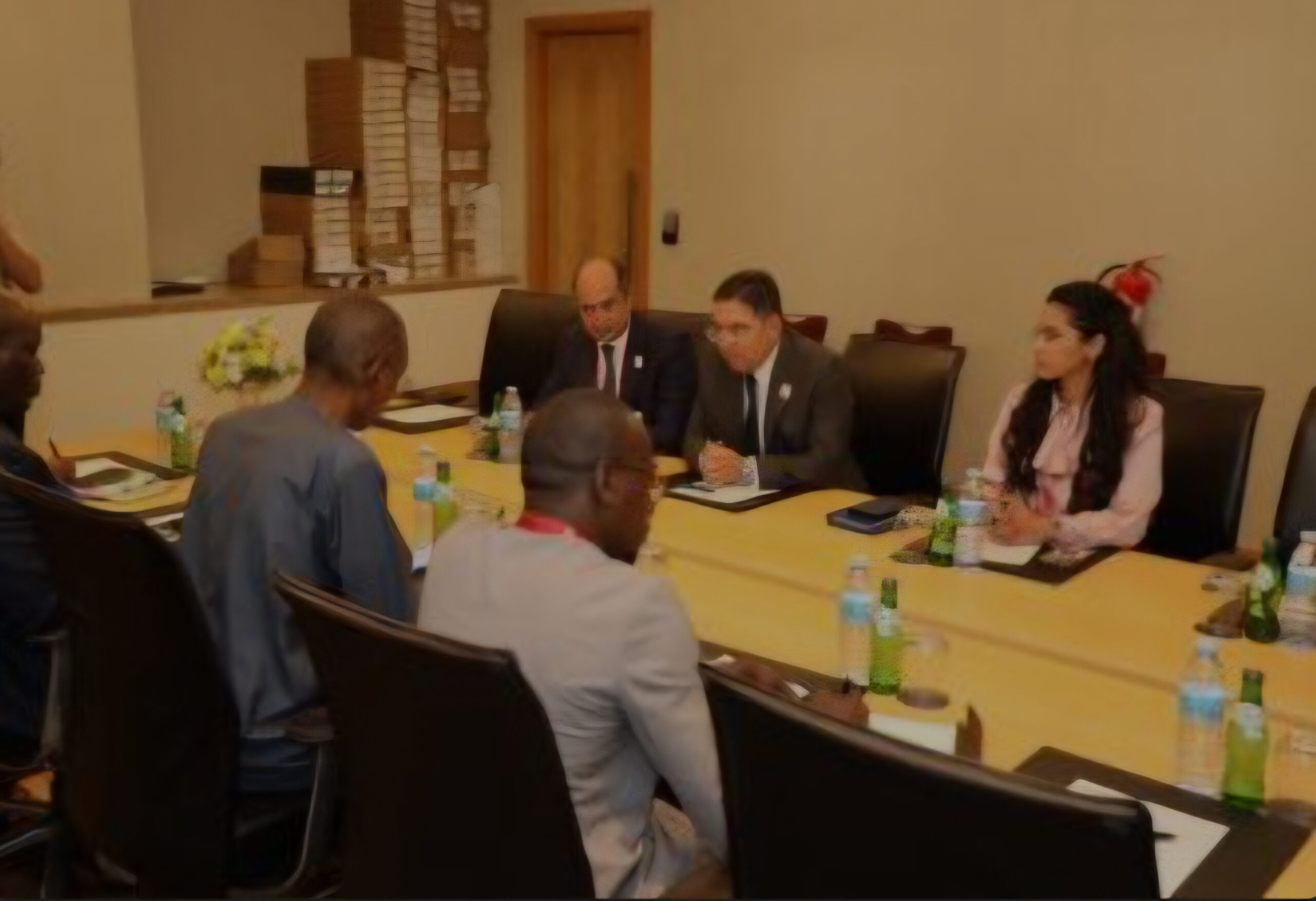
The renewed commitment came on when Senegal’s Minister of African Integration, Foreign Affairs and Senegalese Abroad, Cheikh Niang, met Morocco’s Minister of Foreign Affairs, African Cooperation and Moroccan Expatriates, Nasser Bourita, on the sidelines of the 26th Extraordinary Session of the African Union Executive Council in Luanda.
Niang described Morocco-Senegal relations as having a “unique character in Africa,” stressing that the two countries maintain deep-rooted friendship and cooperation and that their discussions produced broad areas of convergence.
“Zero disagreement,” Niang said, underlining what he described as the strength and resilience of the bilateral relationship.
The remarks carry particular significance for African football, where Morocco and Senegal have emerged as two of the continent’s most successful and influential national teams.
The relationship between the two nations has attracted renewed attention following their dramatic encounter in the 2025 Africa Cup of Nations final, played in Rabat on January 18, 2026.
Senegal won the original final 1–0 after extra time, in a match that became one of the most controversial African football fixtures in recent years.
CAF subsequently overturned the sporting outcome through its appeals process and awarded Morocco a 3–0 forfeit victory, following a ruling concerning Senegal’s departure from the field without the referee’s authorization.
The decision triggered significant controversy and was challenged by Senegal.
Despite the football dispute, however, both governments have repeatedly emphasized that their relationship extends far beyond sport.
That distinction was reinforced in Luanda, with Bourita stressing that the two countries have developed an exceptionally close state-to-state relationship over several decades.
The football rivalry itself is long-standing.
According to CAF statistics published ahead of the 2025 AFCON final, Morocco and Senegal had met 31 times at senior men’s level, with Morocco holding the historical advantage of 18 victories to Senegal’s six, while seven matches ended in draws.
Morocco had scored 41 goals compared with Senegal’s 18.
Their rivalry stretches back more than half a century and includes World Cup qualifying battles, Africa Cup of Nations encounters and international friendlies.
Morocco also defeated Senegal in the qualifiers for the 1976 Africa Cup of Nations, winning 5–2 on aggregate. Morocco subsequently captured its only AFCON title in 1976.
The two nations again crossed paths during World Cup qualification in 2001, when Senegal defeated Morocco 1–0 in Dakar after the teams had drawn 0–0 in Rabat.
Senegal ultimately reached the 2002 World Cup, its first appearance at football’s biggest international tournament.
Morocco had already appeared at the World Cup, making its debut in 1970, and later became the first African nation to reach a men’s World Cup semi-final when the Atlas Lions achieved that historic feat at Qatar 2022.
Senegal, meanwhile, became the first African team to defeat a reigning world champion at the World Cup when the Teranga Lions beat France in the opening match of the 2002 tournament.
The modern rivalry has become increasingly competitive.
Morocco defeated Senegal 3–1 in a 2020 friendly, while the two countries also met in the 2024 African Nations Championship cycle, where Morocco eliminated defending champions Senegal after a 1–1 draw and a 5–3 victory on penalties in August 2025.
Senegal then produced the defining result of the 2025 AFCON final, winning 1–0 in extra time in Rabat before the subsequent CAF ruling dramatically changed the official record.
The fixture has therefore developed into more than a conventional international football contest.
It represents a clash between two of Africa’s strongest football cultures, while simultaneously reflecting the deep connections between their peoples.
Sport as a Bridge Between Rabat and Dakar
The sporting relationship extends beyond national-team football.
In December 2025, senior officials from the Royal Moroccan Football Federation (FRMF) and Senegal’s Dakar 2026 Youth Olympic Games organizing committee met in Morocco to strengthen cooperation and exchange expertise in the organization of major sporting events.
The discussions focused on sharing experience from Morocco’s hosting of the 2025 Africa Cup of Nations and Senegal’s preparations for the Dakar 2026 Youth Olympic Games.
That cooperation illustrates how football and sport can serve as instruments of diplomacy, particularly between two countries whose influence extends well beyond their respective borders.
Morocco is preparing to co-host the 2030 FIFA World Cup alongside Spain and Portugal, while Senegal is continuing to strengthen its position as one of Africa’s leading football nations.
The latest meeting in Luanda also highlighted the wider strategic dimension of Morocco-Senegal relations.
Bourita said the two sides discussed the roadmap for their bilateral relationship, ways to revitalize cooperation mechanisms and continued coordination on issues affecting the Sahel, Atlantic Africa and broader continental affairs.
The two countries formally established diplomatic relations in 1960, and their partnership has expanded across agriculture, education, infrastructure, health, finance, trade and other sectors.
The relationship was further reinforced in January 2026 when Morocco and Senegal signed 17 agreements and memoranda of understanding covering areas including higher education, agriculture, industry, fisheries, food safety and small and medium-sized enterprises.
The developments demonstrate that, despite the intensity of competition on the football field, the strategic interests of Rabat and Dakar remain considerably broader.
Football Rivalry, African Unity
For African sport, the Morocco-Senegal relationship offers an important example of how fierce competition can coexist with diplomatic friendship.
Both nations possess internationally recognized football traditions, passionate supporters and increasingly sophisticated football infrastructure.
Their national teams have also become regular contenders on the continental and global stages.
Yet the message from Luanda was clear: competition does not have to undermine cooperation.
As Morocco and Senegal continue to compete for African football supremacy, their leaders are simultaneously seeking to deepen political, economic and regional cooperation.
That balance could prove increasingly important as African football enters a new era of major tournaments, expanded infrastructure and greater global influence.
The rivalry between the Atlas Lions and the Lions of Teranga may continue to produce dramatic matches, controversial decisions and unforgettable moments.
But beyond the 90 minutes and even beyond extra time Morocco and Senegal are signaling that their relationship is built to last.


