




By: Staff Writer
Liberia is facing mounting questions over a controversial migration arrangement with the United States under which the West African country has agreed to receive as many as 1,200 third-country nationals removed from U.S. territory over a 12-month period.
The first group reported by international news agencies as 20 people is expected to arrive in Liberia on Thursday, August 20, 2026, putting the government under growing pressure to explain precisely what it has agreed to, what legal protections the arrivals will receive and why Liberia was selected as a destination for people who are not Liberian nationals.
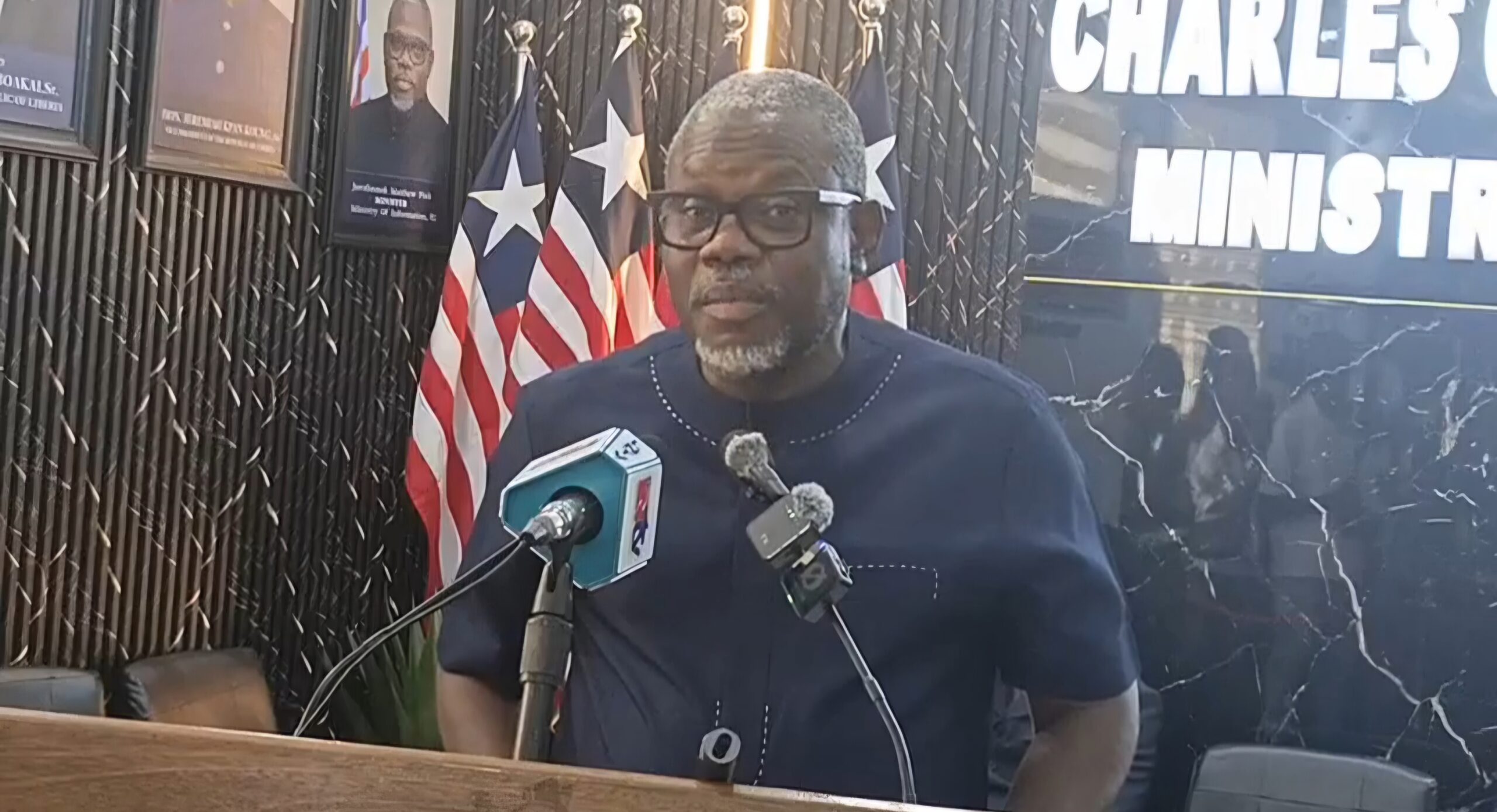
Information Minister Jerolinmek Piah said the arrangement is based on an exchange of notes between Liberia and the United States dated September 4–10, 2025, and that Liberia intends to receive up to 1,200 people during the first year.
But the government has not publicly released the full contents of the exchange of notes, leaving a significant information gap between the announcement of the arrangement and the public’s understanding of its terms.
That gap is now becoming the central controversy.
WHO ARE THE 1,200?
According to the Liberian government, the individuals are third-country nationals, meaning they are not Liberian citizens and may come from different parts of Africa, North America, South America and the Caribbean.
Reuters reported that the people involved include individuals who cannot legally be returned to their countries of origin because of risks such as torture or abuse, while the Liberian government says those arriving will have been vetted and medically cleared for travel.
The distinction is important.
These are not simply Liberians being repatriated from the United States.
They are foreign nationals for whom Liberia has agreed to become an alternative destination.
The government says some may subsequently apply for asylum in Liberia, while others will be free to leave the country.
That raises the first major question:
If these individuals have not chosen to return to their countries of nationality, what legal, security or humanitarian circumstances make Liberia an appropriate alternative?
And perhaps more importantly:
What happens if some of them eventually request permanent protection in Liberia?
THE NUMBERS ARE SMALL FOR AMERICA—BUT SIGNIFICANT FOR LIBERIA
At first glance, 1,200 people may appear relatively modest in comparison with the United States’ population of more than 340 million.
For Liberia, however, the figure deserves closer examination.
UNHCR data show that Liberia already hosts refugees and asylum-seekers, although the country’s current caseload remains relatively small by international standards.
UNHCR’s recent data put Liberia’s refugee population at roughly 1,100–1,200 people, with several hundred asylum-seekers also recorded.
That means an additional 1,200 arrivals would be comparable in scale to Liberia’s existing refugee population.
In other words, while the number may be manageable from a purely demographic perspective, the arrangement could represent a substantial expansion of Liberia’s responsibilities within the international protection system.
Liberia is also a country with a population of roughly 5.7 million people, according to UNHCR data.
The issue, therefore, is not simply the number of people.
It is capacity.
WHY LIBERIA?
Perhaps the most politically sensitive question is why Liberia was selected.
The government has emphasized Liberia’s historic reputation as a country that has offered refuge to displaced people and pointed to its own history of migration, displacement and post-war recovery.
Liberia’s refugee policy operates within international and regional legal frameworks.
The country is party to the 1951 Refugee Convention, the 1967 Protocol and the 1969 OAU Refugee Convention, among other instruments.
Liberia has also spent decades dealing with the consequences of its own civil wars, including mass displacement and refugee movements across West Africa.
But historical experience does not automatically answer the practical questions surrounding this particular arrangement.
The government must still explain:
Why were these individuals selected for transfer to Liberia?
What countries are they from?
How many are expected from each country?
What were the precise criteria used by the United States?
What legal status will they receive upon arrival?
Can Liberia return them to their countries of nationality?
Who pays for housing, food, healthcare, security and transportation?
For how long will U.S. support continue?
What happens when the arrangement expires?
What happens to people who seek asylum in Liberia?
Will Liberia be permitted to refuse particular individuals on security or humanitarian grounds?
Until these questions are answered, the public is being asked to assess a major international migration policy largely on the basis of official assurances.
THE “MEDICALLY CLEARED” QUESTION
Minister Piah has stressed that those transferred will be medically authorized to travel.
That requirement is not inherently suspicious.
Medical clearance is a common component of international travel and migration procedures and can help prevent the transfer of people whose medical condition makes travel unsafe.
However, the government’s emphasis on medical clearance also raises legitimate questions about what screening is being conducted beyond physical fitness to travel.
Medical clearance is not the same thing as security clearance.
Nor is it the same thing as determining whether an individual has a legitimate claim to international protection.
The government therefore needs to clarify whether the screening covers criminal records, national-security concerns, identity verification, trafficking risks, mental-health needs, immigration histories and possible protection claims.
The public deserves to know whether Liberia is receiving people who are simply removable from the United States or individuals whose cases involve more complicated international protection issues.
A LEGAL AND HUMAN-RIGHTS DILEMMA
The arrangement also intersects with a much larger international debate over third-country deportations.
The United States has been pursuing arrangements with countries willing to receive migrants who cannot or in some cases cannot immediately be returned to their countries of origin.
Liberia is now becoming part of that broader policy debate.
Reuters reported that similar arrangements have involved other African countries, including Ghana, Cameroon and the Democratic Republic of Congo.
Supporters can argue that such arrangements provide a lawful mechanism for governments to manage difficult deportation cases while giving vulnerable people an alternative to detention.
Critics, however, worry that third-country transfers could create a chain of deportations in which migrants are moved farther from the country where they initially sought protection and eventually exposed to risks that originally prevented their direct removal.
That is precisely why transparency matters.
Liberia should not merely tell its citizens that the arrangement is humanitarian.
It should show them the framework.
IS THIS A HUMANITARIAN ROLE OR AN OUTSOURCED DEPORTATION SYSTEM?
The government’s characterization of the arrangement as humanitarian deserves scrutiny but so does the suggestion that Liberia is simply becoming an extension of U.S. immigration enforcement.
Both descriptions may be politically convenient, yet neither should be accepted without examining the actual agreement.
The United States has an obvious interest:
removing people who are no longer legally permitted to remain in the country.
Liberia has its own interests: strengthening bilateral relations with Washington, expanding migration-management capacity and potentially receiving technical or other support associated with the program.
Reuters reported that Liberia says the arrangement is not a quid pro quo and that it is not being compensated for accepting the deportees, although the government acknowledged that the United States will provide support connected to managing the program and strengthening Liberia’s migration system.
That distinction will be important.
If Liberia is not being paid to receive people, what exactly does the country gain?
And if assistance is being provided, what form does that assistance take?
Those details should be publicly disclosed.
THE NUMBERS TELL ANOTHER STORY
The proposed ceiling of 1,200 people over 12 months translates to an average of about 100 arrivals per month, or approximately 23 people per week.
The initial group of 20 would therefore represent only about 1.7% of the annual ceiling.
But if the full quota is eventually reached, Liberia’s immigration, asylum, health, security and social-service systems could face sustained demands over an entire year.
UNHCR’s work in Liberia already includes strengthening the national asylum system and supporting solutions for refugees, including voluntary repatriation and local integration.
The question is whether the government has adequately assessed the additional institutional burden.
LIBERIA’S HISTORY MAKES THE DEBATE EVEN MORE SENSITIVE
Liberia’s relationship with the United States is unlike that of many African nations.
The country was founded in the 19th century through a movement associated with the resettlement of formerly enslaved and free Black Americans, and the United States played a major role in Liberia’s early political and economic development.
The two countries have maintained close diplomatic relations for generations.
But history can cut both ways.
Liberia’s humanitarian tradition gives the government a strong argument for helping vulnerable people.
At the same time, that same history makes the question of sovereignty particularly sensitive.
Is Liberia freely exercising its sovereign right to determine who enters its territory or is it assuming a migration-management burden created largely by U.S. domestic immigration policy?
That is a legitimate national question, not necessarily an accusation against either government.
WHAT THE GOVERNMENT SHOULD DISCLOSE
With the first arrivals expected within days, the government’s strongest response may be greater transparency.
At minimum, Liberians should be given access to the principal terms of the exchange of notes, subject only to narrowly defined security or privacy exemptions.
The government should also publish:
The nationalities and general demographic profile of the arrivals.
The legal basis for their transfer.
Their immigration status upon arrival.
The conditions governing asylum applications.
The duration and limits of U.S. assistance.
The estimated cost to Liberia.
The responsibilities of Liberia’s immigration, security and health institutions.
Procedures for dealing with individuals who commit crimes in Liberia.
The process for eventual voluntary departure or resettlement.
Independent monitoring and human-rights safeguards.
Without such information, speculation will inevitably fill the vacuum.
A TEST FOR LIBERIA’S TRANSPARENCY
The controversy surrounding the 1,200-person arrangement is therefore larger than immigration.
It is about sovereignty, transparency, human rights, diplomatic leverage and Liberia’s capacity to make independent policy decisions.
The United States has the right to enforce its immigration laws.
Liberia has the sovereign right to decide whom it receives.
And the people of Liberia have the right to know the terms under which their government is making that decision.
The arrival of the first 20 people on August 20 will therefore be more than an immigration event.
It will be the opening chapter of an experiment that could redefine Liberia’s role in the increasingly contentious global politics of deportation.
The central question is no longer simply “Why are 1,200 people coming to Liberia?”
It is:
“What exactly did Liberia agree to and what will the country be expected to carry after the cameras leave?”
Until the government releases fuller details, that question will remain unanswered.
And with the first arrivals only days away, the pressure for clarity is unlikely to disappear.


