


By: Julius Konton
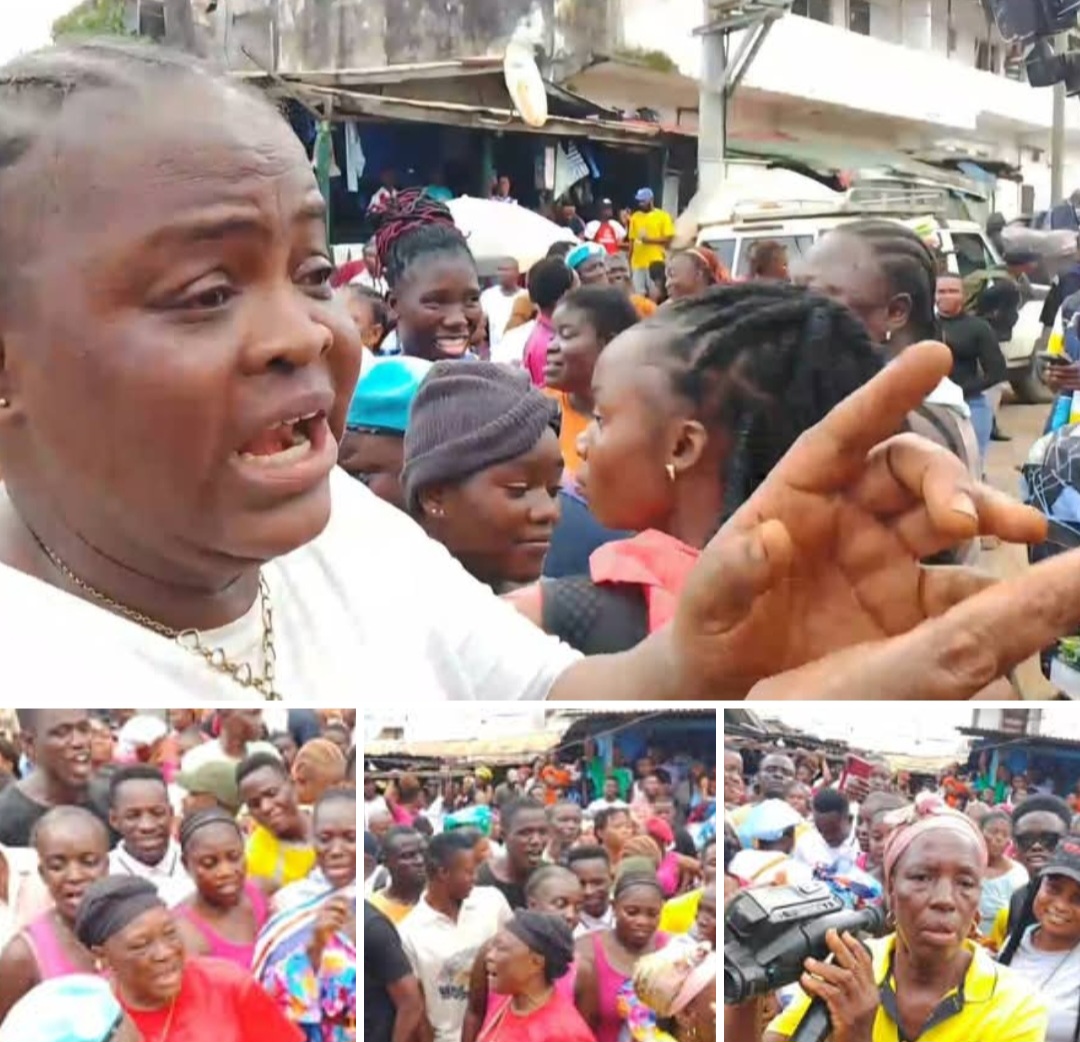
The political temperature in Liberia rose sharply on Thursday as scores of supporters of former President George Manneh Weah gathered outside the Monrovia Central Prison following his visit to former Vice President Jewel Howard-Taylor, transforming what was expected to be a private political encounter into a highly charged demonstration of opposition sentiment.
Despite a heavy security presence around the correctional facility, supporters and sympathizers of the opposition Coalition for Democratic Change (CDC) assembled outside the prison, chanting pro-Weah slogans and portraying the former president as a leader they now believe delivered a better economic experience.
Some demonstrators openly expressed regret over their decision to vote for President Joseph Nyuma Boakai in the 2023 presidential runoff, arguing that their economic circumstances have deteriorated under the current administration.
“We are suffering. Weah’s time was better. We are not seeing any improvement in this government. School is about to open, and we don’t know where the money will come from to send our children to school,” several supporters told reporters.
The claims, however, come against a more complicated economic picture than the political rhetoric suggests.
Liberia’s economy has continued to expand, with the International Monetary Fund estimating real GDP growth at 5.1 percent in 2025 and projecting growth of about 5.1–5.5 percent in 2026, driven largely by mining, agriculture, construction and related economic activity.
Yet headline economic growth does not necessarily translate into immediate improvements in household purchasing power.
IMF data show that inflation fell considerably from 10.7 percent at the end of 2024 to about 4 percent at the end of 2025, while the Liberian dollar also experienced periods of relative stability and appreciation.
That macroeconomic improvement has not prevented ordinary Liberians from complaining about the cost of food, transportation, school expenses and other household necessities.
One businesswoman who spoke at the scene offered a vivid illustration of that frustration.
She claimed that during the Weah administration, she purchased a carton of chicken feet for approximately LD$8,000, compared with about LD$12,000 currently an increase of 50 percent according to her personal experience.
She also said her small cooked-food business had suffered.
“I used to sell more than two bags of rice a day from my cook shop. Now, selling half a bag or one bag is not easy. We are really feeling it.”
The figures could not independently be verified at the time of publication and should therefore be understood as an individual market account rather than national price statistics.
Some of the women at the prison scene also questioned why, in their view, the Liberian dollar’s improved position against the United States dollar has not translated into proportionately lower prices.
That complaint touches on one of Liberia’s longstanding economic dilemmas: exchange-rate movements, inflation and retail prices do not always move together.
The IMF reported that the Liberian dollar appreciated moderately in late 2025, while inflation also declined substantially.
But retail prices can remain elevated because businesses face other costs, including transportation, imported goods, fuel, financing, rent and supply-chain expenses.
For consumers, however, the distinction can be academic.
If the price of rice, transportation or school-related expenses remains high, a stronger currency provides little political comfort to a family struggling to meet its monthly obligations.
The political controversy surrounding Weah’s prison visit extends beyond economics.
Several supporters interviewed at the scene criticized the government’s ongoing campaign against illicit drugs, saying they support efforts to combat narcotics but object to what they perceive as selective enforcement against former government officials and political opponents.
One woman argued that fighting drugs is necessary but questioned why the government’s broader law-enforcement agenda appears, in her view, concentrated on individuals associated with the previous administration.
The allegation of “selective justice” remains a political claim and would require independent evidence to establish.
Nevertheless, it reflects a growing political argument over whether Liberia’s anti-corruption and law-enforcement campaigns are being applied consistently across political lines.
The former president has himself intensified the controversy surrounding the incarceration of his former vice president.
Upon returning to Liberia, Weah described Jewel Howard-Taylor’s incarceration as selective justice and unacceptable, while questioning the circumstances surrounding the removal of Cllr. Oswald N. Tweh from his government position shortly after Weah’s arrival.
Weah argued that the timing of the development raised questions that required answers.
Those assertions have added a distinctly political dimension to an already sensitive legal matter.
The government and relevant judicial authorities would need to respond directly to the former president’s allegations for a complete public assessment.
The demonstrations also offered a glimpse into Liberia’s emerging 2029 political landscape.
President Boakai defeated Weah in the 2023 presidential runoff, bringing an end to Weah’s six-year presidency and marking a major transfer of political power.
Nearly three years later, however, some of Weah’s supporters are openly attempting to rewrite the political narrative, insisting that they made a mistake at the ballot box.
Their message was unmistakable: 2029 will be different.
The demonstrators said they intend to make what they described as a “wiser decision” in the next presidential election one based on economic conditions, employment opportunities, education, household welfare and what they perceive as fairness in the justice system.
But the political challenge facing both camps is more complicated than a simple “Weah was better” versus “Boakai is better” debate.
Liberia’s economy is growing, according to international financial institutions, yet many citizens remain economically vulnerable.
The IMF says growth is being powered substantially by mining, while also warning about Liberia’s structural vulnerabilities and the need for stronger social spending, diversification and reforms.
That creates a potentially dangerous political disconnect: macroeconomic indicators can improve while public confidence remains weak.
For now, the scene outside the prison has provided a powerful snapshot of Liberia’s political mood, a country experiencing measurable economic growth while ordinary citizens continue to debate whether that growth is reaching their kitchens, businesses and children’s classrooms.
The central political question may therefore not simply be who governed better, but who can convince struggling Liberians that the country’s economic progress will eventually be felt in their pockets.


