



By: Julius Konton
Liberia’s Ministry of Finance and Development Planning (MFDP) has called for stronger coordination, increased investment and greater accountability from the United Nations Population Fund (UNFPA), warning that development interventions must move beyond short-term projects and produce measurable improvements in the lives of Liberians.
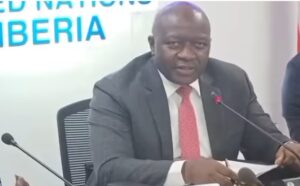
The call was made by Assistant Minister for Development Planning Wilmot Barche, who represented the MFDP at the opening of a two-day review of UNFPA-supported programs in Liberia.
The September 3–4 review is assessing progress, achievements, lessons learned and strategic adjustments needed to ensure that development interventions remain relevant and deliver sustainable results.
Barche said the government appreciates UNFPA’s longstanding contribution to Liberia’s development, particularly in health, education, gender equality, reproductive health, population data and youth empowerment.
UNFPA has worked in Liberia since 1979, including through the country’s post-war recovery and subsequent development efforts.
But he cautioned that Liberia’s development challenges require a stronger and more coordinated partnership among government, development agencies and other stakeholders.
“The government alone cannot achieve all that is required to move Liberia’s development agenda amid fiscal constraints,” Barche said, urging development partners, including UNFPA and the European Union, to deepen their support.
Barche placed particular emphasis on maternal and reproductive health, areas where Liberia continues to face some of its most serious human-development challenges.
Liberia’s maternal mortality ratio stands at approximately 742 deaths per 100,000 live births, according to the 2019/2020 Liberia Demographic and Health Survey.
While the figure represents a substantial decline from 1,072 deaths per 100,000 live births in 2013, it remains among the highest maternal mortality levels globally.
UNFPA reports that pregnancy and childbirth complications remain a major threat to women and adolescent girls in Liberia.
The agency’s recent country reporting also identifies the empowerment of adolescent girls, access to sexual and reproductive health services and the prevention of gender-based violence as central to its work.
Barche therefore urged UNFPA and its partners to increase investments in maternal and child health, reproductive health services, adolescent programs and interventions targeting young women and girls.
He cited continuing concerns including teenage pregnancy, child marriage, limited access to reproductive-health information and services, school dropout among girls and inadequate access to quality healthcare.
The urgency is underscored by UNFPA data showing that three in 10 girls aged 15–19 in Liberia are pregnant or already mothers, while the country records an estimated 600–1,000 new cases of obstetric fistula annually.
Liberia’s demographic structure makes the issue even more pressing. UNFPA estimates that people aged 0–34 constitute about 75 percent of the population, while adolescents aged 10–19 account for approximately 24 percent.
The country also has a total fertility rate of about 4.2 children per woman, according to UNFPA’s population-policy background data.
Barche argued that Liberia cannot afford to treat its young population simply as beneficiaries of development programs.
Instead, he called for greater investment in education, skills development, employment opportunities, reproductive-health services and programs that enable young people particularly girls to participate meaningfully in the economy and society.
He also stressed the importance of using demographic data to guide national planning, arguing that policies should be based on reliable evidence about population growth, migration, age structure, gender and regional inequalities.
A central concern raised by the MFDP official was the sustainability of development interventions.
Barche warned that projects designed only for short implementation periods risk losing their impact once external funding ends.
He urged development partners to work more closely with national institutions and strengthen government systems so that programs can continue producing results after donor-supported projects conclude.
The MFDP official also called for stronger domestic resource mobilization and greater government ownership of development interventions.
His comments come as Liberia implements its ARREST Agenda for Inclusive Development, the government’s national development framework, which includes human capital development and maternal mortality reduction among its priorities.
UNFPA’s own country results framework is aligned with areas including adolescent and youth empowerment, gender equality, population dynamics and sexual and reproductive health.
UNFPA’s 2024 results demonstrate the scale of its involvement.
The agency reports reaching 226,094 women and girls with family-planning services, supporting safe deliveries for 130,076 women, training 272 midwifery students and 51 nurse anesthetists, providing menstrual-hygiene products to 41,000 school-going girls, and supporting 2,580 survivors of sexual and gender-based violence.
Barche also called for improved monitoring, reporting and accountability from implementing partners.
He said timely and accurate reporting is essential for government and citizens to understand what development investments are achieving and where interventions need to be adjusted.
He expressed concern that inadequate reporting by some implementing partners makes it difficult for government to determine the full extent and impact of development programs.
The two-day review is therefore expected to provide an opportunity for stakeholders to examine UNFPA’s portfolio, identify gaps, strengthen reporting mechanisms and agree on strategic measures for improving implementation and development outcomes.
Barche urged stakeholders to use the review not simply to assess past performance but to develop practical measures that can produce measurable, sustainable and people-centered results.
For Liberia, the challenge is increasingly about converting development financing and technical assistance into tangible improvements safer childbirth, better reproductive-health services, stronger educational opportunities, greater economic participation for young people and more effective public institutions.
The MFDP’s message is clear: development partnerships must increasingly be judged not only by how much is invested, but by how much changes in the lives of the people those investments are intended to serve.


