
By: Julius Konton
President Joseph Nyuma Boakai, Sr. has issued a strong call for a strategic shift in the role of Liberians living abroad from remittance senders and philanthropists to owners, investors, and employers as Liberia seeks to accelerate private-sector growth and reduce unemployment.
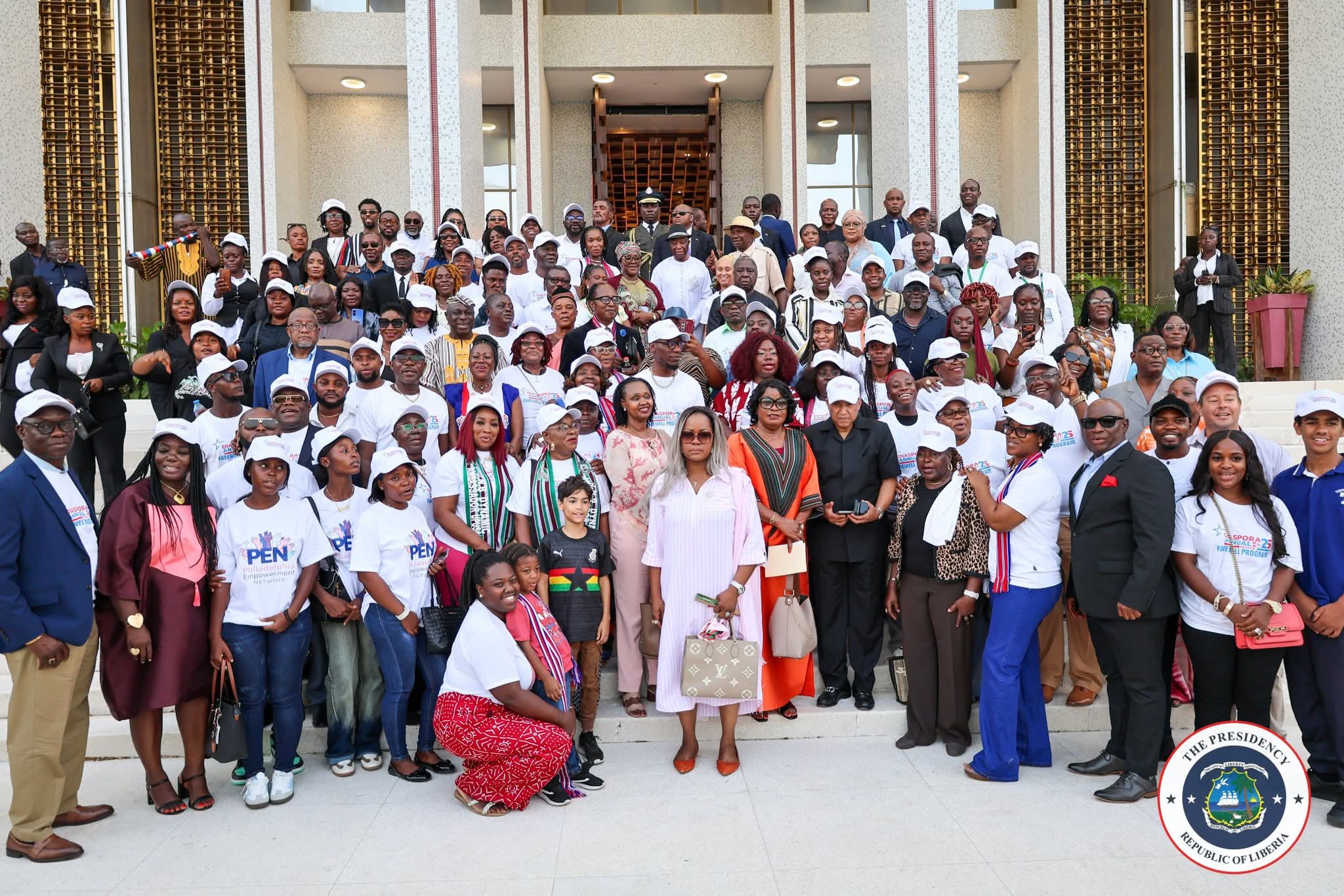
Speaking at a farewell ceremony marking the conclusion of the Diaspora Annual Return at the Executive Mansion in Monrovia, President Boakai urged Liberians abroad to move beyond charity-driven engagement and play a direct role in owning and shaping the country’s economic future.
“Your coming back is not just coming back to your home,” the President told dozens of visiting diaspora Liberians.
“It is coming back to invest, to build businesses, and to create jobs for yourselves and for your country.”
From Remittances to Real Investment
Liberia’s diaspora remains one of the country’s most critical economic lifelines.
According to regional financial estimates, Liberians abroad send home hundreds of millions of U.S. dollars annually, with remittances accounting for a significant share of household income and foreign exchange inflows.
Yet President Boakai argued that remittances alone cannot transform the economy or sustainably absorb Liberia’s growing youth population, where more than 60 percent of citizens are under the age of 25 and unemployment remains persistently high.
“The government cannot employ everyone,” Boakai said. “No government can.
That is why we need Liberians especially those with capital, skills, and exposure to build enterprises that create jobs”, he re-emphasized.
Private Sector as the Engine of Growth
The President emphasized that Liberia’s long-term economic stability depends on a vibrant, Liberian-owned private sector, particularly in communities that lack basic commercial infrastructure such as supermarkets, shopping centers, stationery stores, and service enterprises.
He noted that many diaspora Liberians have successfully established schools, foundations, guesthouses, and businesses in their host countries, questioning why similar levels of investment are not more widespread back home.
“Why should we be successful everywhere else but hesitate to build at home?” he asked.
Boakai warned against an economic future in which foreign nationals dominate Liberia’s prime commercial spaces while Liberians remain largely consumers rather than owners.
“This is your home,” he said pointedly. “But if the houses, the cars, the businesses all belong to someone else then what do you truly own?”
Untapped Regions, Untapped Potential
President Boakai highlighted southeastern Liberia as one of the country’s most underinvested yet resource-rich regions, constrained by weak infrastructure and limited private capital.
He said his administration is actively working to attract diaspora investment to such areas to expand economic access and regional development.
He encouraged diaspora Liberians to invest even if they are not ready to permanently relocate, stressing that Liberia already has productive sectors capable of growth with adequate financing and management.
Empowering Local Skills and Professionals
The Liberian leader also underscored the importance of engaging local professionals, engineers, technicians, artisans, and skilled workers in national infrastructure and development projects, noting that Liberia possesses the human capacity needed to drive growth if properly empowered.
“We have competent Liberians,” Boakai said. “They must not be sidelined in the rebuilding of their own country.”
Addressing Diaspora Concerns
Responding to concerns often raised by returning Liberians, President Boakai assured the diaspora community that his administration is committed to improving their experience, including closer monitoring of airport procedures to ensure dignity, professionalism, and respect.
He acknowledged Liberia’s difficult history of conflict and instability but said the nation’s resilience has positioned it for transformation if citizens at home and abroad work together.
A Call for Ownership and Confidence
President Boakai concluded by reaffirming his belief in Liberia’s potential and urging Liberians everywhere to invest not only money, but confidence and commitment in the nation’s future.
“Liberia is a good country,” he said. “It is full of promise. But that promise will only be realized if Liberians take ownership of their economy and move this nation to its next stage of development.”
