
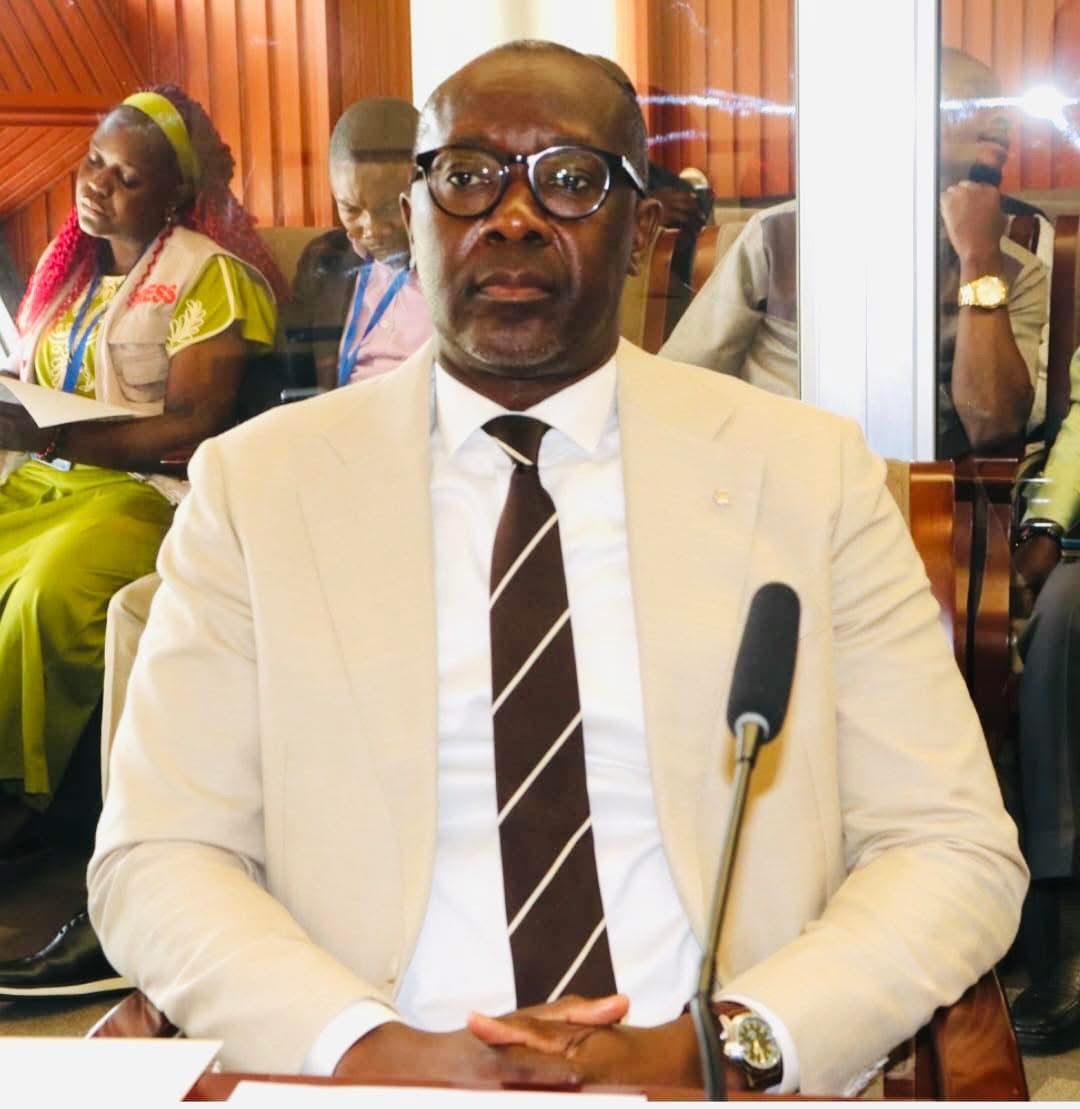
By: Leymah E. Kollie
Gbarpolu County Senator Amara M. Konneh has intensified pressure on the Liberian Senate, demanding a clear and time-bound update on the establishment of the War and Economic Crimes Court for Liberia (WECC-L), and cautioning that prolonged inaction risks eroding public trust and weakening the country’s fragile peace.
In a formal communication dated February 23 and addressed to Senate President Pro Tempore Nyonblee Karnga-Lawrence, Konneh reminded Plenary that the Senate overwhelmingly voted in April 2024, in concurrence with the House of Representatives, to establish the court to prosecute atrocities and economic crimes committed during Liberia’s brutal civil conflicts between 1989 and 2003.
Subsequently, President Joseph Boakai issued Executive Order No. 131 on May 2, 2024, and renewed the mandate through Executive Order No. 148 in April 2025, reaffirming the Executive’s commitment to operationalizing the court.
However, nearly two years after legislative approval, the court has yet to begin formal proceedings.
Senator Konneh stressed that the delay sends a troubling signal to victims and survivors who have waited more than two decades for justice.
“For decades, victims and survivors have carried the scars of that senseless war. Many of us in this Plenary are not exempt from that pain,” he declared, underscoring the moral responsibility of lawmakers to act decisively.
He cited recent assessments indicating that between 40 and 50 percent of Liberian households still include at least one member suffering from long-term trauma, disability, or psychological distress linked to the war.
According to him, the absence of accountability perpetuates cycles of trauma, undermines reconciliation efforts, and threatens sustainable peace.
While acknowledging that the Office for the Establishment of the War and Economic Crimes Court has submitted a roadmap projecting the launch of an anti-corruption court in 2026 and the commencement of war crimes trials in 2027.
He expressed skepticism about the feasibility of the timeline without stronger legislative backing and secured funding commitments from both the Government of Liberia and international partners.
“There are serious concerns about sustainability,” he warned. “Without formal legislative action, appropriations, and guaranteed long-term financial and technical support, the process could stall or collapse under political or economic pressure.”
The senator also emphasized the geopolitical dimension of the court’s establishment, urging proactive diplomatic engagement to prevent political resistance from international partners, particularly the United States, from hindering progress.
To strengthen transparency and oversight, Konneh is calling for Dr. Cllr. Jallah A. Barbu, Executive Director of the Office of the War and Economic Crimes Court, to appear before the Committee of the Whole to provide a detailed briefing on operational progress, funding status, international cooperation, and remaining legal hurdles.
He has further warned that the Fifty-Fifth Legislature’s historical legacy will be defined by how it handles the court’s establishment. “No title or seniority can shield us from the judgment of history if we fail to complete what we unanimously began,” he asserted.
The communication has since been forwarded to the Senate Committee on Judiciary, Human Rights,
