


By: Julius Konton
President Joseph Nyuma Boakai has rally calls among world leaders to see Dialogue, diplomacy and peaceful Resolution in addressing disputes globally.
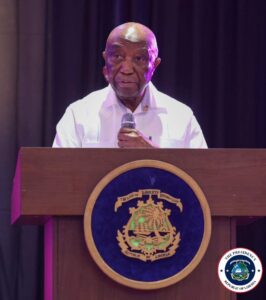
Speaking at the 80th session of the United Nations General Assembly in New York, President Boakai re-emphasized that Liberia supports all credible mediation efforts aimed at resolving the conflict between Russia and Ukraine, as well as the Israeli-Palestinian conflict.
Liberia pledges to remain a bridge to peace, a development partner, and a defender of human rights, he added.
Over the next 80 years, Liberia he maintained will continue to honor the promise of 1945 by renewing its commitment to a world where peace is just, development is inclusive, and dignity is universal.
He assured the gathering that Liberia stands on the common African position for the realization of the two-state solution, where Israelis and Palestinians can live side by side in peace and security, in accordance with international law and relevant UN Resolutions.
“We call on the international community to act together and decisively to protect civilians, hold perpetrators of atrocities accountable, and strengthen mediation efforts”, he noted.
He said as one of only four African countries to sign the Charter of the United Nations, Liberia feels morally obligated to call for a renewal—rather than a reversal— of multilateralism.
According to him, Reversal of multilateralism is not an option for a just and peaceful world.
President Boakai used the occasion to call for greater inclusion, effectiveness, and respect for international law, recognizing that the credibility of the United Nations depends on member Countries ability to act together in the service of humanity, rather than apart in the pursuit of narrow interests.
According to him, Wars in Europe, the Middle East, and Africa remind Liberia that peace is often fragile and must be constantly defended.
Rising from the ruins of civil war, the Liberian leader further informed the gathering that Liberia knows all too well the human cost of conflict and the importance of peace.
Since 2003, Liberia has experienced three peaceful and orderly democratic transitions, each marked by smooth transfers of power, making our nation safer, more stable, and more secure after over thirty years of unrest, instability, and destruction.
He also tpld the body that Liberians have also worked harder to achieve such through multilateral cooperation, with support from ECOWAS, the African Union, and the United Nations, he added.
President Boakai also assured delegates at the United Nations General Assembly of Liberia’s commitment to ensuring that its contributions to the Security Council’s discussions and decisions are shaped by its hard-earned experiences in conflict resolution, as well as its successes in peacebuilding, democratic reform, political transition, and governance.
He at the same time reemphasized the collective experiences of the continent will be taken into consideration during ita two years tenure.
“Please accept the gratitude of the Liberian Government and people for the overwhelming trust demonstrated by the General Assembly members in electing Liberia to serve on the Non-permanent seat of the United Nations Security Council for the 2026-2027 term”, he added.
Liberia, he stated looks forward to advocating for Africa’s fair representation on the UN Security Council, which can only be achieved through permanent representation as a key part of the UN Security Council reform agenda.
Speaking on the Theme: “Better Together: 80 Years and More for Peace, Development, and Human Rights”, the Liberian leader said such gathering marks Liberia’s first full tenure on the UN Security Council, eighty years after the country signed the charter in the Herbst Theatre auditorium in San Francisco.
“While the nameplate during this two-year term will read “Liberia”, the seat, however, belongs to Africa”, he reechoed.
The UN, he said continues to embody the best framework of humanity for peace, justice, security, dignity, and shared prosperity.
Historically, he pointed out that when the UN was founded in 1945, nations came together in the belief that peace could only be secured through cooperation.
After two world wars, it became a widely held conviction that nations are stronger when united than when divided.
However, Eighty years later, that conviction he indicated is being tested like never before especially ranging from wars and displacements to terrorism, threats to technological advances, climate change, and widening inequalities, today, our world faces challenges that no country can solve alone.
Speaking further he informed the body that for Liberia, climate change is not a distant threat but a present reality.
He made reference to rising seas which are eroding Liberia’s coasts, while storms and heavy rains devastate communities, threaten lives and livelihoods, and exacerbate food insecurity.
However, he informed the body that his government is acting.
” We are carrying out coastal defense projects, developing climate information systems for early warning systems, finalizing our carbon market policies, and advancing a blue economy strategy”, he re-emphasized.
He acknowledged that Liberia’s efforts alone are not enough as such encouraged urgent implementation of the Paris Agreement, full capitalization of the Loss and Damage Fund, and greater global investment in adaptation and mitigation.
Above all, we call for Climate Justice—those who contribute the least to this crisis should not be forced to suffer the most, he added.
He stressed that too many developing nations spend more on debt servicing than on health or education.
He stated that the current international financial architecture is unresponsive to said reality, making it not only outdated, but also unjust and defiant of the objectives of shared prosperity and development, the pursuit of which the United Nations was also created.
Liberia, he said also joins the Global South in calling for urgent reforms to the international financial architecture to ensure fair representation, a new approach to debt servicing, and financing that supports sustainable development. Shared prosperity requires a system that truly leaves no nation behind.
Speaking about Liberia, he informed the gathering that inclusive development remains his government’s top priority.
To this end, he told the delegates that his government launched the ARREST Agenda for Inclusive Development, which focuses six key pillars to include; Agriculture and Food Security, Roads and Infrastructure, Rule of Law and Good Governance, Education and Skills Development, Sanitation and Health and
Tourism, Technology and Innovation.
He said the national plan ,branded as the The Arrest Agenda aligns with our National Vision 2030, which aims to transform Liberia into a lower-middle-income country and lay the foundation for a capable state by 2030.
“Through this agenda, we are committed to improving livelihoods, reducing inequality, and ensuring that every Liberian benefits from the dividends of peace and development”, he added.
President Boakai disclosed that his government is taking tangible steps to improve governance by implementing accountability and anti-corruption measures, such as asset declarations, we are strengthening institutional capacity to promote integrity, transparency, and improved public service delivery, he added
At the same time he pointed out that Liberia has endured some of the darkest chapters of human suffering, having experienced one of the most brutal civil conflicts in recent history.
“Over the past two decades, we have remained firmly on the path of recovery—working to heal our nation and rebuild from the painful legacy of war,
My government has taken deliberate and meaningful steps toward national reconciliation and these include honoring the memory of the victims, supporting initiatives for memorialization, and upholding our commitment to justice and the rule of law”, he added.
He acknowledged that while his administration recognize that these efforts are complex and challenging, they are essential steps toward achieving lasting peace and genuine national healing.
President Boakai also renew his government’s request for international support and assistance in establishing a War and Economic Crimes Court, which will further the Liberian people’s aspiration for national healing and reconciliation through justice.
He lamated that for the United Nations to remain relevant and practical, it must adapt.
Liberia, he stated therefore, supports the Pact for the Future and the Global Digital Compact.
” We also call for a UN that’s more responsive and reflective of today’s world. Using outdated 1945 solutions to tackle 2025 challenges is neither reasonable nor realistic”, he added.
Making reference to the Sustainable Development Goals, he acknowledged that Liberia’s collective progress is too slow, However, reaching the SDG targets remains as vital as ever as such urge that the timely achievement of the SDGs be treated as a global emergency.
“Consequently, Liberia will submit its next Voluntary National Review in 2026, committing to accelerate the implementation of the global goals in line with the African Union’s Agenda 2063 and ECOWAS’ Vision 2050”, he added.
According to him, the theme of this year’s session, “Better Together,” aptly captures both the spirit and the urgency of our time. The challenges before us are immense. So, too, must be our collective capacity to overcome them.


