
By: Julius Konton
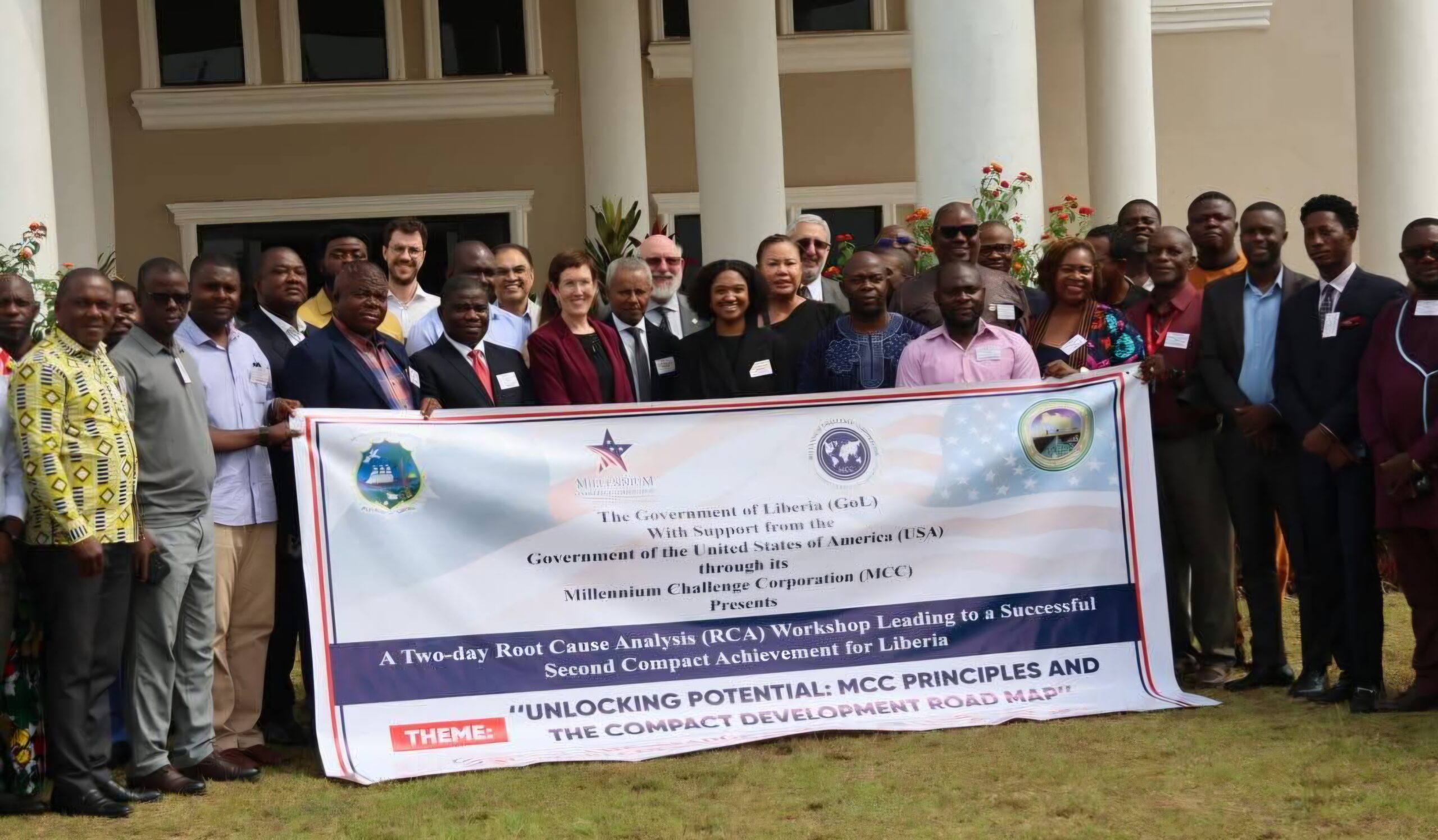
Liberia has taken a decisive step toward reshaping its struggling power sector as the Government of Liberia, in partnership with the Millennium Challenge Corporation, formally launched a high-level Root Cause Analysis (RCA) Workshop, a foundational milestone in the country’s quest to secure a Second MCC Compact (Compact II) focused on energy sector transformation.
The workshop, held Thursday in Margibi County near Monrovia, signals growing momentum in a two-year compact development process that could unlock hundreds of millions of dollars in grant financing, positioning electricity as the backbone of Liberia’s long-term economic recovery and industrial growth.
Electricity as Economic Lifeline
Delivering the opening address on behalf of the Liberian government, Deputy Minister for Economic Management at the Ministry of Finance and Development Planning, Dehpue Zuo, described the engagement as a pivotal moment in Liberia’s development trajectory.
“This process is not merely technical, it reflects leadership, partnership, and ownership between Liberia and the United States,” Zuo told participants, which included MCC officials and representatives of the U.S. Embassy.
He underscored that Liberia’s qualification for Compact II comes at a time when energy constraints are among the single greatest barriers to growth, with electricity access hovering below 30 percent nationally, and far lower in rural areas.
Businesses in Liberia, according to World Bank estimates, pay some of the highest electricity tariffs in West Africa, often exceeding US$0.30 per kilowatt-hour, compared to a regional average of about US$0.14.
“Reliable, affordable, and sustainable electricity is the cornerstone of economic growth,” Zuo said.
“It drives industrialization, job creation, healthcare delivery, education, and competitiveness.”
Digging Beneath the Symptoms
Rather than focusing on surface-level challenges, the Root Cause Analysis aims to interrogate the structural and institutional failures that have long plagued Liberia’s power sector ranging from weak utility finances and transmission losses to regulatory gaps and heavy dependence on imported fuels.
“We must go beyond the symptoms high tariffs, frequent outages, and low access rates,” Zuo emphasized.
“Only by identifying the true root causes can we design reforms that last.”
Liberia currently imports a significant share of its energy inputs, leaving the sector vulnerable to global price shocks and foreign exchange pressures.
Technical and commercial losses in the grid are estimated at over 40 percent, undermining the financial sustainability of the national utility.
MCC: Evidence Before Investment
MCC Senior Project Lead for Liberia, Carolyn Lesolchian, stressed that the RCA phase is the backbone of MCC’s results-driven model, ensuring that future investments are not only large-scale but transformative.
“This is the moment where we resist jumping to solutions,” Lesolchian said.
“We must fully understand the binding constraints to economic growth before designing projects that can truly change outcomes for Liberians.”
She noted that the compact development cycle includes:
Constraints to economic growth analysis
Root cause diagnostics
Project identification and feasibility studies
Policy and institutional reforms known as Conditions Precedent, which must be achieved before funds are released
If successful, Liberia would join a select group of countries that have leveraged MCC compacts to dramatically improve infrastructure, governance, and private-sector confidence.
