




By: Julius Konton
A prominent Liberian youth and sports empowerment advocate has entered the intensifying national conversation surrounding the recent Liberia–Guinea border tensions, urging diplomacy while warning that Liberia’s commitment to peace must not be interpreted as weakness.
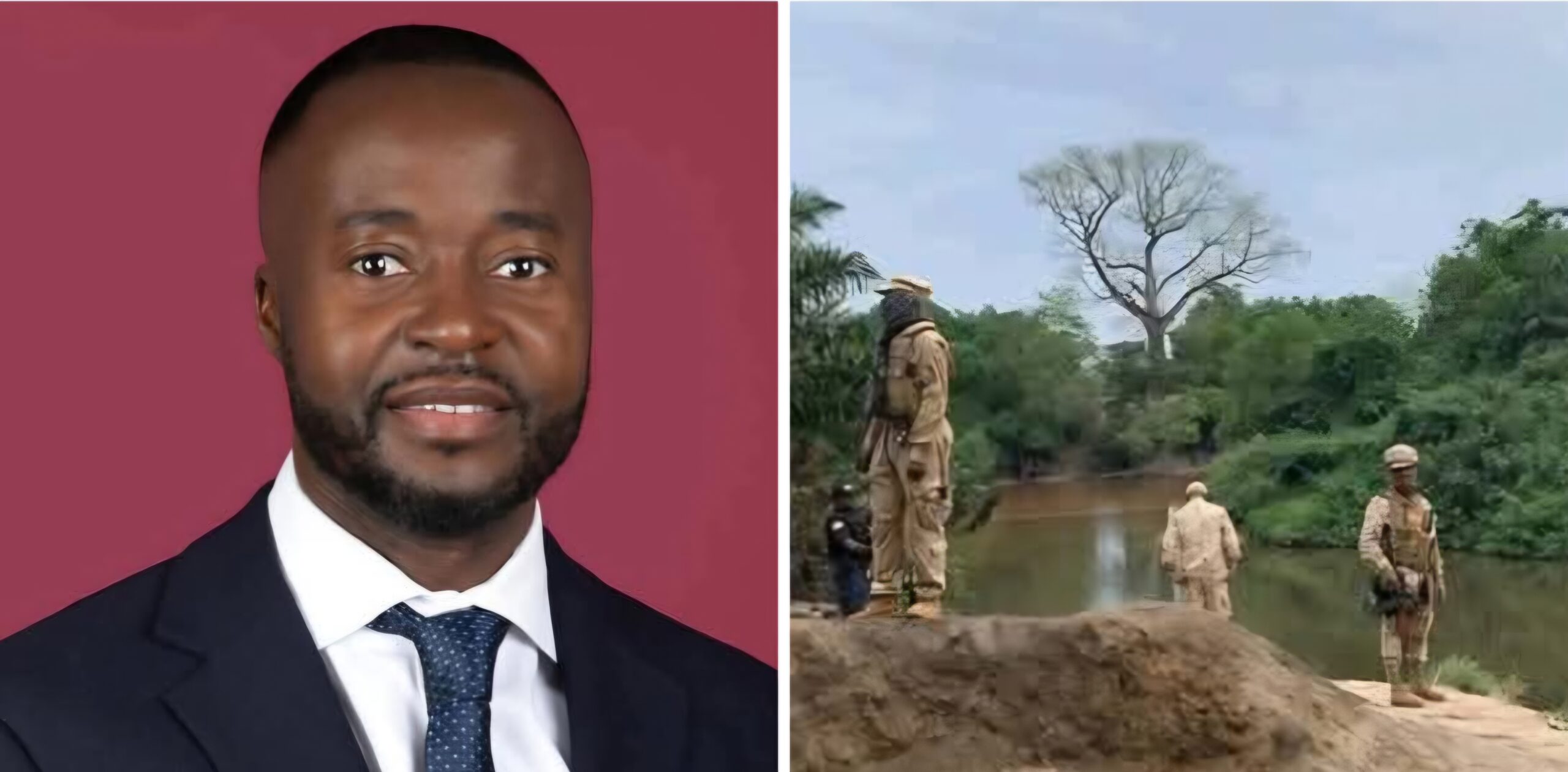
Ambassador Bill Rogers, a youth mobilizer and civic advocate, made the remarks amid the arrival of a high-level delegation from the Armed Forces of Liberia to Lofa County, the epicenter of a brewing territorial dispute in the remote Sorlumba region near the Guinean frontier.
The deployment of the military delegation underscores the seriousness with which the Liberian government is treating the situation, which has stirred public debate about national sovereignty, security preparedness, and the delicate balance between diplomacy and territorial defense.
A Border Dispute With Historical Roots
Liberia and neighboring Guinea share a 563-kilometer land boundary stretching across mountainous and forested terrain.
Much of the frontier was originally demarcated during the colonial era in the late nineteenth and early twentieth centuries through agreements involving France, which governed Guinea at the time.
Despite official demarcations, several sections of the border remain poorly marked or disputed, particularly in rural communities where residents often cross freely for farming, trade, and family ties.
Sorlumba and nearby villages in Lofa County have long served as informal economic corridors, with artisanal mining, agriculture, and small-scale commerce sustaining local livelihoods.
However, the same cross-border activities have historically fueled periodic disagreements over land ownership, mineral resources, and equipment operating near the boundary.
In recent weeks, tensions reportedly escalated after disputes involving heavy mining machinery locally referred to as “yellow machines” which local residents say were seized or contested in the border zone.
“Peace Must Not Be Mistaken for Weakness”
Reflecting on the unfolding situation, Rogers said Liberia’s painful past should reinforce its determination to preserve peace while firmly protecting its territorial integrity.
“Liberia has endured hardship, yet the resilience and fortitude of the Liberian people remain our greatest strength,” Rogers stated.
“Peace remains our priority.
However, peace should never be mistaken for weakness. No nation should take Liberia’s land or territorial integrity for granted.”
His remarks echo a broader sentiment gaining traction within Liberia’s civil society, where analysts say citizens are increasingly demanding stronger border governance following decades of instability.
Between 1989 and 2003, Liberia endured two brutal civil wars that devastated institutions, displaced nearly one million people, and left the country struggling to rebuild security systems.
Since then, the government has worked to reform the military and strengthen national defense capabilities, particularly after the departure of the United Nations peacekeeping mission in 2018.
Echoing the President’s Warning
Rogers also invoked remarks recently attributed to Liberian President Joseph Nyuma Boakai, who emphasized the importance of protecting national territory.
“God is not creating new land,” Rogers quoted the president as saying. “What we have today is what we must responsibly protect and preserve for our children and generations to come.”
The statement has resonated widely across Liberia’s political discourse, reinforcing calls for vigilance while maintaining diplomatic engagement with Guinea.
Liberia’s government has historically prioritized peaceful relations with its neighbors through the regional bloc Economic Community of West African States, which has often intervened to resolve border disputes and security crises across West Africa.
Local Communities on the Frontline
Residents of Sorlumba and surrounding communities in Lofa County have reportedly remained on high alert as the situation unfolds.
Rogers praised the vigilance of local youth and citizens, describing their actions as emblematic of Liberia’s enduring resilience.
“I deeply appreciate the courage of the citizens and youth in the Sorlumba area who remain vigilant in protecting their communities while upholding peace,” he said.
“Their bravery reflects the true spirit of Liberia.”
Community leaders say tensions intensified after a young man was reportedly injured during the dispute. Rogers called for full medical treatment and support for the victim.
“He deserves full coverage and benefits for the injuries sustained,” Rogers emphasized.
The Delicate Balance Between Diplomacy and Defense
Liberia has historically relied on diplomacy to address cross-border tensions with Guinea and other neighbors.
However, security analysts warn that unregulated mining operations, weak border infrastructure, and porous frontiers continue to pose challenges.
According to regional studies, more than 70 percent of Liberia’s borders remain lightly monitored, particularly in forested areas where economic activity often outpaces government presence.
Such conditions create fertile ground for disputes over land, minerals, and equipment operating in contested zones.
For Liberia, a country rich in natural resources including gold, iron ore, and diamonds border governance has become an increasingly strategic issue.
A National Test of Unity
As the situation continues to develop, Rogers urged Liberians to approach the moment with unity and patriotism.
“Let us move forward with wisdom, unity, and patriotism,” he said.
“Our land is our heritage. We must maintain and protect it with dignity, intelligence, and unwavering commitment.”
For many observers, the unfolding border episode is more than a local dispute, it is a test of Liberia’s evolving national identity, balancing diplomacy with sovereignty in a region where borders remain both political lines and shared lifelines.
Whether the Sorlumba situation evolves into a diplomatic resolution or a deeper geopolitical issue may depend on how both Liberia and Guinea navigate the delicate intersection of territorial pride, economic interests, and regional peace.


