


By: Julius Konton
Liberia’s Minister of Finance and Development Planning, Augustine Kpehe Ngafuan, has officially launched a nationwide Open Budget Initiative aimed at deepening transparency, strengthening citizen participation, and expanding public understanding of how the country’s growing national budget is being allocated.
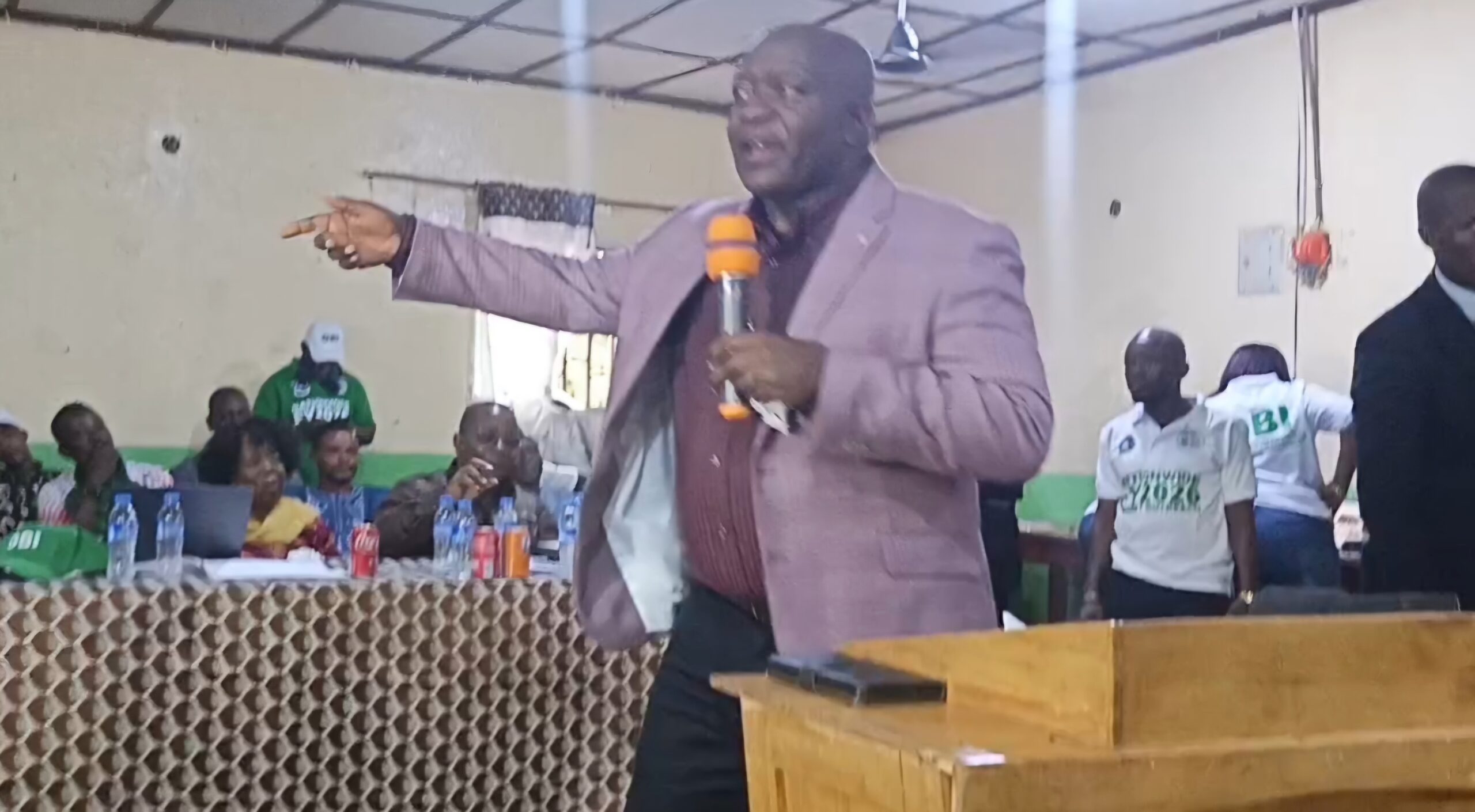
Speaking at the opening ceremony in Kakata, Minister Ngafuan described the national budget as “an instrument through which the dreams and aspirations of the Liberian people are captured,” emphasizing that public infrastructure projects across the country are direct outcomes of government spending priorities.
The launch marks a significant step in Liberia’s evolving democratic governance framework, where citizens are increasingly being involved in the formulation, discussion, and monitoring of public expenditure before the budget is passed into law by the Legislature.
Infrastructure Development at the Center of Government Spending
Highlighting tangible outcomes of the national budget, Ngafuan pointed to the construction of a new facility for C.H. Rennie Hospital and the expansion of infrastructure at Booker T. Washington Institute as evidence of the government’s development agenda under President Joseph Nyuma Boakai.
According to the Finance Minister, the administration’s current national budget of approximately US$1.3 billion represents a historic milestone for Liberia, whose public finances have long struggled under economic constraints, weak revenue generation, and post-war recovery challenges.
“For years, there were dreams and discussions about reaching a billion-dollar budget, but those aspirations did not materialize,” Ngafuan told residents gathered in Kakata. “Today, under the leadership of President Boakai, Liberia has achieved a budget exceeding US$1.3 billion.”
Liberia’s national budget has steadily expanded over the past decade as the country sought to stabilize its economy following years of civil conflict and the devastating impact of the Ebola epidemic between 2014 and 2016.
Economic recovery efforts have also been challenged by global inflation, commodity price volatility, and infrastructure deficits.
Government Targets US$2 Billion Budget
Despite celebrating the current fiscal milestone, Ngafuan acknowledged that Liberia’s development needs remain enormous and cannot be solved immediately, even with the country’s largest budget in history.
“By God’s grace and hard work, we will cross the US$2 billion mark,” he declared, while cautioning that even a budget of that size would still fall short of addressing all national demands at once.
The minister stressed that public pressure on government institutions to deliver more development was healthy for democracy and accountability.
“The more government does, the more people expect us to do,” he said. “And that pressure pushes us to work harder.”
Roads, Electricity and Public Works Prioritized
Ngafuan revealed that the Boakai administration is deliberately prioritizing spending on public infrastructure, particularly roads, electricity, and social services, sectors widely viewed as critical to Liberia’s long-term economic transformation.
“We are discriminating in favor of public works,” he explained. “More money is being allocated for roads, more funding for electricity, and increased investment in national development priorities.”
Liberia continues to face major infrastructure deficits, with large portions of the country lacking paved roads, stable electricity, and access to quality healthcare and education.
Successive governments have identified infrastructure investment as essential for attracting foreign direct investment and expanding economic growth.
The Finance Minister also praised the country’s mining sector as one of the largest contributors to government revenue. Liberia’s economy remains heavily dependent on the export of iron ore, gold, rubber, and other natural resources.
He noted that officials from the mining sector had advocated strongly for increased allocations in the supplementary budget, adding that such advocacy was part of a healthy governance process.
“It is your duty to push us for your sectors and communities,” Ngafuan stated. “That helps us do more.”
Citizen Participation and Democratic Governance
A major theme of the nationwide Open Budget Initiative is expanding public participation in national decision-making.
Ngafuan emphasized that Liberia’s Constitution guarantees citizens the right to engage in governance processes, including discussions surrounding public expenditure and national priorities.
“The budget process used to move from the President directly to the Legislature for passage,” he explained. “Today, citizens are aware of the formulation, drafting, discussions, consultations, and inputs before final approval.”
The Open Budget Initiative, which will continue in counties across Liberia, is intended to create direct engagement between government officials and ordinary citizens while increasing transparency around how public resources are raised and spent.
The minister thanked the Liberia Revenue Authority, lawmakers, and Liberian taxpayers for supporting revenue mobilization efforts that have helped expand the country’s fiscal space.
Acknowledging Challenges While Promising Progress
While defending the government’s performance, Ngafuan admitted that Liberia still faces serious socio-economic challenges inherited from previous administrations, including unemployment, inadequate infrastructure, and limited public services.
However, he argued that measurable progress was being made under President Boakai’s leadership.
“Liberia is making progress, depending on the perspective of the observer,” he said. “This government is developing the country, though we acknowledge there are areas where we must improve.”
The minister stressed that the administration remains committed to investing in education, electricity, roads, and human capacity development as part of its broader national transformation strategy.
He also welcomed criticism from the public and the media, describing it as part of the democratic process.
“Some people will criticize us, some will write against us, some will shout at us,” Ngafuan remarked. “We listen carefully.
We separate fairness from unfairness, and we work on what needs improvement.”
Government Pledges Continued Reform
Closing the engagement, Ngafuan reassured Liberians that the Boakai administration remains committed to keeping the country on a path of stability, accountability, and development.
“We will work for our country. We will be fair to our country. We will improve our country for the betterment of the nation and its people,” he declared.
The nationwide Open Budget Initiative is expected to continue in all 15 counties as the government seeks to strengthen transparency, encourage civic participation, and build public confidence in Liberia’s fiscal governance system.


