
By: Joseph Kerkula
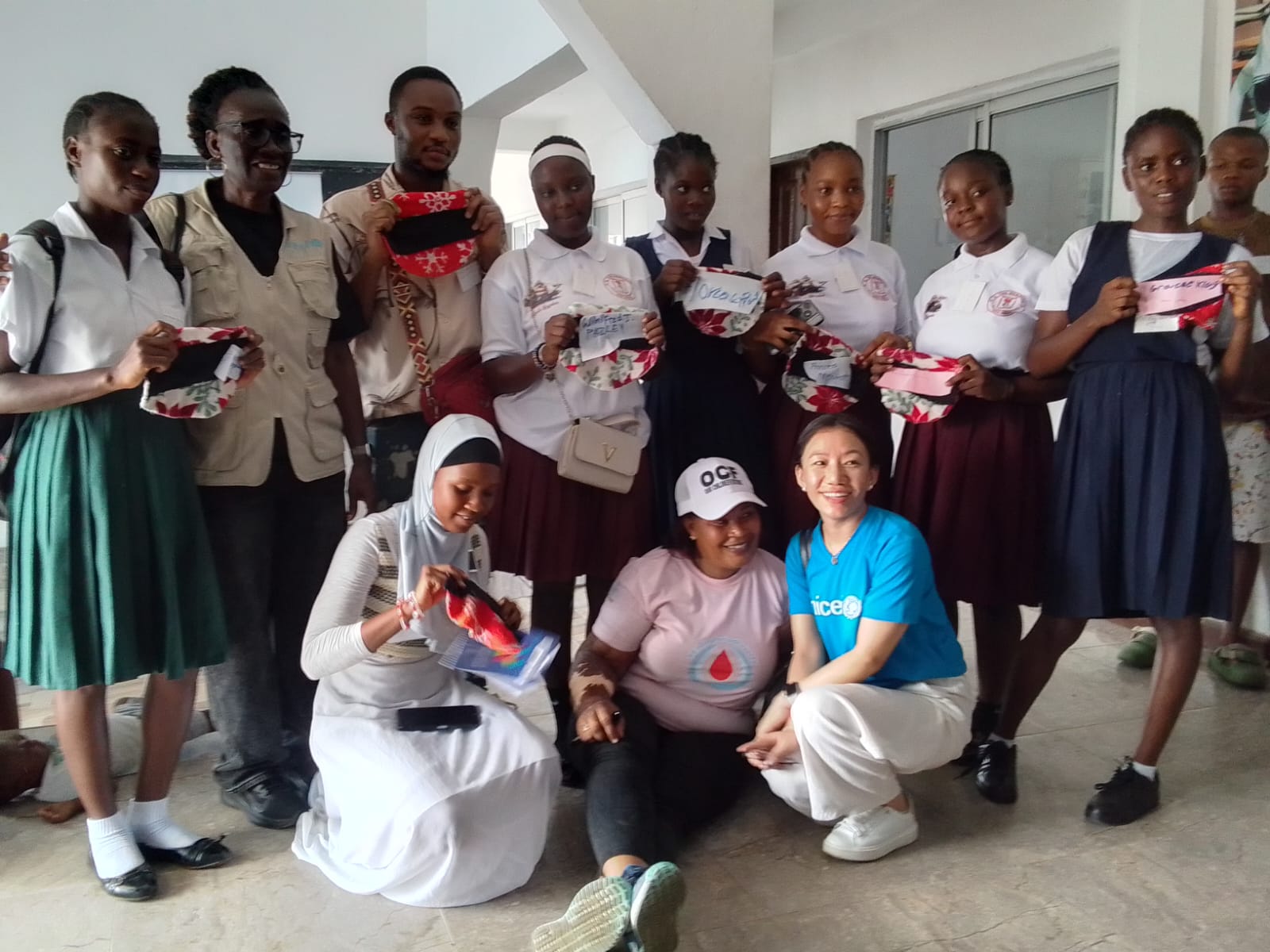
A humanitarian organization operating under the banner Our Children’s Future Incorporated (OCF), in collaboration with its partners, has concluded a three-day awareness and skills-building workshop aimed at empowering young women and adolescent girls with essential knowledge on sexual and reproductive health, as well as practical skills in producing reusable sanitary pads.
The workshop, which commenced on Monday and ended late last week, brought together dozens of participants from several communities across Monrovia. It focused on menstrual hygiene management, the social and economic benefits of reusable sanitary pads, and comprehensive sexual and reproductive health and rights (SRHR) education.
According to the organizers, the initiative was designed to address persistent challenges faced by young women and girls, including limited access to sanitary materials, misinformation surrounding menstruation, early sexual activity, and rising rates of teenage pregnancy. Through interactive sessions, hands-on demonstrations, and discussions, participants were encouraged to better understand their bodies and make informed decisions about their wellbeing.
Speaking at the climax of the program, OCF Executive Director Madam Josephine Barclay said the workshop aligns with the organization’s broader mission of promoting the health, dignity, and self-reliance of girls and young women across Liberia.
“This initiative is not only about teaching young women how to produce reusable sanitary pads, but also about restoring dignity, building confidence, and providing them with knowledge that can positively shape their future,” she stated.
Madam Barclay further disclosed plans to decentralize the initiative by organizing similar workshops in rural communities, where access to menstrual hygiene information and affordable sanitary products remains significantly limited.She also encouraged participants to serve as peer educators within their respective communities, emphasizing that the dissemination of accurate information on menstrual health and SRHR is crucial to reducing teenage pregnancy and improving the overall wellbeing of young girls.
Participants Samira M. Kollie and Korpo H. G. Sonnie expressed appreciation to OCF and its partners for what they described as a timely and impactful intervention.
They noted that the skills acquired from the workshop will help young women manage their menstrual health with dignity while reducing the financial burden on families who struggle to afford disposable sanitary products.
“This training has given us skills we can use for life. We can now make our own pads and even teach others,” one participant shared.
The three-day workshop concluded with a call for sustained community engagement, increased partnerships, and broader stakeholder support to ensure that more girls and young women across Liberia benefit from similar life-changing programs.
OCF reaffirmed its commitment to continuing advocacy and capacity-building initiatives aimed at empowering children and young people, particularly girls, to lead healthy, confident, and productive lives.
