



By: Julius Konton
In a landmark development for labor relations in Liberia’s maritime sector, the National Port Authority (NPA) has signed a long-awaited Collective Bargaining Agreement (CBA) with the Dock Workers Union of Liberia (DOWUL) and the Liberia Labour Congress ending a ten-year delay that left more than 3,000 port workers without updated benefits, safety guarantees, or modern labor protections.
The breakthrough, achieved at the NPA Corporate Headquarters in Monrovia, comes at a critical moment for a sector that manages over 90% of Liberia’s international trade volume and contributes an estimated US$50–70 million annually to national revenue streams.
Workers, union leaders, and NPA executives described the signing as historic, overdue, and transformative for the nation’s most strategically significant state-owned enterprise.
A DECADE OF WAITING: PORT WORKERS FINALLY GET RELIEF
Rising costs, stagnant wages, and outdated policies prompted growing calls for reforms
For years, employees at the Freeport of Monrovia, Buchanan Port, Greenville Port, and Harper Port voiced concerns over stagnant wages, rising living costs, limited promotional opportunities, and insufficient safety standards, especially in an environment where dock work remains physically demanding and high-risk.
The new agreement marks the first major update to labor conditions at the NPA since the early 2010s.
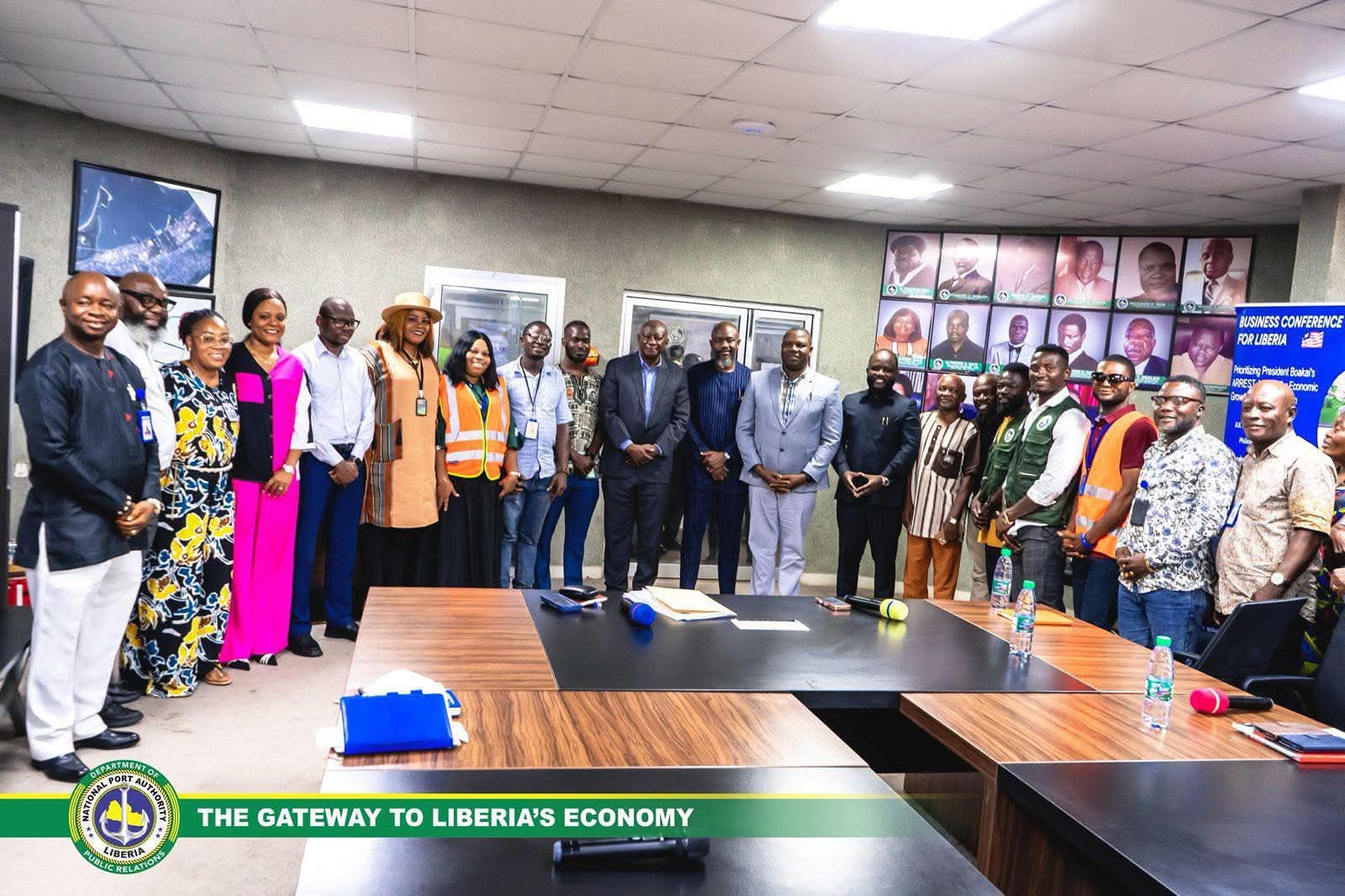
Present at the signing ceremony were:
Rev. Dr. J. Luther Tarpeh, Chairman of the Board
Sekou A. M. Dukuly, Managing Director
James R. Bernard, Deputy Managing Director for Administration
Emmanuel Horton, Deputy Managing Director for Operations
Leadership of the Dock Workers Union of Liberia (DOWUL)
Representatives of the Liberia Labour Congress
Officials hailed the CBA as one of the most comprehensive and progressive agreements in the NPA’s modern history.
KEY PROVISIONS: NEW BENEFITS SET A HIGHER STANDARD FOR WORKERS
Reforms align NPA with global benchmarks in port-sector labor protection
Under the newly approved CBA, workers will receive multiple benefits designed to modernize port-sector labor management:
10% salary increment for all staff
US$50 non-taxable monthly food allowance
Comprehensive employee life and medical insurance
24-month death benefit keeping deceased workers on payroll to support bereaved families
Performance-based promotions and salary increments tied to operational performance and Board-approved budgets
Strict adherence to the NPA Employee Handbook and Liberia’s Decent Work Act of 2015
Labor analysts say the agreement brings Liberia in line with global port-sector norms.
According to the International Labour Organization (ILO), countries that implemented modern CBAs between 2018 and 2024 recorded:
15% improvement in workforce productivity
23% reduction in workplace disputes
Up to 30% higher job satisfaction rates
LEADERS PRAISE A “RESPONSIBLE AND PATRIOTIC” NEGOTIATION PROCESS
Managing Director Sekou A. M. Dukuly described the signing as a milestone for Liberia’s reform agenda:
“This agreement is a renewed commitment to fairness, accountability, and the dignity of work under the RESET Agenda.
Our workers deserve protection, respect, and clear career pathways.”
Board Chairman Rev. Dr. J. Luther Tarpeh praised both sides for what he called a responsible and patriotic process:
“This is the kind of labor relations Liberia needs dialogue that puts workers first and strengthens national development”, he added.
Union leaders expressed satisfaction after years of stalled negotiations and called the CBA “a victory for every dock worker in the country.”
CBA ADVANCES THE GOVERNMENT’S RESET AGENDA
Port reforms expected to boost national revenue, accountability, and service delivery
The updated CBA is a pillar of the government’s RESET Agenda, which prioritizes:
institutional transparency
workforce capacity enhancement
improved public-sector performance
strengthened national infrastructure
Given the NPA’s central role in trade, customs revenue, regional connectivity, and job creation, the agreement is expected to boost efficiency and governance across Liberia’s maritime gateway.
In 2024, West African regional data showed that ports with modernized workforce policies experienced:
12–18% faster cargo clearance times
significantly reduced operational disruptions
higher investor confidence and shipping traffic
A NEW ERA OF REFORMS AS NPA GETS B+ PERFORMANCE RATING
The signing comes as NPA Managing Director Sekou A. M. Dukuly continues to receive nationwide commendation for his reform driven leadership.
A recent independent performance assessment of government institutions ranked the NPA B+, one of the highest ratings among state-owned enterprises.
Dukuly said the grade reflects progress but added that the NPA is capable of achieving more:
“A would have been the appropriate score. But I am confident that the new strategic plan launched recently will move us to A+ next year.”
He emphasized that the Freeport of Monrovia and the NPA at large remains poised for “unprecedented growth that will strengthen Liberia’s global connectivity and economic prosperity.”
LOOKING AHEAD: WORKERS HOPE FOR STABILITY AFTER TEN YEARS OF UNCERTAINTY
For thousands of NPA employees, the CBA marks the end of a decade where outdated policies affected morale and job security.
Workers say they now look forward to:
predictable career advancement
improved safety conditions
fair compensation
greater transparency in management decisions
Executives believe the agreement will boost productivity, reduce labor tensions, and help the NPA meet rising demands in global shipping and trade.
As Liberia positions itself for stronger economic recovery, the NPA’s renewed stability is seen as a critical step toward strengthening the nation’s competitiveness on the West African maritime corridor.
EDITOR’S NOTE
The signing of a long-delayed Collective Bargaining Agreement (CBA) between the National Port Authority (NPA), the Dock Workers Union of Liberia (DOWUL), and the Liberia Labour Congress marks a turning point in Liberia’s labor landscape.
For the first time in ten years, more than 3,000 port workers across the Freeport of Monrovia, Buchanan, Greenville, and Harper will benefit from modernized protections, wage improvements, and safety guarantees aligned with global maritime labor standards.
This development is more than a labor victory, it signals a renewed commitment to institutional accountability, transparency, and social justice at a sector that handles over 90% of Liberia’s international trade and contributes tens of millions annually to national revenue.
At a time when rising living costs and outdated policies had strained worker morale, the new agreement lays the foundation for stability, productivity, and improved national competitiveness.
It also reinforces the government’s RESET Agenda by strengthening public-sector performance and rebuilding trust between workers and management.
As Liberia seeks stronger regional integration and economic resilience, the modernization of port labor policies is not just overdue, it is essential. The new CBA stands as a model for how dialogue, reform-minded leadership, and responsible negotiations can reshape critical public institutions for the benefit of workers and the country at large.


