



By: Julius Konton
As debate continues over Liberia’s landmark US$1.2 billion national budget, Finance and Development Planning Minister Augustine Kpehe Ngafuan has provided detailed insights into how the budget will directly impact key sectors, emphasizing that the benefits will be felt “gradually but tangibly” by Liberians across the country.
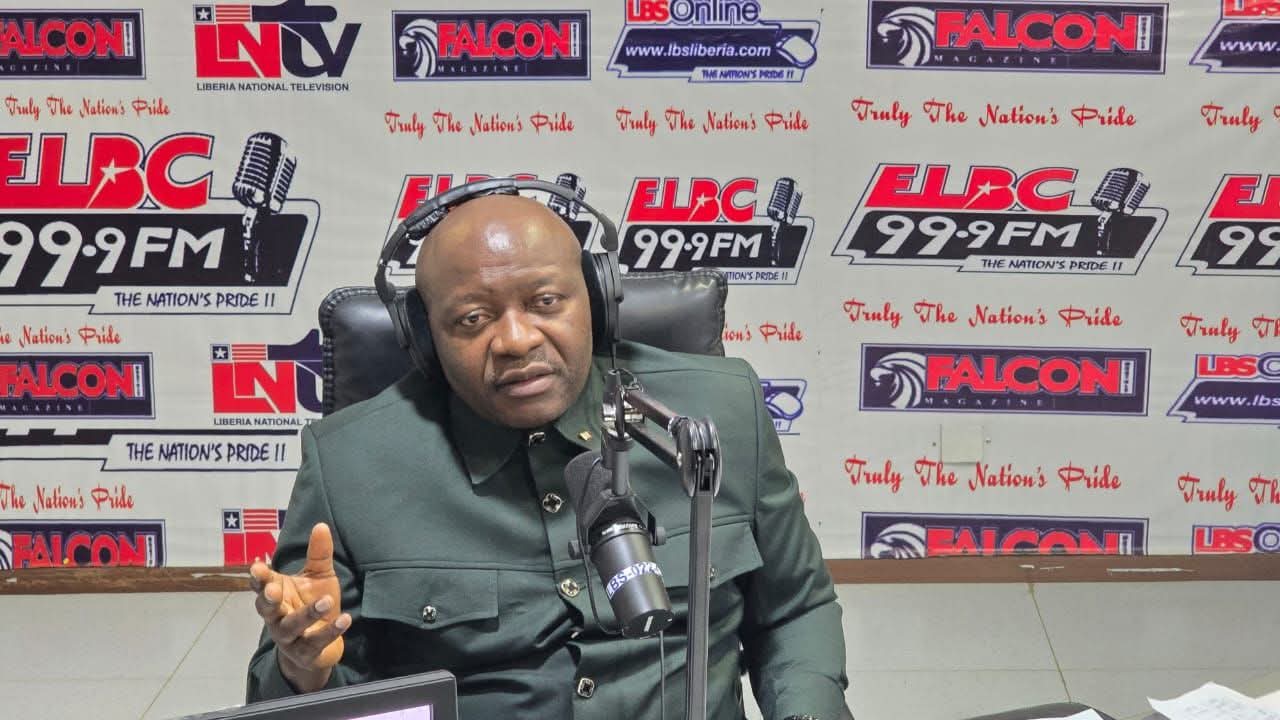
Appearing on State Radio (ELBC), Minister Ngafuan outlined several strategic allocations that he said reflect the government’s commitment to both social welfare and infrastructure development.
“This budget has captured all the key sectors of our country,” Ngafuan said. “Its impact will not be instant, but over time, Liberians will feel the difference in their communities, their health facilities, and in opportunities for our young people.”
The Finance Minister revealed that the government has begun payments for the purchase of heavy-duty ‘yellow machines’, which will be used for road rehabilitation and development across Liberia.
“The payments have already started,” he confirmed. “This is evidence that the government is on course. These machines will soon be in the country and will make a visible difference in infrastructure development.”
Ngafuan also addressed growing public concern about financial struggles facing major hospitals, notably ELWA Hospital, which has faced threats of closure due to salary arrears.
“The government cannot allow ELWA Hospital to close because they cannot pay their staff,” the Minister stated firmly.
“As part of our intervention, beginning next year, the government will assume responsibility for the hospital’s staff payments”, he re-emphasized.
He further disclosed that several private health institutions are already being subsidized under government programs, and that health sector funding remains a top priority.
Touching on governance and accountability, Minister Ngafuan said that the budget allocates US$2.3 million for the Asset Recovery and Property Retrieval Taskforce, a key institution aimed at restoring public trust and ensuring transparency in national governance.
Additionally, US$1.3 million has been earmarked for the Office of the War Crimes Court, an initiative that continues to receive both domestic and international attention.
“We are working closely with our partners to ensure these important institutions get the support they need,” Ngafuan emphasized.
Recognizing Liberia’s youth-dominated population, Minister Ngafuan described youth empowerment as one of the most vital components of the 2025 fiscal plan.
“We know the future of this country depends on our young people,” he said. “That’s why we’ve allocated US$4 million for youth empowerment programs, and increased the budget for sports to keep our youth engaged and productive.”
He also announced the expansion of technical and vocational education, saying each county will benefit from a Technical and Vocational Education and Training (TVET) institution under the ‘Youths Rising Project’, funded by the new national budget.
Minister Ngafuan clarified that education and health sector allocations fall under recurrent expenditures, but stressed that this classification does not mean the funds are limited to salaries.
“There are programs and projects included in these allocations,” he explained. “Recurrent spending isn’t just about paying wages, it’s also about keeping the system functioning and improving service delivery” he added.
The Finance Ministry boss also noted that US$230 million of the total budget is dedicated to debt servicing, arguing that debt payments are a responsible and essential part of fiscal management.
“Should we demonize debt? No,” Ngafuan argued. “Debt repayment is part of responsible governance and ensures Liberia maintains credibility with its partners.”
With Liberia’s largest national budget in history, the Finance Minister assured that the government is focused on transparency, accountability, and implementation.
“This is not just a paper budget,” Ngafuan said. “It is designed for execution. The people will see real results from better roads to stronger health services and empowered youth.”
As national discussions continue, public attention remains fixed on how swiftly and effectively the administration can translate the US$1.2 billion budget into visible improvements in citizens’ lives.


