




By: S. Nimely Sonpon
A new study commissioned by Naymote Partners for Democratic Development has revealed major fiscal, institutional, and procurement challenges that continue to hamper the implementation of citizen-prioritized development projects in Bong, Grand Bassa, and Margibi counties.
Conducted between April 1 and April 30, 2026, the assessment examined progress made under Liberia’s National Policy on Decentralization and Local Governance and the government’s ARREST Agenda for Inclusive Development.
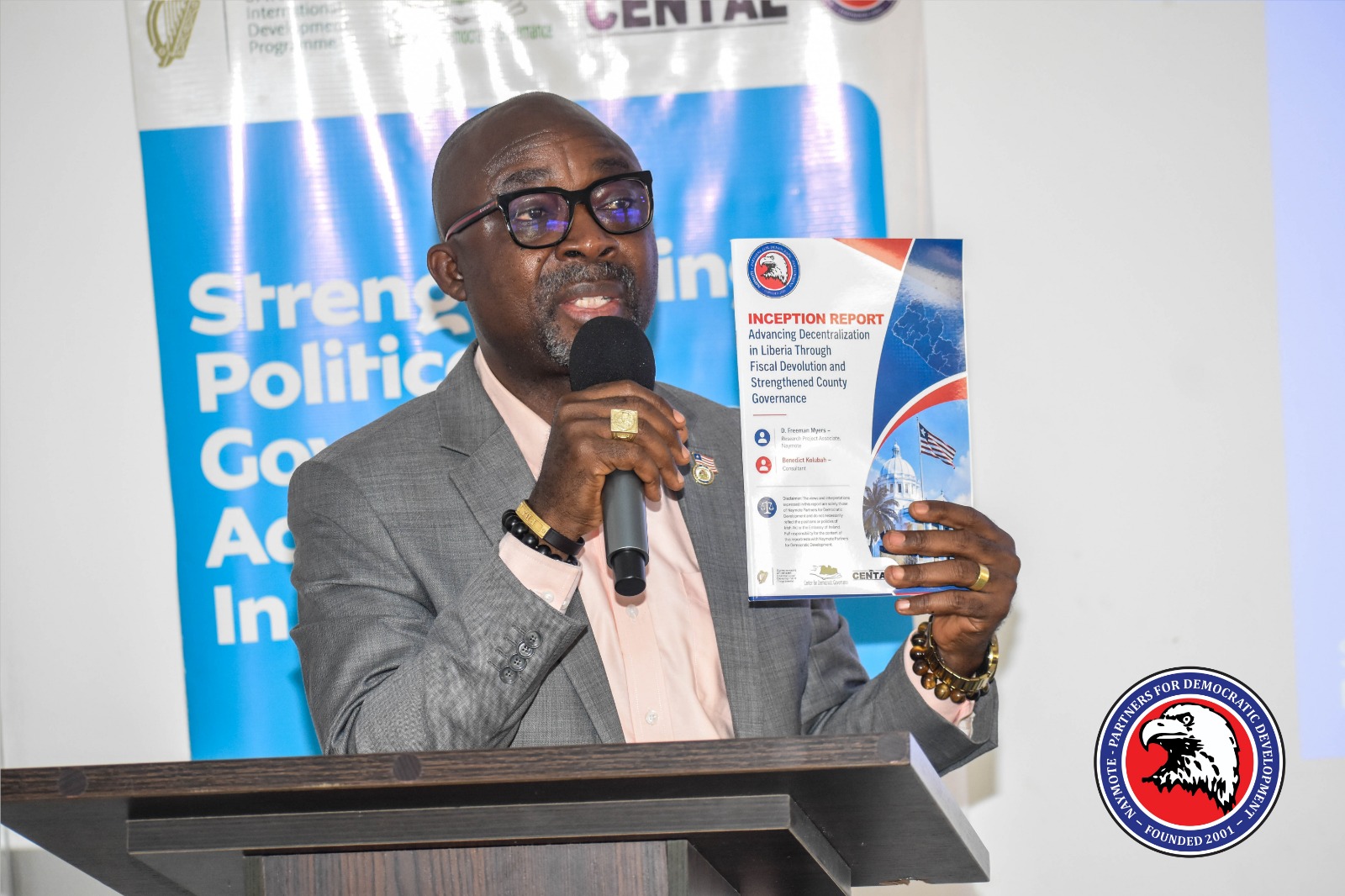
Naymote study, according to Eddie Jarwolo evaluated whether authority, resources, and service delivery responsibilities transferred to local governments are producing meaningful development outcomes for citizens.
The report revealed a significant gap remains between government decentralization commitments and actual funding allocations to counties.
While policy targets envision development financing of approximately US$5 million annually for each county, actual Fiscal Year 2025 allocations through the County Development Fund to Bong, Grand Bassa, and Margibi totaled only US$2.29 million combined.
The researchers have estimated an immediate financing deficit of about US$12.7 million, representing an 85 percent funding shortfall.
The report has warned that if current trends continue, the cumulative funding gap across the three counties could reach nearly US$179.4 million by 2029, threatening the implementation of key infrastructure and public service projects identified through County Development Agendas.
Despite these financial constraints, the study found that 81.6 percent of county development projects were aligned with priorities identified by citizens.
Bong County recorded the highest alignment rate at 88.2 percent, followed by Margibi at 85.7 percent and Grand Bassa at 72.2 percent.The report also highlighted weaknesses in procurement and project preparation systems, noting that larger citizen-prioritized projects are often sidelined in favor of smaller initiatives that are more technically prepared and easier to finance.
In addition, Anymore has identified institutional challenges affecting County Development Steering Committees, County Councils, and County Treasuries. While most respondents were aware of the existence of these structures, many lacked a clear understanding of their roles and responsibilities.
The study further cited weak coordination, irregular meetings, inadequate public awareness, limited stakeholder participation, and political interference as persistent obstacles to effective local governance.
Naymote Executive Director Eddie Jarwolo has called on policymakers, development partners, and local authorities to accelerate reforms aimed at strengthening county governance systems, improving transparency and accountability, and ensuring adequate funding for citizen-driven development initiatives.
Jarwolo further emphasized that meaningful decentralization remains essential to promoting inclusive development, reducing regional disparities, and empowering communities to actively participate in shaping their own development priorities.


