





By: Julius Konton
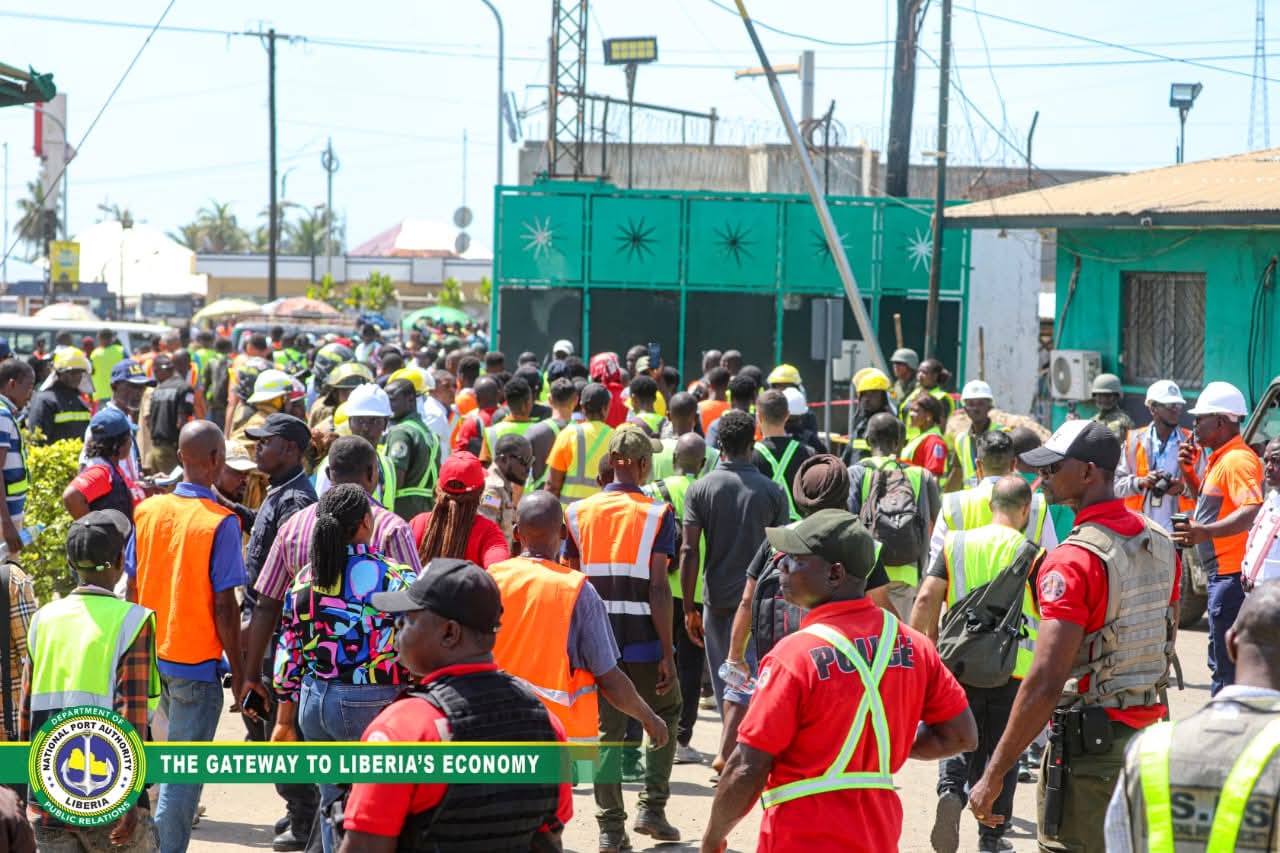
Liberia’s principal maritime gateway, the Freeport of Monrovia, temporarily suspended routine operations this week as authorities carried out a high-intensity security drill aimed at strengthening port defenses, improving emergency response systems, and reinforcing compliance with international maritime safety regulations.
The large-scale exercise, organized by the National Port Authority (NPA) in close coordination with the Maritime Security Service and Liberia’s Joint Security Apparatus, was conducted under the framework of the International Ship and Port Facility Security (ISPS) Code, the global benchmark for maritime and port security established by the International Maritime Organization (IMO).
Officials described the operation as a carefully controlled simulation designed to test the port’s readiness against modern security threats, including unauthorized access, cargo tampering, sabotage risks, and potential maritime disruptions.
Security Level Raised During Exercise
As part of the drill, the Freeport’s security alert status was elevated from ISPS Level 1 (normal operations) to ISPS Level 2 (heightened security), triggering stricter screening procedures, expanded patrol operations, and intensified surveillance of vessels, cargo terminals, and strategic infrastructure.
The exercise evaluated the port’s layered defense systems, emergency coordination procedures, and rapid deployment capabilities under simulated high-risk conditions.
Leading the drill was Port Facility Security Officer (PFSO) A. Famod Kanneh, who said the operation demonstrated Liberia’s growing capacity to protect one of its most critical economic assets.
Multi-Agency Security Response
The drill brought together several national security institutions in a unified command structure, including:
Liberia National Police (LNP)
Liberia Seaport Police (LSP)
Liberia Immigration Service (LIS)
Liberia Fire Service (LFS)
Authorities said the coordinated deployment highlighted improved inter-agency communication, stronger operational discipline, and synchronized command-and-control mechanisms.
Security analysts note that multi-agency cooperation is increasingly essential as ports worldwide face complex risks ranging from smuggling and cyber threats to organized crime and maritime terrorism.
Strategic Importance of Freeport of Monrovia
The Freeport of Monrovia remains Liberia’s busiest commercial seaport, handling the majority of the nation’s imports and exports.
The facility is central to the country’s economy, facilitating trade in fuel, machinery, food supplies, construction materials, and agricultural products.
Any disruption at the port could significantly affect national supply chains, customs revenues, and private sector activity.
Liberia, one of the world’s largest shipping registries by tonnage, has long sought to position itself as a credible maritime nation, making security compliance a top priority.
International Partnerships Strengthening Liberia’s Maritime Sector
The latest exercise forms part of Liberia’s expanding maritime cooperation with the United States Coast Guard, aimed at strengthening port inspections, vessel monitoring, and emergency preparedness.
Officials also cited ongoing security training programs throughout 2026 supported by Veteran Security Specialist Incorporated (VISSI), focused on professional development, threat response, and modern port management systems.
In addition, Liberia’s National Port Authority remains an active participant in the European Union-funded SCOPE Africa Project, which promotes improved port security standards, regional cooperation, and operational resilience across African seaports.
Safety Beyond Security
Alongside security modernization, the NPA has launched a new Occupational Health and Safety (OHS) and fire prevention initiative across port facilities this year.
The program includes:
Emergency evacuation procedures
Fire suppression readiness
Worker safety compliance training
Hazard prevention systems
Infrastructure risk assessments
Port officials say these reforms are essential to maintaining safe and uninterrupted operations in an increasingly competitive maritime environment.
Maritime Security Key to Economic Stability
Following the exercise, authorities convened a joint maritime security conference involving government agencies, port stakeholders, and security professionals to review simulated threat scenarios and discuss improved surveillance integration.
Speaking during the forum, Deputy Commissioner John F. Harvey of the Liberia Maritime Authority emphasized that maritime security remains directly linked to Liberia’s economic resilience and international trade credibility.
He noted that regular drills are necessary to ensure that port facilities remain secure, efficient, and fully compliant with global standards.
Commitment to a Competitive Port System
The National Port Authority reaffirmed its commitment to building a secure, resilient, and globally competitive port network capable of responding decisively to emerging threats while ensuring smooth trade flows.
As maritime risks continue to evolve across the Gulf of Guinea and beyond, Liberia’s latest security exercise signals a determination to protect its strategic gateway and strengthen confidence among shipping lines, investors, and international partners.


