


By: Julius Konton
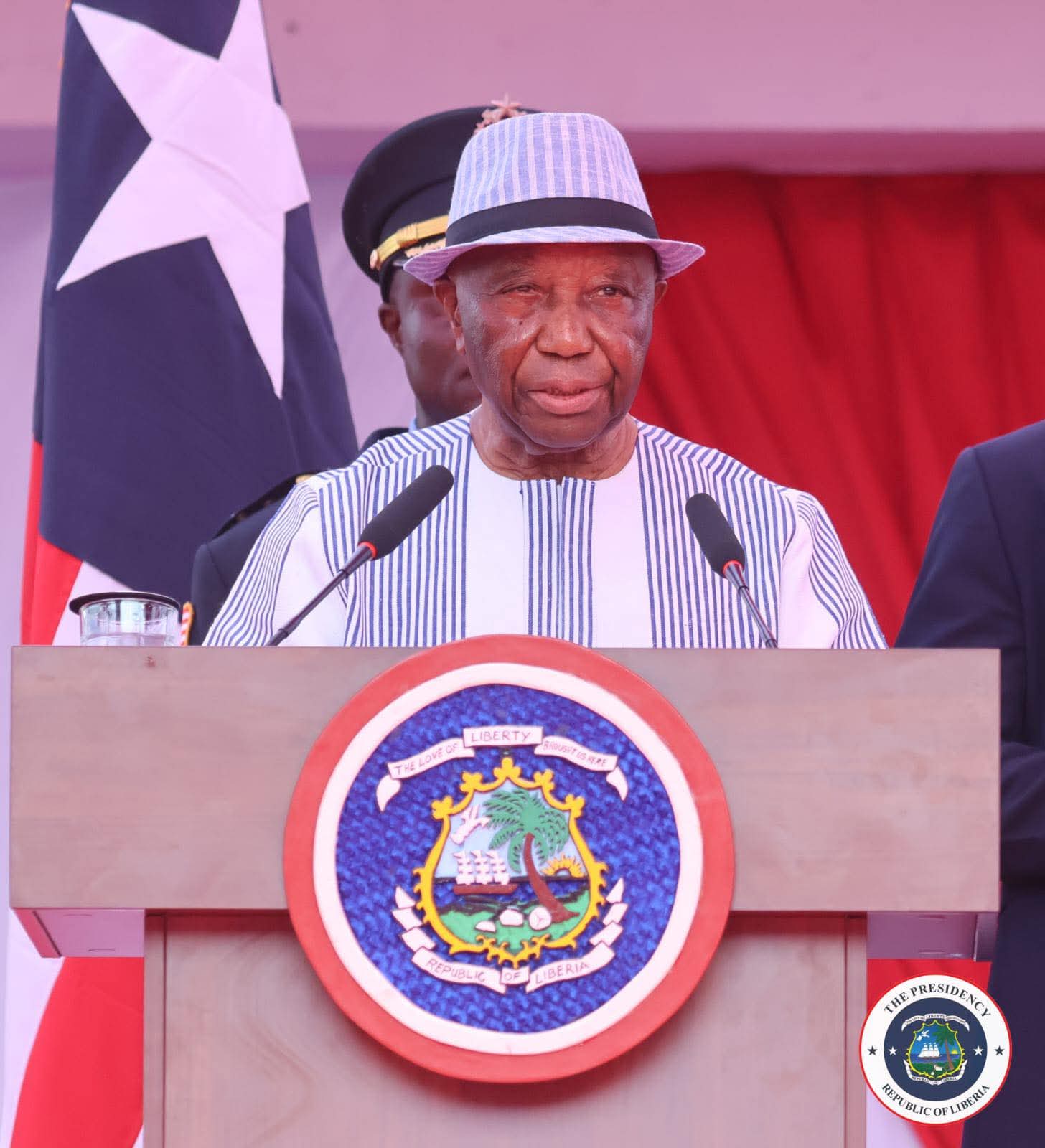
President Joseph Nyuma Boakai’s third State of the Nation Address (SONA), delivered Monday on the grounds of Liberia’s Capitol Building, has ignited mixed reactions across political, civil society, and international policy circles highlighting the enduring tension between reform rhetoric and structural realities in one of West Africa’s most fragile democracies.
Speaking in fulfillment of Article 58 of the Liberian Constitution, Boakai placed transparency, accountability, and institutional reform at the center of his address.
Yet analysts say the speech while heavy on statistics and policy frameworks exposed the administration’s struggle to translate governance reforms into tangible public confidence amid Liberia’s long history of weak institutions and entrenched patronage networks.
A Legacy of Fragile Institutions
Liberia’s governance challenges did not emerge overnight.
From prolonged civil conflict (1989–2003) to post-war reconstruction marred by corruption scandals, public trust in state institutions has steadily eroded.
According to Afrobarometer surveys, fewer than 35 percent of Liberians consistently express trust in key public institutions, a figure that has fluctuated but remained stubbornly low for over a decade.
President Boakai acknowledged this reality, stating that “longstanding governance challenges have weakened institutions and diminished public trust,” positioning his administration as a corrective force.
Performance Contracts: Reform or Bureaucratic Optics?
Central to Boakai’s reform agenda is the newly established Performance Management and Compliance System, which requires heads of public institutions to sign performance contracts tied to clearly defined standards.
While governance experts view performance contracting as a positive step, critics argue that Liberia’s past experiments with similar mechanisms under previous administrations failed due to selective enforcement and political interference.
“The key question is not whether contracts are signed, but whether underperformance will finally carry real consequences for politically connected officials,” said a Monrovia-based governance analyst.
Anti-Corruption Results: Progress or Modest Returns?
Working with the Liberia Anti-Corruption Commission (LACC), the administration reported 11 indictments, two convictions, one acquittal, and four ongoing prosecutions.
Several officials were suspended or dismissed through administrative actions.
However, transparency advocates note that Liberia consistently ranks poorly on Transparency International’s Corruption Perceptions Index scoring below 30 out of 100 in recent years.
Against that backdrop, two convictions are seen by critics as modest returns for a country where corruption is estimated by some economists to drain up to 20 percent of annual public expenditure.
The introduction of strengthened asset declaration rules and ethics textbooks in schools was praised symbolically, though skeptics warn that ethics education without systemic enforcement risks becoming performative governance.
Audit Breakthroughs and a Political Test Ahead
One of the most consequential disclosures in Boakai’s address came from the General Auditing Commission (GAC), which completed 94 of 105 audits, including a landmark Domestic Debt Audit (2018–2023) that rejected over US$704 million in unsupported claims a figure nearly equivalent to Liberia’s annual national budget.
Equally unprecedented was the first-ever system audit of the House of Representatives (2021–2024), with findings expected in March 2026.
Compliance with audit recommendations reportedly increased from 13 percent in 2024 to 37 percent in 2025, a notable jump, though still far below international best-practice benchmarks, where compliance often exceeds 70 percent.
The real political test, observers say, will be whether audit findings lead to prosecutions or quietly gather dust.
Procurement Reform and the Digital Promise
Boakai also highlighted progress in public procurement reform, noting expanded e-procurement systems across more than 50 public entities under the Public Procurement and Concessions Commission (PPCC).
Liberia’s procurement system has long been identified as a corruption hotspot, with sole-sourcing and inflated contracts undermining fiscal discipline.
While digitization is expected to reduce leakages, civil society groups warn that technology alone cannot substitute for political will.
Security Gains Amid Persistent Social Pressures
On security and justice, the administration reported measurable operational gains.
The Liberia Drug Enforcement Agency seized nearly 10 metric tons of illicit drugs and arrested over 550 suspects, reflecting Liberia’s growing exposure to regional narcotics trafficking routes.
Border controls were strengthened, fire services upgraded with 10 new fire engines, and correctional and military infrastructure expanded relocating over 600 soldiers to renovated barracks in Margibi and Nimba Counties.
While these steps signal renewed state capacity, analysts caution that youth unemployment and drug abuse particularly in urban slums remain destabilizing forces.
Youth at the Center or the Edge of Reform
With more than 60 percent of Liberia’s population under the age of 25, Boakai framed youth development as both a demographic opportunity and a national security imperative.
The launch of the National Youth Policy (2025–2030) and the Youth Peace and Security Action Plan, alongside the REALISE Project, reportedly supported over 15,000 youths in income generation and trained 1,400 youths in technical and vocational skills.
Sports initiatives, including football academies backed by Bea Mountain Mining Corporation, were presented as pathways to discipline and national cohesion.
Yet youth activists argue that skills programs remain insufficient against structural unemployment estimated at over 70 percent among young people, raising concerns that policy ambition continues to outpace economic absorption capacity.
A Reform Narrative Still on Trial
President Boakai’s third SONA reflects an administration keenly aware of Liberia’s credibility crisis both domestically and internationally.
The speech offers evidence of institutional motion, but also underscores how far Liberia remains from systemic transformation.
As one civil society leader summarized: “Liberia is no longer standing still but it is not yet moving fast enough.”


