


By: Julius Konton
Liberia’s Minister of Finance and Development Planning, Augustine Kpehe Ngafuan, has disclosed that Liberia’s active portfolio with the World Bank now stands at approximately US$1.1 billion, underscoring what officials describe as one of the largest development partnerships in the country’s post-war history.
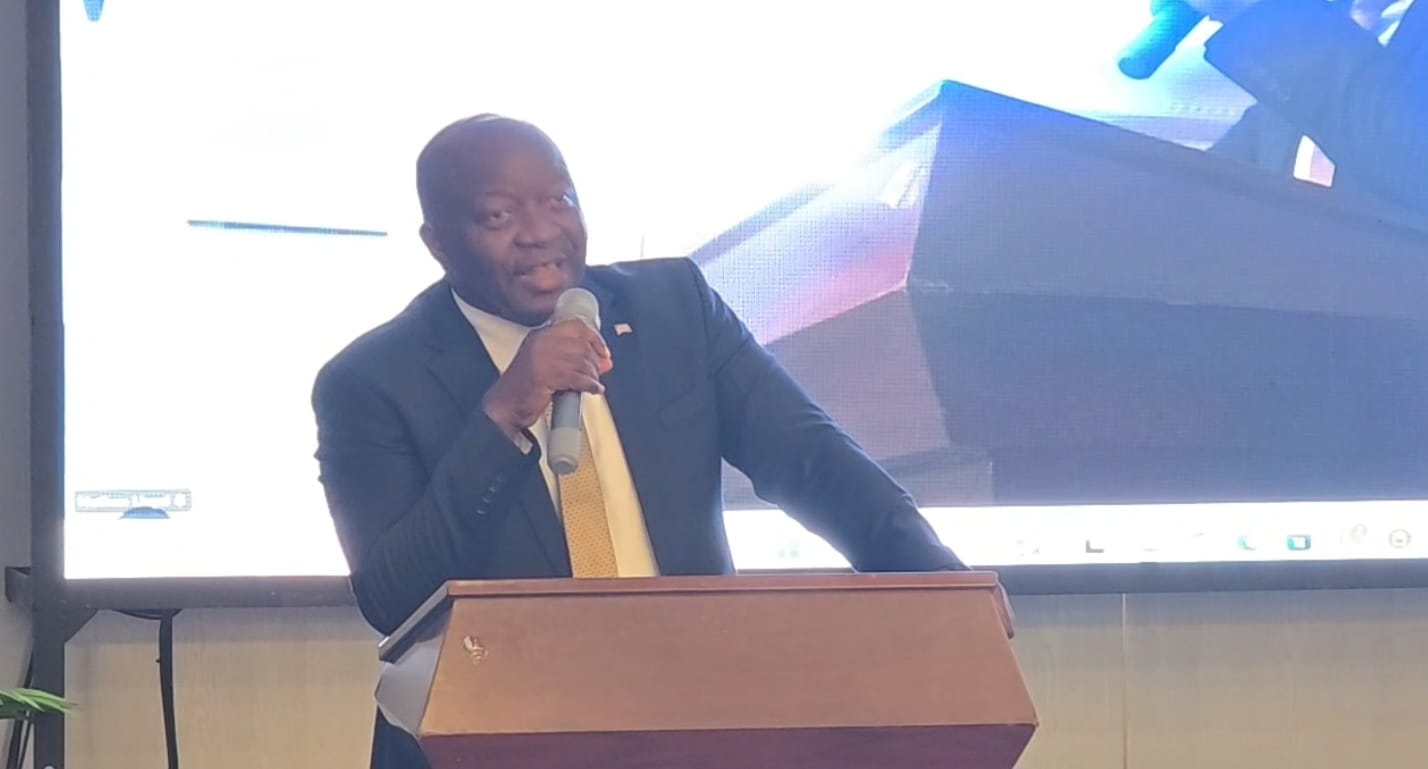
Speaking during the World Bank Liberia Country Portfolio and Performance Review (CPPR) for World Bank-financed projects in Monrovia, Minister Ngafuan said the portfolio currently covers 18 major projects spanning critical sectors including agriculture, energy, education, health, infrastructure, commerce and industry, social development, and public administration.
According to the minister, the World Bank remains Liberia’s largest international development partner, not only because of the scale of financial support provided but also because of what he termed the institution’s “consistent commitment and reliability” during difficult periods for the West African nation.
“The World Bank did not backpedal during Liberia’s difficult moments last year. Instead, it stood firmly with Liberia and supported the country through its turbulence,” Ngafuan declared. “That demonstrates true friendship not only to the government but to the Liberian people.”
Development Partnership Anchoring National Recovery
Liberia, a nation of about 5.5 million people, continues to rely heavily on international development financing as it rebuilds infrastructure and public institutions following years of civil conflict, the Ebola epidemic, and the economic impact of the COVID-19 pandemic.
The World Bank has historically financed several transformative projects in Liberia, including road connectivity programs, electricity expansion, education reform initiatives, healthcare strengthening, and public financial management reforms.
Economists estimate that donor-supported projects account for a significant share of Liberia’s public sector investment spending annually, particularly in infrastructure and social services.
Minister Ngafuan emphasized that ongoing World Bank-supported projects are directly impacting ordinary Liberians through improved public services and economic opportunities.
He pointed to visible progress in road construction, agriculture, healthcare delivery, and educational reforms under the administration of President Joseph Boakai.
More Than 100 Schools Planned Nationwide
Among the flagship projects highlighted by the finance minister is a nationwide school construction and rehabilitation initiative expected to deliver more than 100 modern educational facilities across Liberia.
Ngafuan said the schools, which will focus on foundational learning for young children, will be fully equipped to improve learning outcomes and educational access in underserved communities.
Liberia’s education sector continues to face major challenges, including overcrowded classrooms, inadequate infrastructure, and shortages of trained teachers, particularly in rural counties.
According to international education assessments, Liberia has one of the world’s lowest literacy rates, making education investment a key national priority.
“Making progress comes with the burden to do more,” Ngafuan told participants at the review meeting. “The more we achieve, the greater the expectations placed on government.”
Government Expands Budget and Fiscal Space
The finance minister also announced that Liberia has reintroduced supplementary budgeting, a mechanism that allows additional appropriations beyond the initial national budget framework.
Liberia’s national budget recently increased from approximately US$1.2 billion to US$1.3 billion, reflecting what officials describe as improved domestic revenue generation and stronger fiscal performance.
Ngafuan clarified that the supplementary budget is “an addition rather than a recast,” stressing that the government is maintaining fiscal discipline while expanding spending in priority sectors.
He cited several areas benefiting from the expanded fiscal space, including:
Recruitment efforts within the Armed Forces of Liberia
Construction of new hospitals and health facilities
Expansion of the national school feeding program
Payroll integration for volunteer teachers and health workers
Increased procurement of medicines and medical supplies
The minister revealed that Liberia’s school feeding initiative is now benefiting more than 240,000 children nationwide, helping improve attendance and learning outcomes, particularly in vulnerable communities.
He further disclosed plans to place additional volunteer healthcare workers on government payrolls to improve Liberia’s doctor-to-patient ratio, which remains among the lowest in the region.
Domestic Revenue Growth Despite Aid Challenges
In one of the strongest sections of his remarks, Ngafuan argued that Liberia demonstrated economic resilience last year despite delays and cancellations of some external partner support.
According to him, the government successfully expanded domestic resource mobilization and recorded what he described as Liberia’s highest annual domestic revenue generation in history.
Economic analysts have increasingly encouraged African governments to strengthen domestic revenue collection systems as global aid flows become less predictable amid international economic uncertainty.
“Even when some partner support was delayed or canceled, the sky did not collapse,” Ngafuan said. “Liberia relied on domestic resource mobilization and still managed to increase the national budget and generate a surplus.”
The minister added that while international partnerships remain essential, Liberia is simultaneously strengthening its internal economic capacity.
“The government of President Boakai rides on multiple lanes and rides very well,” he stated.
Performance-Based Recognition Introduced
Ngafuan also announced plans by the Ministry of Finance and Development Planning to introduce performance-based recognition for Project Implementation Units (PIUs) overseeing donor-funded initiatives.
According to him, top-performing project managers and institutions will receive awards aimed at encouraging efficiency, accountability, and delivery.
“We will identify the stars even in the darkness,” he remarked. “We must distinguish performance from laziness.”
The initiative comes amid increasing calls from international financial institutions for stronger project implementation and accountability mechanisms in developing countries.
Liberia Seeks Greater Development Momentum
Observers say Liberia’s expanding World Bank portfolio reflects growing international confidence in the country’s governance and economic management under the current administration.
However, challenges remain significant. Liberia continues to grapple with high youth unemployment, infrastructure deficits, energy shortages, inflationary pressures, and limited industrial productivity.
Still, government officials insist the country is making measurable progress and that sustained collaboration with development partners will accelerate national transformation.
As Liberia pushes forward with ambitious education, healthcare, and infrastructure programs, the success of the US$1.1 billion World Bank portfolio is likely to remain central to the country’s broader economic recovery and long-term development strategy.


