


By: Julius Konton
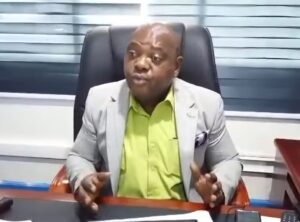
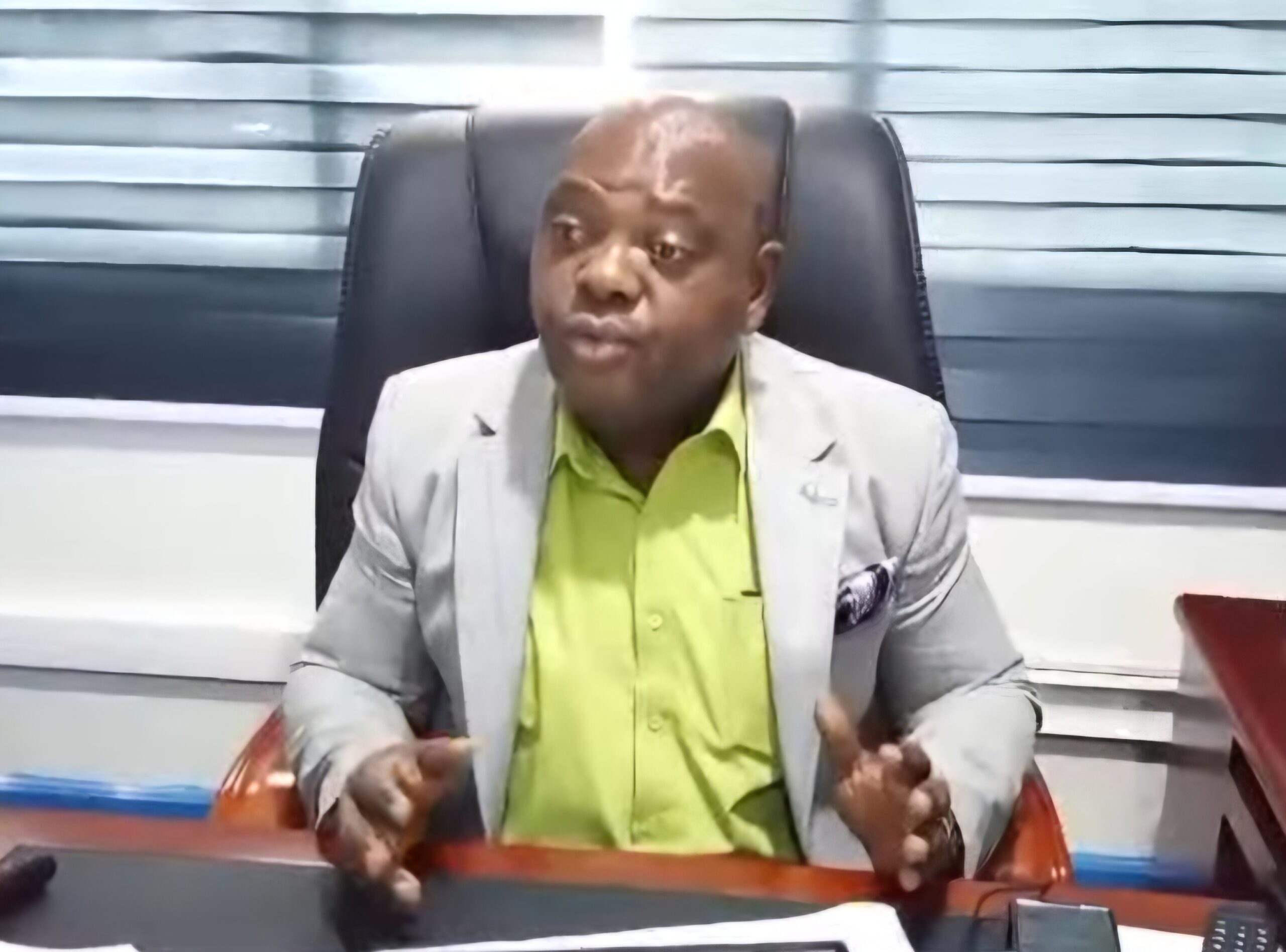
The Chief Executive officer of Liberia’s Law Reform Commission (LRC), Cllr. Bornor M. Varmah, has described the recent visit of the Minister of State for Presidential Affairs, “Sam” Stevequoh as a “monumental milestone” that reinforces President Joseph Nyuma Boakai’s commitment to strengthening the country’s rule of law institutions and advancing democratic governance.
The visit, which marked the third government institution toured by Minister Stevquouh as part of an ongoing assessment of public institutions, provided an opportunity for the Commission to present its achievements, ongoing reforms, strategic priorities and legislative agenda aimed at modernizing Liberia’s legal framework.
Speaking following the meeting, Cllr. Varmah said the Minister’s engagement demonstrated the Executive Mansion’s growing commitment to supporting institutions responsible for governance, justice and legal reforms.
“The visit enabled us to brief the Minister on the Commission’s mandate, our institutional progress, ongoing reforms and strategic priorities under my leadership,” Varmah said.
According to the Commission’s Chairperson the Law Reform Commission has undergone significant institutional transformation since he assumed office.
He noted that the Commission has been repositioned into a dynamic national legal reform institution committed to supporting the Boakai Administration’s governance agenda through modern legislation, legal drafting and policy reforms.
Among the major institutional achievements highlighted were:
Strengthening internal governance and administrative systems;
Expanding collaboration with national and international development partners;
Increasing legislative drafting and legal advisory services;
Enhancing stakeholder engagement across Liberia;
Developing a comprehensive Five-Year Strategic Plan.
Varmah said the Commission’s newly validated Five-Year Strategic Plan was developed through extensive consultations involving the Judiciary, Legislature, government ministries and agencies, development partners, academia, civil society organizations and members of Liberia’s legal profession.
According to him, the strategy serves as the Commission’s roadmap for modernizing Liberia’s legal architecture while ensuring that future legislation remains consistent with the 1986 Constitution.
One of the Commission’s most significant achievements, according to Varmah, is the drafting of Liberia’s proposed Family Court Bill, legislation expected to fundamentally transform how family-related disputes are handled.
Currently, issues involving divorce, child custody, adoption, guardianship and other domestic matters are distributed among various courts.
If enacted, the proposed law would establish a specialized Family Court responsible exclusively for family-related legal matters.
The Commission worked closely with the Supreme Court of Liberia, the Association of Female Lawyers of Liberia (AFELL), civil society organizations and international partners in preparing the legislation.
Varmah disclosed that the draft bill will soon be submitted to President Joseph Nyuma Boakai for onward transmission to the National Legislature.
He described the proposed court as a “paradigm shift” that would improve access to justice, reduce delays and enhance specialized judicial services for Liberian families.
The Commission has also completed drafting Liberia’s first National Law Reform Policy, designed to streamline and standardize the country’s legislative drafting process.
Under the proposed policy, ministries, agencies and public institutions seeking to introduce legislation would first submit draft laws to the Law Reform Commission before forwarding them to the Legislature.
According to Varmah, the objective is to ensure that all proposed laws are legally consistent, constitutionally compliant and free from conflicts with existing legislation.
“The Legislature remains Liberia’s constitutional law-making body,” he explained.
“Our statutory responsibility is to provide professional legal drafting that ensures every proposed law aligns with the Constitution and existing statutes.”
The Chairperson further revealed that the Commission is collaborating with the National Railway Authority Technical Team, ArcelorMittal Liberia and other industry stakeholders to finalize legislation establishing an independent National Railway Authority.
Liberia currently operates under an Executive Order establishing an interim technical structure to oversee railway governance.
That Executive Order is expected to expire later this year.
The proposed legislation seeks to create a permanent statutory authority responsible for regulating Liberia’s expanding railway sector, particularly as mining investments continue to increase demand for rail infrastructure.
Varmah described the initiative as another historic governance reform under the Boakai’s Administration.
The Commission also announced that it has developed a comprehensive concept note proposing a future holistic review of Liberia’s 1986 Constitution.
Liberia’s Constitution, adopted in 1986 following military rule, has now been in force for approximately four decades.
Varmah emphasized that while constitutional reform remains necessary, Articles 91 and 92 establish stringent amendment procedures that have historically made constitutional changes difficult.
He said previous constitutional amendment attempts have largely failed because of the demanding referendum thresholds established by the framers of the Constitution.
Instead of immediately pursuing amendments, the Commission proposes establishing a Presidential Constitutional Review Committee.
Under the proposal, the Law Reform Commission would serve as Secretariat, coordinating nationwide consultations, civic education and stakeholder engagement before any future constitutional referendum.
The Commission hopes a national referendum could eventually be conducted after broad public awareness and legislative approval.
Expanding Legislative Reforms
Beyond constitutional issues, the Commission disclosed that it has recently completed or reviewed several major legislative initiatives, including:
Amendments to the Liberia Water and Sewer Corporation Act;
Technical review of governance and justice sector legislation;
Review of the proposed Anti-Corruption Commission legislation;
Housing sector reforms with the National Housing Authority;
Technical and Vocational Education legislation in collaboration with the Ministry of Youth and Sports;
Legislative support for the Ministry of Commerce and Industry and the Bureau of State-Owned Enterprises.
Varmah said the Commission continues to provide legal drafting and advisory services to numerous ministries, agencies and commissions across government.
The Commission plans to launch an online legal information portal that will provide public access to Supreme Court opinions, statutes, legal publications and other legislative materials.
According to Varmah, digital access to legal information will improve transparency, legal research and access to justice throughout Liberia.
“We want law reform to go beyond drafting legislation,” he said. “Citizens should have easy access to our laws through modern digital platforms.”
Despite the progress made, Varmah stressed that the Commission requires increased financial and technical support to fully implement its mandate.
Among its priority needs are:
Additional legal researchers;
More legislative drafters;
Expanded budgetary support;
Modern ICT infrastructure;
Capacity-building for legal professionals;
Increased public legal awareness campaigns.
He disclosed that the Commission recently procured new operational vehicles through the national budget and continues to engage international partners to mobilize additional support for Liberia’s rule of law sector.
Liberia, a constitutional republic of approximately 5.5 million people, continues to strengthen democratic institutions following years of civil conflict that ended in 2003.
Successive governments have prioritized governance reforms, judicial independence and institutional capacity-building as essential pillars for sustainable peace, economic development and investor confidence.
Cllr. Varmah maintained that meaningful national development cannot occur without strong legal institutions.
“Law reform is democratic stability. Without a vibrant rule of law sector, no country can truly move forward. That is why the Law Reform Commission remains one of Liberia’s most important governance institutions, deserving continued national support,” he concluded.


