



By: Julius Konton
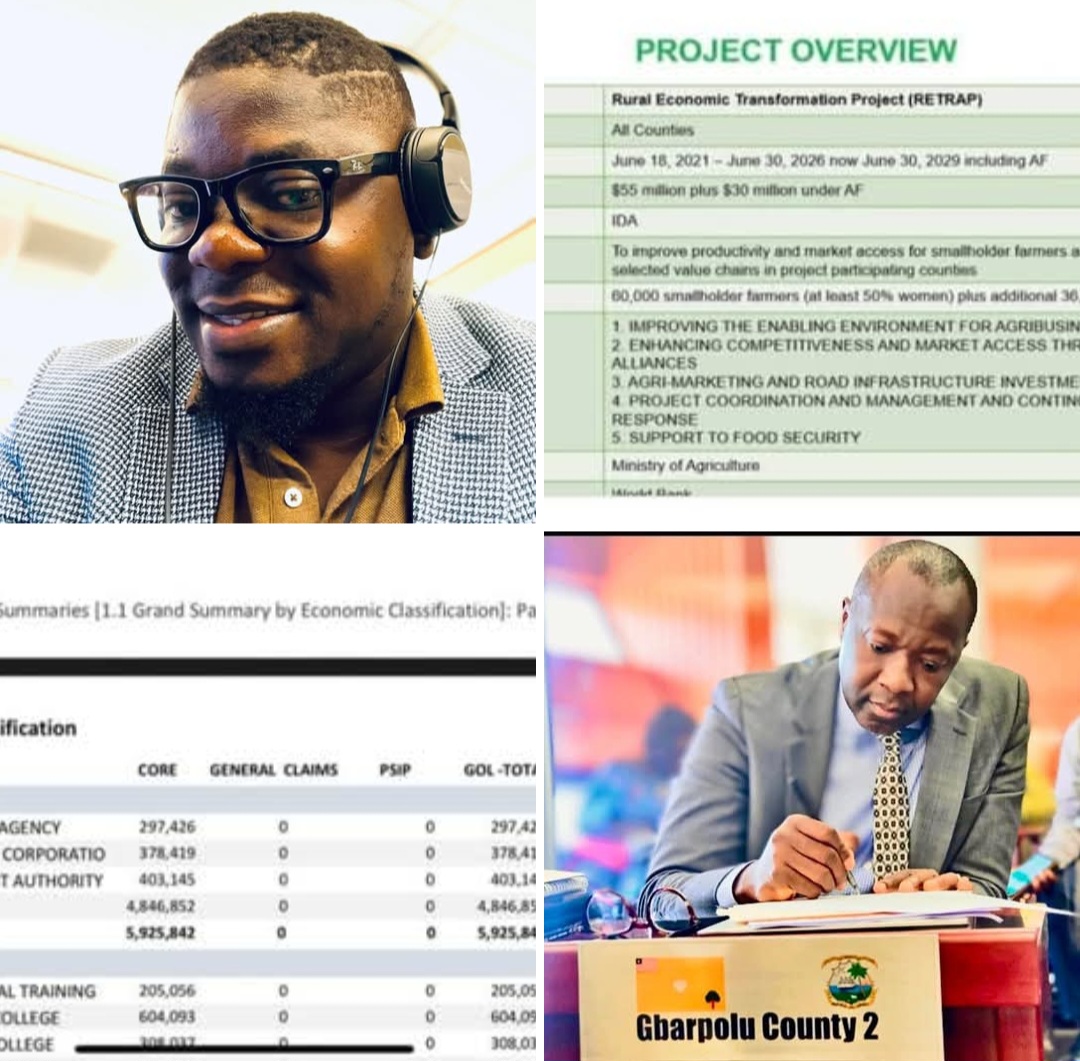
Liberia’s long-running debate over agricultural financing has resurfaced following fresh claims by Senator Amara Konneh that the national budget continues to underfund the agriculture sector, potentially undermining economic growth and food security.
But Budget Consultant S. Emmanuel Lloyd Sr. has pushed back strongly, arguing that the narrative of systemic underfunding ignores execution failures, donor financing realities, and the broader structure of agricultural development in a modern economy.
In a detailed public response, Lloyd described the Senator’s claims as “misleading and incomplete,” asserting that headline budget figures alone do not accurately reflect the government’s real investment in agriculture.
Infrastructure Spending Is Part of Agriculture, Lloyd Argues
According to Lloyd, agricultural transformation extends well beyond allocations to the Ministry of Agriculture.
“Feeder roads, rural energy, storage facilities, and market access are all agricultural investments,” Lloyd said, noting that farmers rely on road networks and logistics to move produce from farms to markets.
He argued that significant portions of Liberia’s public spending classified under infrastructure directly support agricultural productivity, even if they do not appear under the agriculture ministry’s budget line.
Execution Capacity Remains a Central Challenge
Lloyd further emphasized that budget credibility depends not only on allocations but also on the government’s ability to implement approved programs.
He cited the Agriculture and Cooperative Development Bank as a key example. Approximately US$4 million was appropriated for the institution, but implementation has stalled due to delays in passing enabling legislation, legislation currently pending before the National Legislature.
“Leaving money idle because of legislative inaction does not strengthen public financial management,” Lloyd noted.
Legislators’ Role in Agricultural Financing
The budget expert also pointed out that lawmakers now exercise direct control over District Development Funds (DDFs), giving them the ability to prioritize agriculture at the local level.
According to Lloyd, legislators who view agriculture as a national priority have the authority to allocate district-level resources toward farming, processing, and rural infrastructure projects.
Historical Data Raises Questions About Past Performance
Lloyd’s rebuttal also revisited Senator Konneh’s tenure as Minister of Finance, citing official budget execution figures.
FY2013/2014:
Approved agriculture budget: ~US$7 million
Actual expenditure: ~US$5.7 million
Underspending: ~US$1.3 million
FY2014/2015:
Agriculture allocation reduced to ~US$5.9 million, down from the previous year
Lloyd argued that these figures reflect execution challenges rather than budgetary neglect.
“Funds were approved, but not fully utilized,” he said, describing the issue as “under-execution, not underfunding.”
Donor Financing Dominates the Sector
One of the most significant omissions in the current public debate, Lloyd contended, is the scale of donor financing flowing into Liberia’s agriculture sector.
In FY2014/2015, donor-supported agricultural spending reportedly reached approximately US$88.6 million, far exceeding the government’s direct budgetary allocation.
“Agriculture has consistently been one of Liberia’s most donor-supported sectors,” Lloyd said. “Ignoring that reality distorts the national conversation.”
Accountability Questions Raised
Lloyd also called for greater transparency in the use of agricultural grants awarded under previous initiatives, including funding disbursed to private farms under donor-supported programs.
He stressed that public confidence in budget debates depends on clear reporting and measurable outcomes.
A Debate Beyond Numbers
As Liberia continues to pursue food security, value-chain development, and rural employment, analysts note that the agriculture funding debate increasingly hinges on execution efficiency, institutional readiness, and coordination between government and donors, rather than headline budget figures alone.
Lloyd concluded that the current controversy reflects broader political tensions rather than a genuine collapse in agricultural financing.
“When the full financial picture is examined,” he said, “the claim that agriculture is being deliberately starved of resources simply does not hold.”


