



Liberia Launches New Economic Blueprint, Targets Sustainable Growth Through Strategic Financing
By: Julius Konton
Liberia has officially launched the 2026 Country Focus Report and the 2026–2031 Country Strategy Paper, two major policy instruments designed to guide the country’s economic transformation agenda, strengthen development financing, and deepen cooperation with the African Development Bank (AfDB).
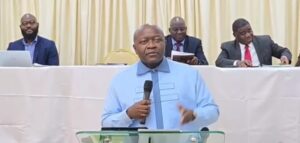
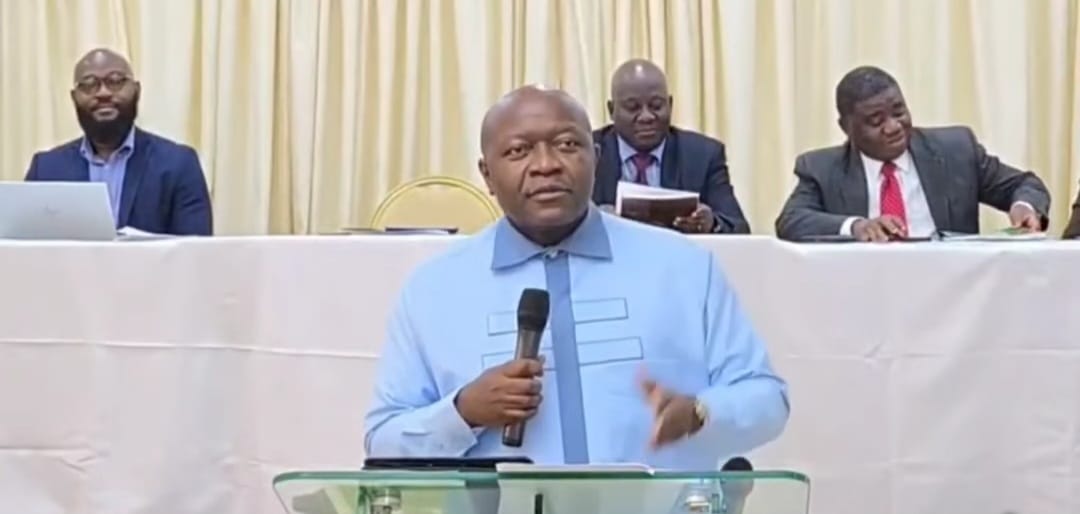
The launch, led by Finance Minister Augustine Kpehe Ngafuan, marks a new phase in Liberia’s partnership with the continental financial institution as the government seeks to address infrastructure gaps, expand human capital development, attract private investment, and build economic resilience in an increasingly challenging global environment.
Speaking at the ceremony, Minister Ngafuan, on behalf of the Government of Liberia, expressed appreciation to the AfDB for its longstanding partnership, policy support, leadership, and continued confidence in Liberia’s development journey.
He described the two documents as complementary tools that will shape Liberia’s medium-term development direction.
According to the Minister, the Country Focus Report provides a detailed assessment of Liberia’s macroeconomic outlook, financing requirements, structural challenges, and policy options, while the Country Strategy Paper translates those findings into a framework for AfDB financing, technical assistance, policy engagement, and knowledge support between 2026 and 2031.
Minister Ngafuan said the theme of the 2026 Country Focus Report — “Mobilizing Liberia’s Development Financing as Scaled in a Fragmented World” , is timely, as developing countries continue to face rising economic pressures, limited fiscal space, and growing development needs.
He said Liberia must confront global challenges while positioning itself to benefit from emerging opportunities.
“As I emphasized recently at the launch of the Africa Macroeconomic Performance and Outlook Report in Abidjan, Africa remains a global growth frontier, and Liberia is part of that frontier,” Ngafuan stated.
He noted that AfDB’s continental analysis showed that 22 African countries, including Liberia, recorded economic growth above 5 percent last year, describing the performance as a reflection of resilience, reforms, and strategic partnerships.
Minister Ngafuan highlighted Liberia’s difficult economic history, particularly the impact of years of civil conflict and institutional weakness.
He disclosed that after the civil war, Liberia’s debt-to-GDP ratio exceeded 700 percent, placing the country among the world’s most indebted nations.
However, through extensive economic reforms and international cooperation, Liberia secured debt relief that covered approximately 90 percent of its outstanding obligations, creating the foundation for renewed macroeconomic stability.
“These achievements demonstrate what sustained reform, responsible economic management, and strong partnerships can accomplish,” he said.
The Minister also referenced Liberia’s experience during major public health emergencies, including the 2014–2016 Ebola epidemic, which claimed more than 5,000 lives, and subsequent efforts to strengthen national health systems to respond more effectively during the COVID-19 pandemic.
Minister Ngafuan revealed that Liberia lost more than US$300 million in external project financing last year following the withdrawal of its second-largest development partner.
Despite the setback, he said Liberia maintained fiscal stability through stronger domestic resource mobilization, improved tax administration, digital reforms, transparency initiatives, and measures aimed at reducing revenue leakages.
“The sky did not collapse over our heads,” Ngafuan told the gathering, emphasizing that the government’s reforms helped cushion the impact.
He identified four critical priorities for Liberia’s future:
Mobilizing domestic resources more effectively and efficiently.
Protecting fiscal and debt sustainability while funding critical development programs.
Using public resources to leverage private investment and development financing.
Strengthening institutions to ensure every dollar generates measurable economic and social value.
Minister Ngafuan said Liberia’s development ambitions cannot be achieved through public resources alone.
He called for a balanced financing strategy combining:
Domestic revenue growth;
Concessional financing;
Climate financing;
Regional investment opportunities;
Private sector capital;
Public-private partnerships;
Risk-sharing and guarantee mechanisms.
The Finance Minister outlined several ongoing government reforms, including:
Tax and Revenue Reform
The government, he said, remains committed to expanding domestic revenue while improving fairness, efficiency, and predictability within the tax system, including the planned introduction of Value Added Tax (VAT).
Public Financial Management
Liberia will continue strengthening expenditure controls, improving value-for-money systems, enhancing transparency, and maintaining debt sustainability.
Digital Governance
The government is prioritizing digital transformation, accountability, and institutional effectiveness to improve service delivery.
Private Sector Development
Ngafuan stressed the need to create a business environment capable of attracting investment, supporting entrepreneurship, and generating jobs.
The newly launched AfDB Country Strategy Paper 2026–2031 aligns the bank’s support with Liberia’s national priorities and provides a structured platform for long-term cooperation.
Minister Ngafuan welcomed the strategy’s focus on:
Inclusive infrastructure development;
Human capital investment;
Market-driven skills development;
Private sector expansion;
Economic diversification.
He emphasized that Liberia’s transformation requires integrated investments rather than isolated projects.
“Roads and energy systems must connect productive communities to markets, reduce the cost of doing business, and improve access to essential services,” he said.
According to the Minister, transportation investments must connect farms to markets, counties to economic centers, and Liberia to regional trade corridors.
Energy investments, he added, must provide reliable and affordable electricity to:
Households;
Hospitals;
Schools;
Farmers;
Agro-processing facilities;
Businesses.
He stressed that infrastructure success should not only be measured by spending levels but by measurable outcomes such as:
Reduced travel time;
Lower production costs;
Increased trade;
Greater investment;
Improved access to services;
Jobs created.
Minister Ngafuan described Liberia’s youthful population as the country’s greatest asset and emphasized the importance of connecting education and training with labor market demands.
He highlighted government initiatives including:
Youth apprenticeship programs;
Internship opportunities;
Expansion and modernization of Technical and Vocational Education and Training (TVET).
He said Liberia must prioritize training for:
Engineers;
Electricians;
Construction workers;
Health professionals;
Agro-processors;
Digital specialists;
Entrepreneurs.
“A skilled workforce is essential for private sector growth, productivity, and sustainable employment,” he said.
The Finance Minister said the AfDB has an important role to play in helping Liberia unlock private capital through financing instruments, guarantees, and risk-sharing mechanisms.
He welcomed support for:
Credit facilities;
Investment guarantees;
Private sector financing;
Commercially viable public-private partnerships;
Support for SMEs;
Women-owned businesses;
Youth-led enterprises;
Businesses outside Monrovia.
On mining, Ngafuan acknowledged that the sector remains a major contributor to Liberia’s economy but said historical revenues have not always reflected the value extracted by private operators.
He said ongoing reforms, including AfDB-supported revenue governance initiatives, aim to ensure Liberia’s natural resources generate greater benefits for citizens.
Minister Ngafuan reaffirmed the Ministry of Finance and Development Planning’s commitment to working with the AfDB, government institutions, development partners, civil society, and the private sector to transform policy recommendations into concrete investment actions.
He called for continued cooperation based on:
Fiscal discipline;
Transparency;
Institutional coordination;
Evidence-based policymaking.
“We look to the bank for predictable financing, technical assistance, knowledge support, and responsive engagement throughout the project cycle,” he said.
The Minister concluded that the launch represents a renewed commitment to disciplined implementation, strategic financing, and measurable development outcomes.
“Together, let us mobilize development financing at scale, strengthen economic resilience, accelerate structural transformation, and build a stronger, more inclusive, and prosperous Liberia,” Ngafuan said.


